The Checker Maven
The World's Most Widely Read Checkers and Draughts Publication
Bob Newell, Editor-in-Chief
Published every Saturday morning in Honolulu, Hawai`i
Noticing missing images? An explanation is here.
Uncle Ben's Porch: An Argument with Mom
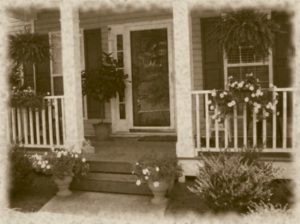
I had a bit of an argument with Mom this morning, and that's never a good way to start off the day. It was Saturday morning, and nearly every Saturday for more than a year I'd gone over to Uncle Ben's for a couple of hours, to sit on his porch, drink his wonderful lemonade, and learn something new about checkers.
But Mom had said that we're two months into a new school year, I'm in fifth grade now, and I need to spend a few extra hours hitting the books, as I hadn't exactly gotten off to a good start in English and math. Besides, she said, you can't be bothering Uncle Ben all the time; the elderly gent can't be expected to entertain children every single week!
I pointed out that Uncle Ben seemed to really look forward to my visits and that he might be disappointed if I didn't show up. Besides, I said (repeating back a few lines I'd heard from Uncle Ben himself), checkers helps a student with logical thinking and the application of reason. (I'm glad Mom didn't ask me to explain what all of that really meant, though.)
After a little while Mom relented and let me go, with a final caution to not stay too long and wear out Uncle Ben's patience or hospitality. Still, I didn't feel very good about the whole incident, and when I arrived at Uncle Ben's and sat down in one of his porch chairs, I couldn't help but blurt out the whole story.
"Well, Tommy," Uncle Ben said after hearing me out, "listening to your Mom and doing as she says is very important, and I shouldn't discourage you from doing so."
At these words, my heart started to sink and I was sure Uncle Ben was going to send me straight home. Certainly, he realized this as he added, "No, no, Tommy, I'm not going to send you off. But we need to make a little deal, one that you need to tell your mother about when we've shaken on it."
"Deal?" I said, unsure of what was coming.
"Yes, a nice gentleman's agreement. The one part of the deal is that you can come here and visit every Saturday that you wish ... but the other part is that your grades have to all be above whatever mark your mother decides. So if she says that you have to have nothing less than a 'B' in every subject, then you have to do that well in school," Uncle Ben concluded.
"But ... but ...." I stammered.
"No 'buts', Tommy! I know, you're worried that your mother will ask you to get all "A"s or something really hard. But I know your mom and I know she'll be fair about it. She'll just expect you to do your part. So, is it a deal, then?"
"Yes, sir," I said, and we shook hands on it. Uncle Ben was right, Mom would be fair, and I did want to keep my grades up, though I knew it would be hard work.
"Well then!" exclaimed Uncle Ben, "all this business talk makes a man thirsty!" And before you could blink twice, Uncle Ben had placed glasses of frosty lemonade on the table in front of us, and turned his attention to the checkerboard.
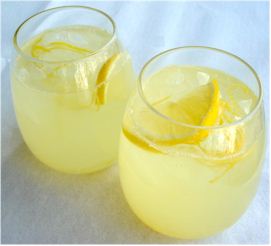
"You've been coming along fast," he said, "and so today we're going to try something a little harder. It's a bit like school; as you move up in grades, the work gets harder, but you learn more and more all the time. What do you make of this? Here's one in which whoever moves first will win."
This was the position Uncle Ben had set up for me.

WHITE
Either to Play and Win
W:W20,21,23,32:B1,10,12,13.
I took a long, careful drink of lemonade, and all at once, everything seemed clear. "Hey, Uncle Ben, I've got it!" I said proudly, and began to move the men to demonstrate the solution.
What do you make of this problem? Work it through and then click on Read More to see the solution, a sample game, and a large helping of additional illustrated examples.
Maybe Not Quite A Speed Problem

The first Saturday of each month we often offer a speed problem, featuring our relentless Javascript clock, and this month we return to that theme. But today's problem might not be quite a speed problem.
To be sure, the better checkerists out there will likely come up with the solution in short order. But others may perhaps need a little more time. And so, to accommodate everyone, we're being especially generous and allowing a whole two minutes for you to find the solution before the clock runs out. Aren't we the kind ones?
Click on the link below when you're ready to give it a try.
November Speed Problem (moderate difficulty)
Whether you were speedy or not, clicking on Read More will show you the solution in a jiffy.
Win or Draw? It's Fifty-Fifty!

This month in our Checker School column you have a fifty-fifty chance of getting the right answer even if you don't know a thing about checkers! Here's the position we're going to consider.
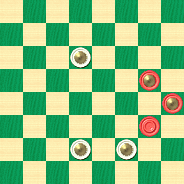
BLACK
Black to Play
B:WK23,K7,K6:BK17,K13,9.
Only two moves look possible for Black in this tough situation.
Consider: 9-14 loses quickly to 7-2 followed by 6-9, while 17-14 goes down almost as quickly via 6-10 14-17 23-18 17-21 10-14.
That just leaves 17-21 and 17-22.
One of these two allows White to win; it's known as Wardell's Win. The other obtains a draw for Black, and goes by the name Sweeney's Draw. All you have to do is say which is which! So, even if you just guess at the solution, you have even odds of getting it right!
Of course, all of you two-fisted checkerists will undoubtedly want to go on and demonstrate just how the win or draw takes place ... won't you?
Whether you work it all out or just play the odds, there's one sure thing: clicking on Read More will give you the answers, sample games, and explanatory notes, all courtesy of Ben Boland and his classic book Famous Positions in the Game of Checkers.
Thirkell's Folly

It's a "Willie Ryan" Saturday today, as we continue with our electronic republication of his classic Tricks Traps & Shots of the Checkerboard. These monthly excerpts seem to rank among our most popular columns, and with good reason: there was no one else in checker history quite like Willie; a master player who was also a most engaging writer and instructor. Here's what Willie has to say this time.
"Peter Thirkell, a prolific and talented analyst and problemist, held a prominent place as the draughts oracle of 70 years ago. But sometimes Pondering Peter, like the rest of us, pulled glaring boners. Witness his oversight in the following game, in which he passed up one of the most beautiful in-and-out shots ever to adorn the board.
| 10-15 | 29-25 | 11-16 |
| 23-19 | 16-23 | 25-22 |
| 6-10 | 26-19 | 16-23 |
| 22-17 | 8-11 | 27-11 |
| 1-6 | 17-13 | 7-16 |
| 25-22 | 3-8 | 32-27 |
| 11-16 | 22-17 | 10-15---A |
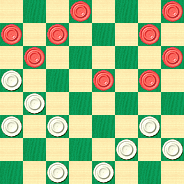
WHITE
White to Play and Win
W:W31,30,28,27,24,22,21,17,13:B16,15,12,9,8,6,5,4,2.
A---Given by Thirkell to draw, but it loses. 8-11 or 16-20 will produce a draw easily."
Fool around with this problem all you wish, but don't be fooled; it's no folly to click on Read More to see the very fine solution.
An Oktoberfest Contest
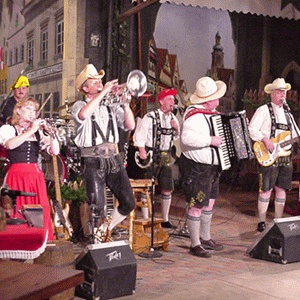
It was about five in the afternoon on a fine Sunday in October, and Marvin J. Mavin was sitting in the Biergarten on the Detroit Oktoberfest grounds. Marvin, as you probably know by now, is team captain of the Detroit Doublejumpers, a leading team in the National Checker League. The Doublejumpers were off today, and Marvin had just finished playing a simultaneous exhibition in the Oktoberfest's Main Halle. Marvin took on no less than 48 other players, all at once, in a benefit for disadvantaged city youth, a cause that Marvin often proudly volunteered to support. Marvin, in true championship form, won 46 games, drew two, and lost none at all.
The problem was, Marvin decided that such a performance was worthy of a beer. Or maybe, beers. So after the exhibition, he had gone right to the Biergarten, and for the past hour had been enjoying the atmosphere perhaps a little too much, and, well, things like that don't usually turn out for the best...
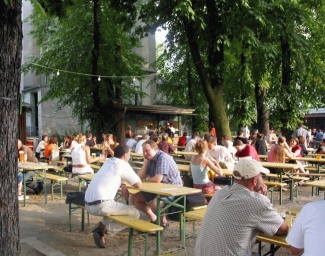
Marvin, in a bit of a reverie, suddenly sensed someone standing in front of him, talking rather loudly. Blinking his eyes and looking up, he realized it was none other than Dmitri Tovarischky!
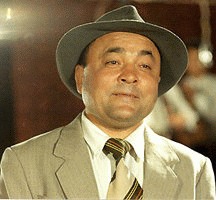
Now, if you recall our earlier story (found here), a little while back Marvin had gone with his girlfriend Priscilla (who was at the moment in England on business) to a champagne party, and had played to a rather tense draw in an impromptu challenge game with Russian champion Dmitri. Marvin's less than star-like behavior had led to quite a row with Priscilla, and Marvin ended up taking the bus home instead of riding in Priscilla's Mercedes.
"Checkers Boy! What you doing here!" Dmitri exclaimed. "Should be home practicing!" Dmitri accompanied the last statement with a bit of a snort.
Marvin looked up, and it was obvious that he wasn't pleased to see Dmitri, let alone listen to his remarks. "Hey Russki, I played an exhibition and won 46 out a 48. You couldn't a done that! You ain't good enough!"
"Dmitri would be winning all games, Checkers Boy! Dmitri does not drink bad American beer and get funny in head and play poor game of checkers!"
"Hey, I didn't ..." Marvin started, but Dmitri immediately interrupted him.
"You and I, we play game now, da?" And before Marvin could even reply, Dmitri had opened up a little briefcase, took out a folding board and a set of checker pieces, and had started to set up for a game. "Checkers Boy will take Black pieces," Dmitri stated when the board was ready for play.
"No dude, they're Red pieces. Red, get it, like you!" Marvin chuckled at this remark but Dmitri glowered at the impolite comment. Not receiving a reply, Marvin began the game, and it played out as follows.
Black: Marvin
White: Dmitri
1. 11-16 23-18
2. 16-20 24-19
3. 9-14 18x9
4. 5x14 27-23
"Kind of a bum move, Russki!" exclaimed Marvin.
5. 8-11 22-18
6. 6-9
"Is now your bad moving," Dmitri said.
"Will ya keep quiet and play!" Marvin, replied with some annoyance.
6. ... 25-22
7. 2-6
"American beer drinker is cooked goose now!" Dmitri said, with glee.
7. ... 22-17
8. 4-8 30-25
"Ha, ya big loser, that move ain't so hot," Marvin threw across the table.
9. 11-16
"OK, Checkers Boy, Dmitri maybe make one mistake, but now you losing game for sure," Dmitri shot back.
10. ... 25-22
10. 20-24 32-27
11. 16-20 29-25
12. 8-11 17-13
13. 11-16
"You playing bad checkers when drinking American beer!" Dmitri said, repeating his earlier remark.
13. ... 22-17
14. 7-11 25-22
15. 3-8
"Now win is here," said Dmitri. "Game is over for Checkers Boy!"
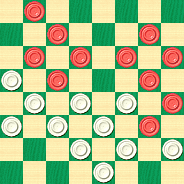
WHITE
White to Play and Win
W:W31,28,27,26,23,22,21,19,18,17,13:B24,20,16,14,12,11,10,9,8,6,1.
15. ... 19-15
16. 10x19 17x10
17. 6x15 13x6
18. 1x10 21-17
19. 10-14 17x10
White Wins.
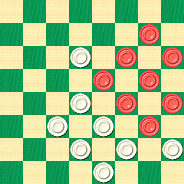
WHITE
White Wins
"I told you, Dmitri is winning all games," Dmitri concluded. "Checkers Boy better take taxi to home and go in his bed and sleep until next day is coming." And in an instant, Dmitri had packed away the checker set and board and was gone.
"Wha...what..." was all Marvin could say, and in the background, he heard one of the small crowd of observers call out, "Yeah, better get 'em a taxi and send 'em home!" and then added, "His coach ain't gonna like it when he shows up for practice with a big headache!"
Can you correct the play at moves 4, 6, 7, 8, 9, 13, and 15? Dmitri did make one large error, but Marvin made many. What would you have played instead? Analyze the game and then click on Read More for complete annotations and the game in PDN format.
Hard? Hardly!
In one of our favorite Honolulu second-hand book stores (not that there are all that many to choose from), we came across an old book that purported to contain the "hardest" problems in various genres. The book bore a very low price tag and so we decided to add it to our collection.
We weren't terribly surprised to learn two things about this book: first, that the problems were anything but "hard" for the most part, and second, that the requisite checker problem was to be found within the book's contents. The checker problem was certainly entertaining enough, but as for difficulty, we found it a suitable entry for this month's "easy" problem!
Here's the problem:
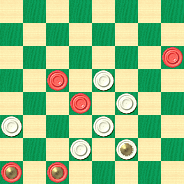
WHITE
White to Play and Win
W:W15,19,21,23,26,K27:B12,14,18,K29,K30.
Think hard, though you'll hardly need to; and a good hard click on Read More will then bring you to a hard stop at the problem's hardy solution.
Editor's Note: Where's the Javascript clock this month? Well, we've decided that, in addition to our usual "speed" problems where you compete against the clock, we'd alternate some months with an "easy" problem that is suitable for those of us with, shall we say, lesser talents. There is no clock for the "easy" problems in order to allow our readers to concentrate on solving without time pressure.
The Squeeze

We haven't published one of W. T. Call's delightful miniatures in quite some time, so this week we provide a long overdue selection. Miniatures provide much more of a challenge than their simple settings imply; they are as much a test of visualization skills in their own way as stroke problems are in another way.
The little problem that follows relies, as you might guess from our title, on a "squeeze" theme. You'll see what that means when you've solved the problem.
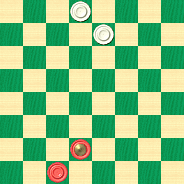
BLACK
Black to Play and Win
B:W31,26:BK7,3.
See if you can squeeze out the solution, and when you've extracted it, press Read More to check your answer.
Symmetry
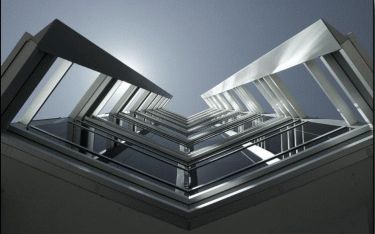
Checker School today brings us a problem that exhibits a certain form of symmetry; not the perfect symmetry of our photo, to be sure, but nevertheless an appealing geometric pattern. The position is credited to a Mr. Brooks, and looks like this.
WHITE
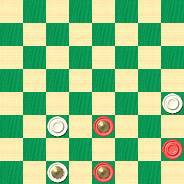
BLACK
Black to Play and Win
B:W13,11,K3:BK10,5,K2.
As it turns out, reflecting our theme of symmetry, Black has not one but two ways of winning. Can you find them both?
Reflect on this for a while, but if you can't mirror the winning thought process, a simple click on Read More will flip to the solution page, which contains the answer to the problem, a sample game, and detailed notes, all courtesy of Ben Boland.
Wyllie's Switcher Swindle
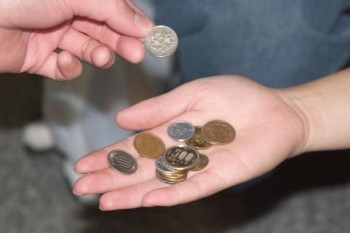
Once again it's time for an installment from one of the greatest checker books of all time, Willie Ryan's Tricks Traps & Shots of the Checkerboard. This month Willie takes us back in checker history, to a stratagem employed by Scotland's legendary James Wyllie. Willie tells us all about it in his own well-chosen words.
"It is impossible to record the historic stratagems of the world's great draughts players without including the hallowed name of James Wyllie of Scotland, father of modern checkers and the game's first full-time professional. Here we review one of the wily Scot's best-known thunderbolts:
| 11-15 | 6-10 | 4-8 |
| 21-17---A | 22-17 | 29-25 |
| 9-13 | 13-22 | 11-15 |
| 25-21 | 26-17 | 30-26 |
| 8-11 | 15-18 | 6-9---B |
| 17-14 | 24-20 | |
| 10-17 | 2-6 | |
| 21-14 | 28-24 |
forming the diagram.
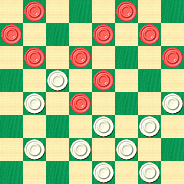
WHITE
White to Play and Win
A---The Switcher opening; weak for white. Champion Wyllie was first to use and develop the gambit, and despite its inherent weakness, he doomed many a master with the white pieces.
B---Caught! White now ends all organized resistance with a neat double-action bust-up. The correct play at B is: 15-19, 24-15, 10-19, 23-16, 12-19, 27-23, 18-27, 32-16, 6-9, 26-22, 9-18, 22-15, 8-12, 16-11, 7-16, 20-11, 3-7, 11-2, 1-6, 2-9, 5-30, ending in a draw."
Will you too be swindled, or can you find your way to the solution? Try it out, but be sure to count your change before clicking on Read More to see how it's done.
Be a PAL

The Police Athletic League (PAL) is a venerable institution with chapters all across the United States. The idea is at once simple and brilliant: to bring police and kids together in a positive, partnership-building environment, which fosters mutual trust and respect. Of course, basketball and similar sports are prominently featured, but other activities such as homework help and board games are also on the agenda.
Once upon a time in New York City, legendary checkerist Kenneth Grover served as a PAL checker instructor. In his PAL chapter, the following Tom Wiswell problem was a big favorite. It's not too hard, not too easy, and as simple and brilliant as the PAL concept itself.
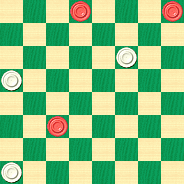
WHITE
White to Play and Draw
W:W11,13,29:B2,4,22.
Forces are even but the White man on 11 is rather exposed, and Black is about to get a king. Can you save the game for the White forces?
As always, solve the problem and click on Read More to view the solution. And, we urge you to be a PAL yourself. Support the work of your local PAL chapter and help build better communities.
The Checker Maven is produced at editorial offices in Honolulu, Hawai`i, as a completely non-commercial public service from which no income is obtained or sought. Original material is Copyright © 2004-2026 Avi Gobbler Publishing. Other material is public domain, AI generated, as attributed, or licensed under CC1, CC2, CC3 or CC4. Information presented on this site is offered as-is, at no cost, and bears no express or implied warranty as to accuracy or usability. You agree that you use such information entirely at your own risk. No liabilities of any kind under any legal theory whatsoever are accepted. The Checker Maven is dedicated to the memory of Mr. Bob Newell, Sr.