The Checker Maven
The World's Most Widely Read Checkers and Draughts Publication
Bob Newell, Editor-in-Chief
Published every Saturday morning in Honolulu, Hawai`i
Hard? Hardly!

PxHere CC0
In one of our favorite Honolulu second-hand book stores (not shown above, unfortunately, and not that there are all that many to choose from), we came across an old book that purported to contain the "hardest" problems in various genres. The book bore a very low price tag and so we decided to add it to our collection.
We weren't terribly surprised to learn two things about this book: first, that the problems were anything but "hard" for the most part, and second, that the requisite checker problem was to be found within the book's contents. The checker problem was certainly entertaining enough, but as for difficulty, we found it a suitable entry for this month's "easy" problem!
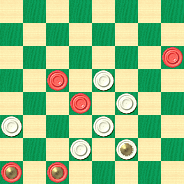
Here's the problem:
WHITE
White to Play and Win
W:W15,19,21,23,26,K27:B12,14,18,K29,K30.
Think hard, though you'll hardly need to; and a good hard click on Read More will then bring you to a hard stop at the problem's hardy solution.
Editor's Note: Where's the Javascript clock this month? Well, we've decided that, in addition to our usual "speed" problems where you compete against the clock, we'd alternate some months with an "easy" problem that is suitable for those of us with, shall we say, lesser talents. There is no clock for the "easy" problems in order to allow our readers to concentrate on solving without time pressure.
You can email the Webmaster with your comments on this article.
The Squeeze

Pexels CC0
We haven't published one of W. T. Call's delightful miniatures in quite some time, so this week we provide a long overdue selection. Miniatures provide much more of a challenge than their simple settings imply; they are as much a test of visualization skills in their own way as stroke problems are in another way.
The little problem that follows relies, as you might guess from our title, on a "squeeze" theme. You'll see what that means when you've solved the problem.
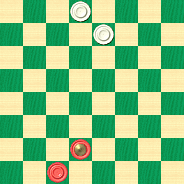
BLACK
Black to Play and Win
B:W31,26:BK7,3.
See if you can squeeze out the solution, and when you've extracted it, press Read More to check your answer.
You can email the Webmaster with your comments on this article.
Be a PAL
Rawpixel CC0
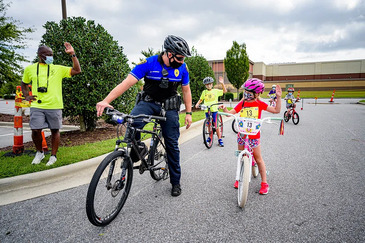
The Police Athletic League (PAL) is a venerable institution with chapters all across the United States. The idea is at once simple and brilliant: to bring police and kids together in a positive, partnership-building environment, which fosters mutual trust and respect. Of course, basketball and similar sports are prominently featured, but other activities such as homework help and board games are also on the agenda.
Once upon a time in New York City, legendary checkerist Kenneth Grover served as a PAL checker instructor. In his PAL chapter, the following Tom Wiswell problem was a big favorite. It's not too hard, not too easy, and as simple and brilliant as the PAL concept itself.
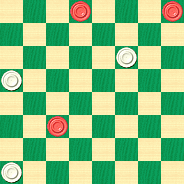
WHITE
White to Play and Draw
W:W11,13,29:B2,4,22.
Forces are even but the White man on 11 is rather exposed, and Black is about to get a king. Can you save the game for the White forces?
As always, solve the problem and click on Read More to view the solution. And, we urge you to be a PAL yourself. Support the work of your local PAL chapter and help build better communities.
You can email the Webmaster with your comments on this article.
Labor Day Festivities
NY Transit CC0
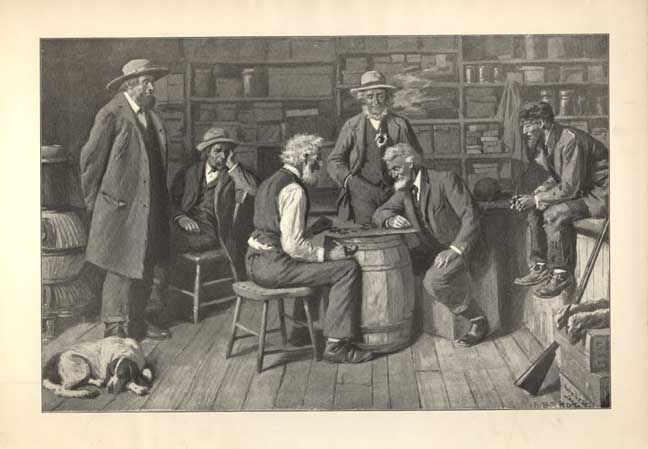
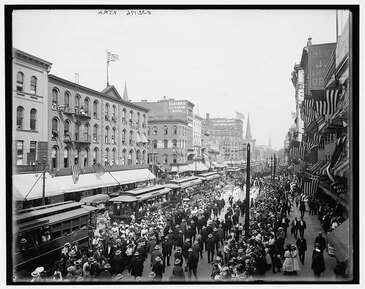
It's Labor Day weekend in the United States and elsewhere, and festivities of all sorts are taking place. As our photo illustrates, such celebrations have been going on for a very long time, and that's a good thing, for honoring the work of the regular guy is an important thing to do.
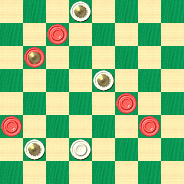
We'll join in ourselves by giving you a special Labor Day checker problem. After all, the regular working guy has his very own mind sport: checkers! Here's the problem:
WHITE
White to Play and Draw
W:W26,K25,K15,K2:B24,21,19,K9,6.
White is a man down, but there is a very workmanlike draw available--- if you can find it. Labor away, and then stop for a break; clicking on Read More will take you to the very pleasing solution.
You can email the Webmaster with your comments on this article.
A Plethora of Names
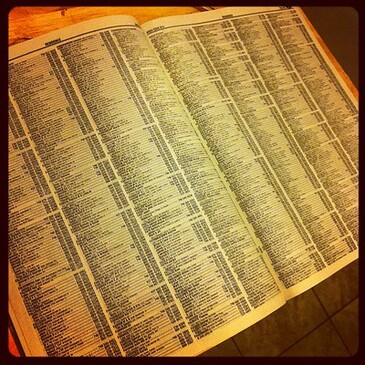
Today, as we present another offering in our Checker School series, you might think we're asking you to memorize the telephone book instead of learning something about checkers. Ben Boland, in his solution to the problem below, seemed intent on including the names of as many top checkerists as would fit on the page.
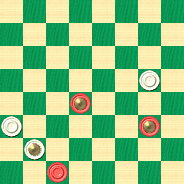
It's all to the good, though, as we'll see several additional settings of the theme along with a sample game and explanatory notes. But first, we ought to look at the diagram:
WHITE
BLACK
Black to Play and Win
B:W17,12,K8:BK15,K9,3.
The position is attributed to F. Allen, though as we'll see, plenty of other checkerists get a mention.
Can you name the winning moves? In any event, clicking on Read More will bring you to the full directory.
You can email the Webmaster with your comments on this article.
A Crowd Scene
Rawpixel CC0
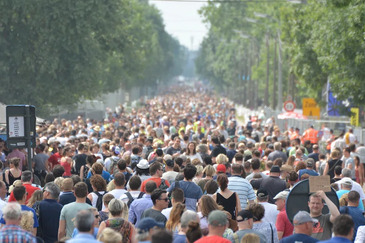
We must admit that we're not all that fond of crowds (leaving aside baseball games, of course), preferring the tranquil solitude of the prairie, the desert, or the open sea. But at times, it's just impossible to avoid jostling with massed humanity as we go about our business in one urban environment or another.
Today's problem presents us with a crowd scene of a different sort, as we view a checkerboard situation where the White forces are a full three men up on the Black side, yet a win seems elusive. This unexpected turn of events is due to some severe single-corner crowding, where a lone Black king is holding three White pieces completely at bay.
Here's the position:
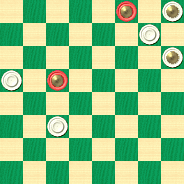
WHITE
White to Play and Win
W:WK4,8,K12,13,22:BK3,K14.
White doesn't seem to have a single decent move, yet the game can still be won, though it's every bit as difficult as making your way along Kalakaua Avenue on a Saturday evening.
Try to solve the problem, but if your thoughts become overcrowded, relieve the congestion by clicking on Read More to see the solution.
You can email the Webmaster with your comments on this article.
Fine Summer Days

Pexels CC0
This time of year it is our wont to observe that in the Northern Hemisphere the days are long and hot, and folks are out enjoying summer. So our August speed problems this time are most definitely on the easy side, and solving them won't cut into your pool or picnic time.
In fact, just to be sure that you have plenty of time for the summer pursuits of your choice, we're setting the time limit for these problems to a mere ten seconds. Don't blink twice, you may be too late! Click on the links below to show the problems and start the clock on your ten second solving time.
August Speed Problem One (very easy)
August Speed Problem Two (very easy)
Check your solutions by clicking on Read More, and then go back to your enjoyment of a fine summer day.
Editor's Note: To our friends in the Southern Hemisphere, who are mired in the depths of winter, we can only point out that in less than six months the tables will be turned.
[Read More]You can email the Webmaster with your comments on this article.
Sturges the Great
Joshua Sturges was one of the early great teachers in the world of draughts; he published his "Guide to the Game of Draughts" in London, in 1800, and for nearly half a century it was the draughts primer. Even to this day, online bookseller Amazon lists the title in their catalog as Joshua Sturges's guide to the game of draughts: In which the theory and practice of that scientific recreation are clearly illustrated including one hundred and seventy-two critical positions. They list the date as 1881, for some reason (there were apparently numerous later editions and reprints), and note that the title is not currently available, and is not expected back in stock!
Information on Mr. Sturges isn't all that easy to come by, but we did find this historical record of a London jury that convened in July, 1801.
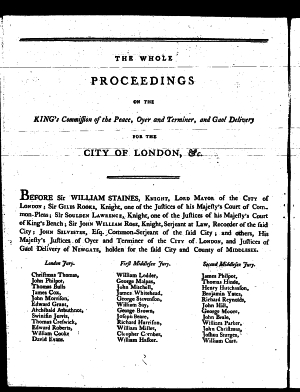
In the listing of jury members, a Joshua Sturges is shown as a member of the "Second Middlesex Jury." We don't know if this is the same Mr. Sturges of draughts fame, but given the date and location, it is certainly quite possible.
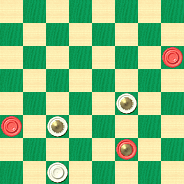
But today, in our continuing Checker School series, we're asking you to be both judge and jury of the following Sturges "situation."
BLACK
WHITE
White to Play and Win
W:WK19,K22,30:B12,21,K27.
Certainly, White is better off here, but demonstrating the win makes all the difference, and it will certainly require care and attention.
Weigh the evidence and come up with the verdict: can you prove that White wins or will there be a hung jury? After you've given it your best effort, click on Read More to see the solution, notes, and several example games, as provided by Ben Boland.
You can email the Webmaster with your comments on this article.
Bastille Day Fireworks
PICRYL CC0
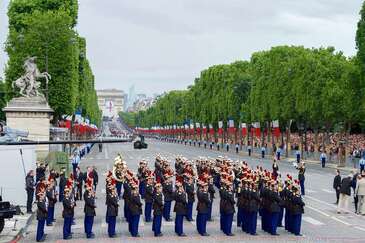
The publication date of today's article is July 14, which is the French national holiday, most popularly known here in the US as Bastille Day. The French certainly know how to throw a party, and music, dancing, liberally quaffed libations, parades, and much more take place throughout the country starting the evening of July 13 and continuing all through the next day. Capping it all off, of course, are spectacular displays of feu d'artifice--- fireworks.
We wanted to publish a French problem to celebrate the occasion, but high-level checkers as played in France is almost exclusively the international game, played on a 10x10 board with rules that differ in substantial ways from the Anglo-American game about which we write here. So instead, we're offering our own feu d'artifice display, featuring spectacular fireworks on the checker board. Here's the position, as composed by problemist T. Duncan.
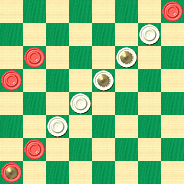
WHITE
White to Play and Win
W:W8,K11,K15,18,22:B4,9,13,25,K29.
With a setup such as this, you just know something extraordinary is about to happen. Can you work it out?
There's no need to explode, of course; clicking on Read More will rocket you to the crowd-pleasing solution.
You can email the Webmaster with your comments on this article.
An Interesting Combination
Albuquerque, New Mexico, is perhaps an hour's drive south on Interstate 25 from our Santa Fe offices. We go there frequently, and with our eye for the unusual, we've spotted some rather unique combinations during our visits.
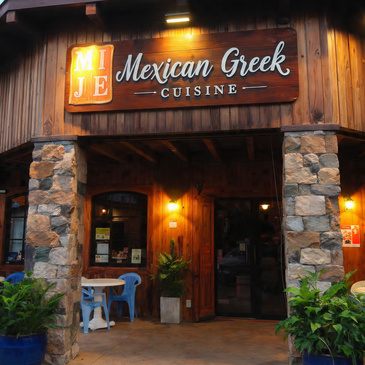
Where else will you find a Mexican-Greek restaurant?
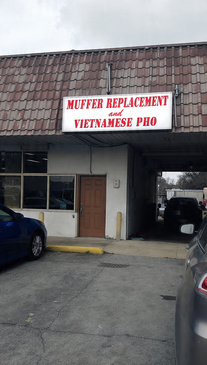
Or a muffler repair shop that also houses a Vietnamese lunch counter?
(Note: Not actual images of the referenced locations.)
It's not possible to top either of these eclectic melanges, but our checker problem today is a combination of a different sort.
For the sake of variety, on the first Saturday of each month we've alternated between speed problems and stroke problems. This time, we present a single problem that has aspects of both: you'll need to find the winning stroke in a rather short amount of time. The problem is fairly easy, and we think fifteen seconds should leave you with time to spare.
Of course, we're as infamous for our diabolical notion of "easy" as our Javascript clock is infamous for its unforgiving nature. But in any case, combine speed, clear thinking, and accurate play to solve this month's speed/stroke problem.
When you've worked it all out, click on Read More for the very pleasing solution paired with the actual game from which the position arose. Though we can't offer you tacos, gyros, a new muffler, or Vietnamese noodle soup, we do think you'll enjoy today's problem.
You can email the Webmaster with your comments on this article.
The Checker Maven is produced at editorial offices in Honolulu, Hawai`i, as a completely non-commercial public service from which no income is obtained or sought. Original material is Copyright © 2004-2026 Avi Gobbler Publishing. Other material is public domain, AI generated, as attributed, or licensed under CC1, CC2, CC3 or CC4 and the various CC options. Information presented on this site is offered as-is, at no cost, and bears no express or implied warranty as to accuracy or usability. You agree that you use such information entirely at your own risk. No liabilities of any kind under any legal theory whatsoever are accepted. The Checker Maven is dedicated to the memory of Mr. Bob Newell, Sr.