The Checker Maven
The World's Most Widely Read Checkers and Draughts Publication
Bob Newell, Editor-in-Chief
Published every Saturday morning in Honolulu, Hawai`i
21st Century Checkers: The 11-15s
The Checker Maven is proud and privileged to present the fifth volume in Richard Pask's groundbreaking 21st Century Checkers series, The 11-15s. You can download it in PDF format here, or on the Richard Pask page as linked in the right-hand column. Mr. Pask continues to generously offer his work free of charge.
Mr. Pask's series on the three-move ballots is sure to be the definitive reference for years to come and no serious player should be without it.
Volumes 6 and 7, on the 11-16s and 12-16s, are in the works. Mr. Pask has told us that his objective is to have completed the series by some time in mid-2015. We wish him continued good health after his wonderful recovery from some serious issues in the past year.
If you plan on printing this new book, keep in mind that it makes extensive use of color and so printing at a commercial shop could be much more costly than printing on an ink-jet at home.
As a preview, here's an interesting run-up from the 11-15 23-18 9-14 ballot.
| 1. | 11-15 | 23-18 |
| 2. | 9-14 | 18-11 |
| 3. | 8-15 | 22-18 |
| 4. | 15-22 | 25-9 |
| 5. | 5-14 | 29-25 |
| 6. | 4-8 | 25-22 |
| 7. | 8-11 | 27-23 |
| 8. | 11-15 | 24-20 |
| 9. | 6-9 | 31-27 |
| 10. | 7-11 | 28-24 |
| 11. | 9-13 | 23-18 |
| 12. | 14-23 | 27-18 |
| 13. | 12-16 | 18-14 |
| 14. | 10-17 | 21-14 |
Through some transpositions the play is still in the KingsRow opening book.
| 15. | 2-6 |
Loses; 16-19 was best.
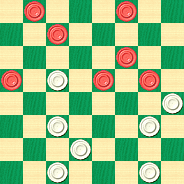
WHITE
White to Play and Win
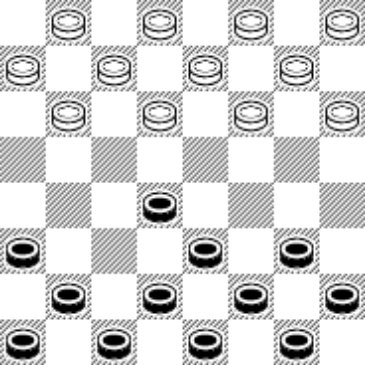
W:W32,30,26,24,22,20,14:B16,15,13,11,6,3,1.
Here Mr. Pask points out a subtle move that secures the White win. Can you find it on your own? Match wits with this eminent British grandmaster and see if you can find the sequence of moves that brings White the victory. When you're done, click on Read More to see the solution.
You can email the Webmaster with your comments on this article.
Famous Shots VII

Pexels CC0
We continue our series of Famous Shots from Ben Boland's Famous Positions in the Game of Checkers with a fireworks-filled position. Here's the run-up, with notes.
12-16 21-17 16-20 17-13 10-14---A 23-19---B 14-17 19-16 17-21---C 16-12---D 11-16---E 22-18 8-11 25-22 7-10 26-23 10-14---F 24-19 14-17 31-26 4-8 19-15---G
A---Looks natural but 11-15 would be better.
B---24-19 would have kept the advantage.
C---Gives a slight edge to White. 11-15 was correct here.
D---22-18 would have kept the small lead for White.
E---Gives White an edge again. 11-15 is still the move to make.
F---This move leads to a probable Black loss; 10-15 would have been correct.
G---A serious mistake. With 28-14 White should go on to win. Now Black wins.
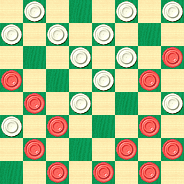
BLACK
Black to Play and Win
B:W32,30,29,28,27,26,23,22,18,15,13,12:B21,20,17,16,11,9,8,6,5,3,2,1.
As usual, we're asking you to solve the problem, name the shot, and also name the "shot" pictured at the top of the article. There are two different solutions to the problem, one as originally published, and one found by the computer. Can you find one of the them? Click on Read More when you're ready to check your solution.
You can email the Webmaster with your comments on this article.
May Stroke
NARA & DVIDS CC0
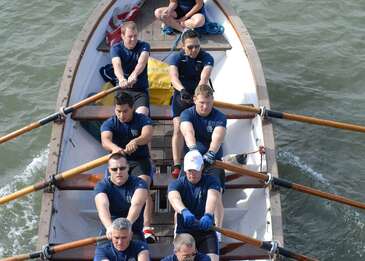
After so many years of publication, we're out of "stroke" puns and find it necessary to do repeats. But the photo above is definitely a harbinger of spring and summer; rowing crews out on the water, enjoying outdoor activity, perhaps after a long winter.
Today's problem is relatively easy and is set with only four pieces per side; it's a little more practical than the more complex, artificial stroke problems.
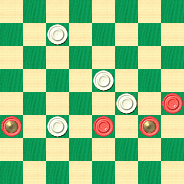
WHITE
White to Play and Win
W:W22,19,15,6:BK24,23,K21,20.
Solve this one from the diagram, if you can, for great practice in visualization. Then click on Read More to verify your solution.
You can email the Webmaster with your comments on this article.
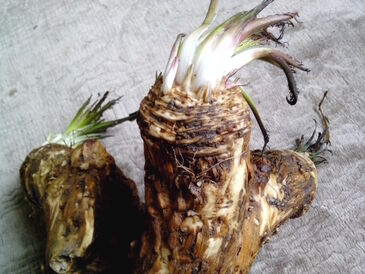
Horse-Radish
Pixnio CC0
Horseradish, of course, is a well known condiment, with a sharp taste and sinus-clearing effect. It's often enjoyed with prime rib of beef, on hot dogs, and in numerous other ways. It's not to everyone's taste; you either love it or you don't.
Horse-radish, in checkers (note the hyphenation) is an older term not much heard today that refers to moves that are sharp, like horseradish, but not to everyone's taste, because they are usually unsound or at least questionable in theory. They're all about over the board play; a horse-radish move, even if inferior, may be hard to refute on the spot if you're not familiar with the line.
You won't be surprised to hear that Willie Ryan was a fan of horse-radish, and the following problem comes from a horse-radish line in one of his earliest books.
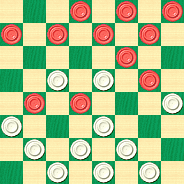
WHITE
White to Play and Win
W:W14,15,20,21,23,25,26,27,30,31,32:B2,3,4,5,6,7,8,11,16,17,18.
Is this sort of thing to your taste, or is it a little too sharp? Does it clear your thinking? Give it a taste, and then click on Read More to see the solution.
You can email the Webmaster with your comments on this article.
A Bristol Broadside
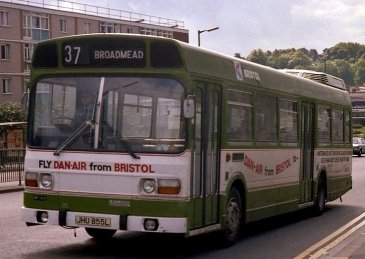
The word "broadside" carries various meanings, and perhaps the one that comes to mind at first is the "broadside" fired by the cannons on warships of a bygone day. Cannons were arranged on the sides of the ship, and having all of them fire a more or less simultaneous volley made for a powerful attack.
But there's another meaning. British photographer Stephen Dowle notes that advertising on the side and front of a bus, as illustrated above, is often called a "broadside"; hence, the photo is titled "Bristol Broadside."
Our presentation of Willie Ryan's Tricks Traps & Shots of the Checkerboard continues with an exposition on the 11-16 Bristol opening, presented in four parts due to its length. To say that this first part is explosive and spectacular is almost an understatement. Certainly Willie was thinking of cannons and not buses.
Here's Willie's run-up and notes. Additional variations will appear in future columns.
| 11-16 | 26-23---H | 9-13 | 16-11 | 14-17 |
| 24-20 | 19-26 | 22-18 | 6-10 | 32-27 |
| 16-19 | 30-7 | 14-23 | 11-7 | 17-22 |
| 23-16 | 2-18 | 27-18 | 22-25 | 27-23 |
| 12-19 | 28-24 | 13-17 | 7-2 | 25-30; |
| 22-18 | 9-14 | 21-14 | 1-5 | drawn. |
| 10-14---A | 24-19 | 8-11 | 2-6 | Campbell |
| 18-15---B | 5-9 | 16-7 | 10-14 | vs. Reid |
| 7-10---E,1 | 25-22 | 3-17 | 18-9 | |
| 20-16---F,2 | 18-25 | 19-16 | 5-14 | |
| 14-18---G,3 | 29-22 | 17-22 | 6-10 |
A---"The text was a long-standing favorite with that renowned celebrity of the draughts world, James Wyllie. It was also popular with many other stars of the Andersonian firmament. Although it has gained only negligible favor with the modern exponents of the go-as-you-please school, one is certain to regard the line with increasing respect as its ramifications are mastered.
B---In a title game between two world's champions, Richard Jordan and James Ferrie, the former attempted 27-23 here. The game proceeded 8-12, 23-16, 12-19, 18-15, 4-8, 25-22, 9-13, 32-27, 5-9, 29-25---C, 7-11, 27-24,11-18, 24-15---D, 2-7, 20-16, 7-11, 16-7, 3-19, 22-15, 14-18, 26-23, 18-27, 31-24, 9-14, 24-20, 14-18, 20-16, 8-12, 16-11, 19-23, 11-7, 23-27, 7-3 (30-26, 27-31, 26-22 should develop a draw), 27-31, 28-24, 31-27, 24-20, 18-23, 15-11, 6-10, 3-7, 12-16, 7-14, 23-26, 30-23, 27-9, 11-7, 16-19, 7-3, 9-14, 3-7, 14-18, and Ferrie won. Considering the usually high caliber of Mr. Jordan's play, this one stands out on the record as one of his worst examples. Time and again he displayed a remarkably dull grasp of the involved positional structures.
C---15-11, 8-15, 27-23, 1-5, 23-16, 14-17, 21-14, 9-25, 29-22, 7-11, 16-7, 2-11, 30-25, 6-10, 25-21, 5-9, 22-17, etc. would be a much easier way for white to play for the draw. Wm. F. Ryan.
D---This seems to be about the spot where the Great Jordan fell into error. A draw after 24-15 is difficult to reach. The alternative jump gains the draw easily with: 22-15, 3-7*, 20-16, 7-11, 16-7, 2-18, 24-15, 6-10*, 15-6, 1-10, 28-24*, 8-11 (10-15, 31-27, 8-11, 26-23), 24-19*, 18-22, 25-18, 14-23, 19-16, etc. Wm. F. Ryan.
E---The line of play initiated at A is usually associated with this follow-up, although black can safely adopt other moves, as depicted in Variation 1. The student should bear in mind that the strategical advantage in adopting a dormant line of play, such as the one begun at A, is twofold: first, it may throw the adversary off lines of play he is most likely to know; second, it gains the initiative and efficiency that go with employing a well-prepared plan of attack. It has been proved time and again that a player who takes a weak line of play and knows it thoroughly will win more games than the one who adopts a standard procedure of play without knowing how to carry it through.
F---To the player handling the white pieces, this is an important waiting move, as it simplifies the formational structure by thwarting any attempt by black to secure tenable complications. See Variation 2 for 25-22 here.
G---Just about all that black has left. For play on 9-13, see Variation 3. Alfred Jordan tried 2-7 here in a title match duel with Melvin Pomeroy and finished on the rocks by 16-12, 14-18, 21-17*, 9-14, 17-13, 5-9, 27-24, 7-11, 26-22, 19-23, 31-27, 10-19, 24-15, 14-17, 27-24, 17-26, 15-10, 6-15, 13-6, 1-10, 32-27, 23-32, 30-7, 3-10, 12-3, 11-16, 24-20, 16-19, 3-7, 10-14, 25-22, 14-18, 7-11, 18-25, 29-22, 19-23, 11-27, 32-23, 28-24, 23-26, 22-18, 26-23, 18-14, 23-18, 14-10, 4-8, 10-7, 18-15, 7-3, 8-12, 3-8, 15-18, 24-19; white wins.
H---White must accept the clearance or drift into a ragged formation. If 27-24 is played, then black wins with:" (See solution---Ed.)
1,2,3---To be presented in subsequent Tricks Traps & Shots installments---Ed.
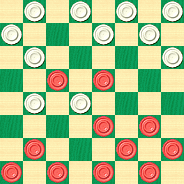
BLACK
Black to Play and Win
B:W32,31,30,29,28,26,25,24,21,16,15:B19,18,10,9,8,6,5,4,3,2,1.
The computer rates this one as a strong Black advantage and a probable win, but it's not so easy. Fire away at it; give it your best volley, and when you've done your best, click on Read More to see both Willie's solution and the computer's notes.
You can email the Webmaster with your comments on this article.
Famous Shots VI
We continue our Checker School series on famous shots in the game of checkers. These are positions that all experts should know and all aspiring players should learn. Here's the run-up for this month's installment.
11-15 24-19 15-24 28-19 9-14 22-18 5-9 26-22 7-11 27-24 3-7 22-17 11-15 18-11 8-15 25-22 9-13 23-18---A 14-23 17-14 10-26 19-3
A---This seemingly natural move loses. 22-18 is correct.
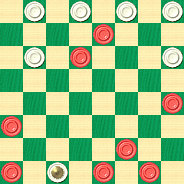
BLACK
Black to Play and Win
B:W32,31,30,29,24,21,K3:B26,23,13,12,6,4,2,1.
Find the solution (for once, it's not too difficult), name the shot, and if you wish, name the shot in the photo at the top. Clicking on Read More will take you to the solutions, even though the drinks are on you.
You can email the Webmaster with your comments on this article.
Is It Spring Yet?

Public Domain Pictures CC0
Technically, it's already spring in the Northern Hemisphere, as the vernal equinox always arrives in March. Whether or not it's warmed up in your location is something else, and since these columns are written some weeks in advance, we really can't say. Hopefully, the long winter is coming to an end for most North Americans. (If you're in the Southern Hemisphere, we realize you're moving into winter, and we can only hope on your behalf that it will be a mild one.)
To herald the arrival of spring, we have an easy speed problem that will entertain without baffling.
April Speed Problem (Easy; 10 seconds)
When you've warmed to the answer, warm up your mouse by clicking on Read More to check your solution.
You can email the Webmaster with your comments on this article.
A Little Mischief
Rawpixels CC0
We owe today's problem to a certain L. L. Granger, who published it as Prize Problem No. 4 in The Canadian Checker Player nearly a century ago. He called the problem "A Little Mischief" but it turned out to be rather a lot of mischief.
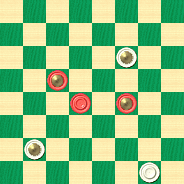
WHITE
White to Play, What Result?
W:B18,K14,K19:W32,K11,K25.
Black has a mobile, centralized position. Is it enough to win, or can White draw? That's the real question here. These "What result?" problems are a breed of mischief all their own.
How much mischief are you up to? The problem isn't easy; prize problems seldom are. Give it a try, and then click on Read More to see the original solution and modern computer analysis.
You can email the Webmaster with your comments on this article.
Uncle Ben's Porch: The Checker Maven
Public Domain
It goes without saying that Uncle Ben and his protegé, Tommy Wagner, were avid readers of the weekly internet checker column, The Checker Maven. So when Uncle Ben saw the recent Checker Maven column called Hobson's Choice, he realized that it related to a game that Tommy played recently in a match in his middle school checker league. Tommy missed a win in that contest and had been kicking himself about it ever since.
Tommy was on Uncle Ben's front porch for his weekly checker lesson from the retired master. Uncle Ben was proud of Tommy's achievements and knew that Tommy had the potential to go on to great things, perhaps even making it one day to a team in the National Checker League.
"Tommy," Uncle Ben said, "I think it's time for you to get past that missed win against Tallahassee a couple of weeks ago."
"I know, Uncle Ben," Tommy said, "but I feel like I let my teammates down. I should have won..."
"The best way to make it up is to study that weakness in your game and eliminate it. The best players make strengths out of weaknesses, and that goes for many things in life. If you have a weak point, work so hard at it that it becomes a strong point instead."
"How can I do that, Uncle Ben?" Tommy asked. "It just seemed to have gotten away from me..."
Uncle Ben smiled. "I've put together a series of positions," he said. "If you work through them, I guarantee that you'll never miss a win on this theme again. It might take a little while, so if you're willing, I'll let your mother know that you'll be home later than usual. I can make us some lunch and we can study until, say, mid-afternoon. What do you say?"
The one thing that Tommy liked as much as Uncle Ben's checker instruction was his lunches. And, of course, his homemade lemonade. "Sure thing, Uncle Ben, if you're willing to spend the time, I'm ready!"
Pexels CC0
Uncle Ben knew Tommy well. "Good, then, take a look at this position while I get us some lemonade." He winked at Tommy and went inside to the kitchen.
Here's the situation that faced Tommy, and it looked a lot like that Wednesday afternoon in Tallahassee. Tommy gave an involuntary shudder, but then he shook it off and got to work.
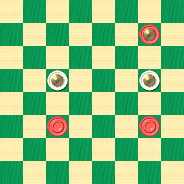
BLACK
Black to Play and Win
B:B9,11,K25:WK17,K19.
Can you earn your lemonade by solving this problem? We think you can, and when you're done, you can click on Read More to see the solution, a sample game, and no less than seventeen examples based on this theme. (You'll have to supply your own lemonade.)
You can email the Webmaster with your comments on this article.
Mitchell's Miracle

Albert Einstein once said, "There are only two ways to live your life. One is as though nothing is a miracle The other is as though everything is a miracle."
But a miracle in checkers? Well, this month we present Mitchell's Miracle, the second part of The Champion's Choice, which we began in last month's Tricks Traps & Shots of the Checkerboard installment. Please see there for the run-up to Variation 2, which begins from the diagram just below. Willie Ryan is here to tell us more. It can be a little confusing, so if you get lost, just go down to the bottom of this article to see the problem diagram.
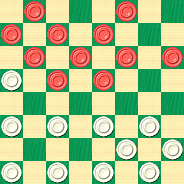
WHITE
White to Play
W:W32,31,30,29,28,27,24,23,22,21,13:B15,14,12,11,10,9,7,6,5,3,1.
Variation 2
| 23-19---A | 23-14 | 30-23 | 20-16 | 11-7 |
| 14-17 | 9-25 | 9-14 | 17-22 | 31-26 |
| 21-14 | 29-22 | 23-19 | 15-11 | 7-2; |
| 10-26 | 12-16 | 15-24 | 22-26 | drawn. |
| 19-10* | 24-20 | 28-19 | 16-12 | Wm. F. |
| 7-14 | 16-19 | 1-5---C | 26-31 | Ryan. |
| 31-22* | 32-27 | 19-15 | 18-15 | |
| 11-15 | 5-9 | 14-17 | 9-14 | |
| 27-23* | 27-23 | 22-18 | 12-8 | |
| 14-18 | 19-26 | 5-9 | 3-12 |
A---The best that white can hope for after this move is a problematical draw---1. If white attempts 31-26 here, then 14-18, 23-14, 9-25, 29-22, 11-16, 24-20, 16-19 will leave black with a winning game. Another plausible try at A is 22-17. Black's strongest reply to this move is 14-18, 23-14, 9-18, which leaves white confronted with the critical situation shown on the diagram. I published play on this position a few years ago, claiming a black win against any defense adopted by white, but a problematical draw was found as follows. (See solution---Ed.)
C---Black can prolong the game by forcing white into a bridge ending like this: 14-17, 22-18, 17-22, 18-14, 22-26, 14-9, 6-10, 9-6, 10-14, 6-2, 14-17, 13-9, 17-21 (to stop the pitch by 9-6 next), 19-15, 26-31, 15-10, 31-26, 2-7, 26-22, 9-6, 22-18, and white having the move, can draw the ending."
1---The computer finds this move to be about as good as 23-18---Ed.
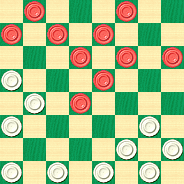
WHITE
White to Play and Draw
W:W32,31,30,29,28,27,24,21,17,13:B18,15,12,11,10,7,6,5,3,1.
This one is not easy, though we won't go so far to say that it would be a miracle if you solve it. No doubt some of you will work it out; you're a rather astute group, after all. Do try it and then click on Read More to enjoy the truly miraculous solution.
You can email the Webmaster with your comments on this article.
The Checker Maven is produced at editorial offices in Honolulu, Hawai`i, as a completely non-commercial public service from which no income is obtained or sought. Original material is Copyright © 2004-2026 Avi Gobbler Publishing. Other material is public domain, AI generated, as attributed, or licensed under CC1, CC2, CC3 or CC4 and the various CC options. Information presented on this site is offered as-is, at no cost, and bears no express or implied warranty as to accuracy or usability. You agree that you use such information entirely at your own risk. No liabilities of any kind under any legal theory whatsoever are accepted. The Checker Maven is dedicated to the memory of Mr. Bob Newell, Sr.