The Checker Maven
Jump to navigationThe Champions' Choice
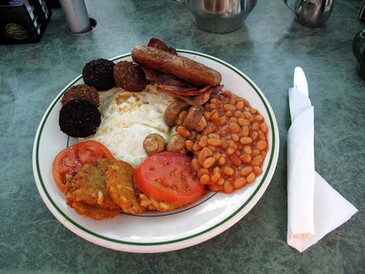
The photo above is of what's known as a "full English breakfast" or often "a heart attack on a plate." The photographer (credited above) calls it "the breakfast of champions" although that's a trademarked slogan of General Mills; however it's also the title of a novel by Kurt Vonnegut.
We won't get into the complexities of intellectual property law here, but Willie Ryan's use of the term "Champion's Choice" to describe today's checker study certainly doesn't conflict with the aforementioned trademark. Of course we have no doubt that many checkerists consume the cereal which is the subject of the trademark, but that's merely by the way.
As we've mentioned before, the last installments of Willie Ryan's Tricks Traps & Shots of the Checkerboard are pretty long and complex. We've broken today's study into two parts. We'll present the second part in our next regular installment.
The study looks at the Cross Choice opening and it's fascinating to say the least. Let's let Willie tell us more.
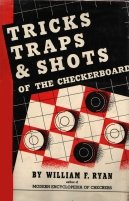
"The Cross Choice opening, formed by 11-15, 23-18, 9-14, has long been a favorite battleground of the champions, and some of the most spectacular wins on the record have been scored on it. The following analytical study of this colorful debut bristles with brilliant play and unusual combinations:
| 11-15 | 17-13 | 7-10 |
| 23-18 | 2-6---C | 21-17*---F3 |
| 9-14 | 23-18*---D,2 | 16-19 |
| 18-11 | 14-23 | 29-25---G |
| 8-15 | 27-18 | 19-24---H |
| 22-17 | 10-14---E | 28-19 |
| 4-8 | 31-27*---F | 15-24 |
| 25-22 | 14-23 | 25-21* |
| 8-11---A,1 | 27-18 | 3-8---I, |
| 26-23---B | 12-16---F1 | to the |
| 6-9 | 24-20---F2 | diagram |
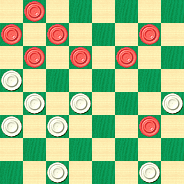
WHITE
White to Play and Draw
W:W32,30,22,21,20,18,17,13:B24,11,10,9,8,6,5,1.
A---7-11 is also good, as shown in Variation 1.
B---As played by Champions Rubin and Hunt. In view of the improved attack innovated at C, this 26-23 move will henceforth occupy a lower rating among the master minds. Probably the best move here for a draw is---B1: 17-13, 11-16, 22-17, 16-20 (16-19, 29-25, 7-11, 24-20, 2-7, 27-24, may be used as a plausible alternative), 26-23, 7-11, 29-25, 3-7, 24-19 (23-19, 5-9, 25-22, 14-18, 17-14, 18-25, 14-5, 25-29, 21-17, 11-16, 17-14, 16-23, 27-11, 20-27, 32-23, 7-16, 14-7, 2-11, 31-26, 11-15, 23-19, etc. produces the draw), 15-24, 28-19, 11-15, 32-28, 15-24, 28-19, 7-11, 31-26*, 11-15, 19-16, 12-19, 23-16, 15-19, 26-23, 19-26, 30-23, 10-15, 17-10, 15-19,10-7, 19-26, 27-23, 2-11, 16-7, 26-31, 23-19, 31-26, 19-16, 26-23, 25-22. Sam Levy, Manchester, England, 1937.
B1---The computer thinks 7-11 and 8-11 are about equally good and finds 17-13 to be a lesser choice---Ed.
C---Inaugurates a baffling attack, suggested to me by John T. Bradford. It improves upon the combination of: 14-17, 13-6, 17-26, 31-22, 2-9, 23-19 (used by Edwin F. Hunt, Nathan Rubin, and Asa Long in games played by them), which leaves black with a draw at best and no chance of winning. This 2-6 puts muscle in the black build-up and promptly takes the snapper out of white's formation. If black tries 1-6 at C, then we have a familiar Denny development, strong for white, which runs its course like this to a draw: 1-6, 23-19, 14-17, 21-14, 9-25, 29-22, 5-9, 27-23, 9-14, 24-20, 15-24, 28-19, 14-17, 31-26, 11-15, 32-28, 15-24, 28-19, 7-11, 22-18, 3-7,19-16,12-19,23-16, 6-9,13-6,2-9,16-12,17-21,12-8,10-15, 26-22, 7-10, 20-16, 11-20, 18-11, 10-15, 8-3, 15-19, 3-7, 19-23, 7-10, 23-27, 10-15, 20-24, 15-18, 9-13*, 11-7, 27-31, 7-2, 24-28, 2-7, 28-32, 7-10, 31-27. Wm. F. Ryan vs. Jesse B. Hanson, 1927.
D---The key to the situation, cramping mobility of the black pieces on squares 1, 5, 6, and 9. A good draw by any other move is hard to find, and even the text must be followed through by the subtle touches at J. For play on 23-19 at this point, see Variation 2---an exposition in hairline draughts! Ed.'s note: Variation 2 will be published next month.
E---This press is obviously the only move to gain a draw. If 12-16 is played, 24-20 wins.
F---31-26, 14-23, 26-10, 7-14, 29-25, 12-16, 32-27 or 30-26, then 11-15 leaves white irreparably impaired.
F1---The end of the KingsRow opening book, with an equal evaluation---Ed.
F2---It takes some deep computer analysis to reveal that 32-27 is the best move here, though any Black edge is tiny indeed---Ed.
F3---Willie stars this move, but 32-27 also is good---Ed.
G---The shot by 17-14, 10-26, 30-7, 15-22, 7-2, 22-26, leaves black with much the better ending, though a win would be hard to prove. The strength of the black ending rests in ultimately relieving the four man tie-up of his pieces on 1, 5, 6, and 9. This is accomplished by crowning the piece on 22, returning the king to square 18, and then conditionally "slipping" 9-14, 2-9, 14-17, thus removing the white king on square 2 from play. On such "ideas" and tactical threats is the game of checkers based. The more knowledge a student acquires of these principles of play, and the more adept he is in knowing when and how to threaten with the proper plan for a particular setup, the greater is his skill. The proficient planner makes the player.
H---Or 19-23, 28-24 (better than 20-16, 11-20, 18-11, 9-14, 25-21, 5-9, black strong), 3-8, 20-16, 11-27, 18-4, 27-31, 4-8, 31-27, 8-11, 27-24, 11-8 will also reach a draw. Wm. F. Ryan.
I---24-28, 30-26, 3-8, 17-14, 10-17, 21-14, 8-12, 22-17, 11-15, 18-11, 9-18,11-7,18-22, 26-23, 22-26, 23-18, 26-30,18-14, 30-25, 7-2, 25-22, 2-9, 22-18, 32-27, 28-32, 27-23, 18-27, 9-6 produces the draw. Wm. F. Ryan.
J---The timely rescue for white.
Variation 1
| 7-11 | 22-17 | 10-17 | 25-22 | 11-16 |
| 29-25 | 3-7 | 21-14 | 12-16 | 2-7 |
| 12-16 | 31-27---A | 18-23 | 22-18 | 31-26; |
| 24-20 | 1-5---B | 20-16 | 16-19 | drawn. |
| 16-19 | 27-23 | 11-27 | 1-6 | Wm. F. |
| 27-24 | 14-18 | 28-24 | 2-9 | Ryan. |
| 5-9 | 23-14---C | 19-28 | 13-6 | |
| 17-13 | 9-18 | 26-1 | 7-11 | |
| 8-12 | 17-14 | 27-31 | 6-2 |
A---White dares not go 32-27, since he will be stung by 19-23. However, white can travel safely to a draw with: 26-23, 19-26, 30-23, 1-5 (nothing better), 23-19*, 11-16, 20-11, 7-23, 24-19, 15-24,28-19,14-18,17-14,10-17, 21-14,2-7,19-15,12-16,15-11, 6-10, 11-2, 10-17, 13-6, 17-21, 2-7, 21-30, 7-11, 16-20, 31-26. Wm. F. Ryan.
B---If the play goes 11-16, 20-11, 7-16, 27-23, the breakup by 15-18 will promote a draw; but if the move is 2-7, white will reply with 32-27*, and black's position is perilous.
C---Or 23-16, 12-19, 17-14, 10-17, 21-14, 18-23, 14-10, 7-14, 20-16, 11-27, 28-24, 19-28, 26-1, 27-31, 13-6, 2-9, 1-6, 9-13, 25-22, 14-17, 22-18, 17-22, 18-14, 13-17, 6-9, 17-21, 9-13, also ending in a draw. John T. Bradford."
Ed.'s Note: Variation 2 will appear in the next installment.
Here's the diagram once again.
WHITE
White to Play and Draw
W:W32,30,22,21,20,18,17,13:B24,11,10,9,8,6,5,1.
Can you make the champion's choices here and solve the problem? Will you be a champ or a chump? We think if you give it a good try, you're a champ no matter. When you've chosen your moves, click on Read More to see the solution.
Solution
WHITE
White to Play and Draw
W:W32,30,22,21,20,18,17,13:B24,11,10,9,8,6,5,1.
"Continue from diagram:
| 17-14* | 20-16* | 3-7 | 11-16 | 28-24 |
| 10-26 | 15-22 | 10-15 | 19-23 | 23-26 |
| 30-23 | 16-7 | 7-11 | 16-19 | 21-17; |
| 6-10 | 1-10 | 15-19 | 22-26 | drawn. |
| 13-6 | 7-3 | 23-16 | 19-28 | Wm. F. |
| 10-15 | 8-12 | 12-19 | 26-30 | Ryan." |
The Checker Maven is produced at editorial offices in Honolulu, Hawai`i, as a completely non-commercial public service from which no income is obtained or sought. Original material is Copyright © 2004-2026 Avi Gobbler Publishing. Other material is public domain, AI generated, as attributed, or licensed under CC1, CC2, CC3 or CC4 and the various CC options. Information presented on this site is offered as-is, at no cost, and bears no express or implied warranty as to accuracy or usability. You agree that you use such information entirely at your own risk. No liabilities of any kind under any legal theory whatsoever are accepted. The Checker Maven is dedicated to the memory of Mr. Bob Newell, Sr.