The Checker Maven
The World's Most Widely Read Checkers and Draughts Publication
Bob Newell, Editor-in-Chief
Published every Saturday morning in Honolulu, Hawai`i
Sort Of

"Sort of" is a common two-word phrase in English. We're "sort of" tired or hungry. We "sort of" need to do homework, laundry, yard work, etc. And the best example of all: We're "sort of" interested in doing something or going somewhere.
We hope that all of us are more than "sort of" interested in checkers, though; and if we are, you'll find this "sort of" speed problem (pun intended), provided by regular contributors Lloyd and Josh Gordon, to be a good one.
WHITE
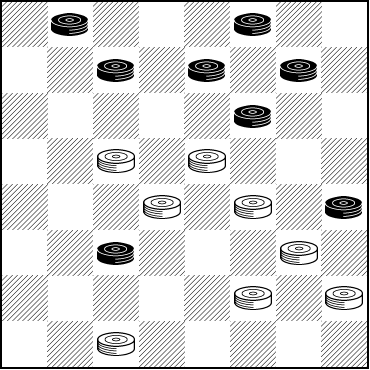
White to Play and Draw
W:W14,15,18,19,24,27,28,30:B1,3,6,7,8,11,20,22.
Why is this a "sort of" speed problem? The initial sequence is easy to find, but the follow-up play is a bit more complex, though certainly below the expert range. So don't "sort of" solve it; do it all the way, after which clicking on Read More will more than "sort of" show you the solution and explanatory notes.
You can email the Webmaster with your comments on this article.
Checker School: Second Session
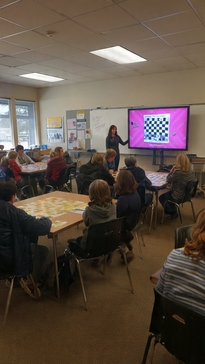
We've completed our first session of Checker School, which was a tour through Ben Boland's Famous Positions in the Game of Checkers. For our next session, we'll turn (at least at first) to an unusual book published by Andrew J. Banks in 1945, called Checker Board Strategy. Mr. Banks, who lived in Washington, D.C., evidently self-published his work.
The book is written in an entertaining style and features a number of fascinating fictional players. We'll get to meet them as the months roll by. Mr. Banks starts out with the rules of checkers (compiled by none other than William Ryan) and then continues with a brief games section that illustrates the basic openings. Next is a section he calls Snappy Problems (Gems) Today, we'll look at the first one and along the way make the acquaintance of Nemo and Skittle.
Nemo had been studying the foregoing games (in the Games Section--Ed.) when Skittle exclaimed, "You are learning checkers the hard way. You are like a tourist I saw in the State of Maine; he stoped a native and inquired 'How far is it to Portland?'"
"How far was it?" Nemo asked.
"The way the tourist was headed it was about 25,000 miles. The native told him that if he would turn around and go the other way it would be only about two."
"You be my guide; show me the quick way to learn the game," said Nemo.
"By solving problems you will be learning checkers the quick way."
Champion player Alex Moiseyev flatly states that beginners should not touch opening books until they have played a large number of games; many other checker greats stress the value of solving problems. So, the first "gem" or "snappy" problem proposed by Mr. Banks is this one, by G. M. Gibson.
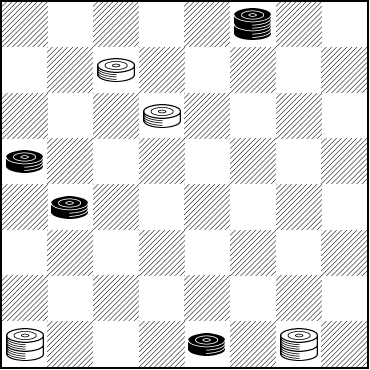
BLACK
Black to Play and Win
B:W27,23,K4,K1:BK30,20,16,2.
Can you solve the problem proposed to Nemo by our new friend Skittle? Make it snappy! Solve it and then snap your mouse on Read More to check your solution.
You can email the Webmaster with your comments on this article.
Bastille Day
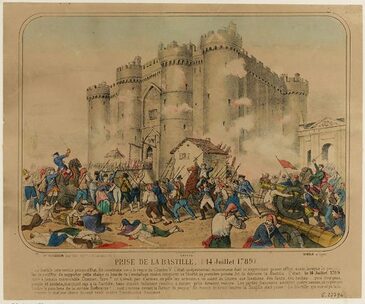
Look and Learn CC0
July 14 is the national holiday of France, generally known as Bastille Day. Popular wisdom is that the holiday commemorates the capture of the Bastille on July 14, 1789, during the revolution which brought down the French monarchy.
But we learn something every day. When we consulted the official French government website, we were told:
«Si le 14 juillet est généralement associé à la prise de la Bastille en 1789, c'est dans les faits le 14 juillet 1790, la fête de la Fédération, qui est officiellement commémoré en France.»
We'll bet you didn't know that, either.
Now, it seems that in honor of Bastille Day, we should present a problem by a French problemist, but in the 8x8 Anglo-American literature, we didn't find one that we could specifically attribute. However, Jean-Bernard Alemanni, in his excellent book "Les jeux de dames dans le monde" does present a couple of relevant demonstration positions. While these are surely not original compositions, the one we show below makes for an easy practice exercise.
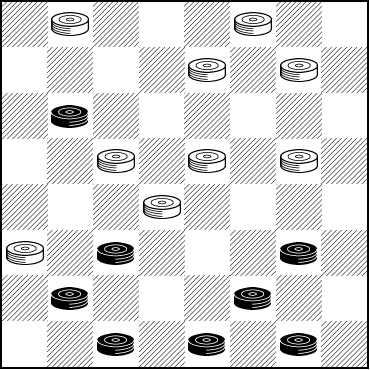
BLACK
Black to Play and Win
B:W12,15,17,18,19,25,26,30,32:B1,2,3,6,8,9,11,24.
Vite, vite! Trouvez la solution, and when you're done cliquez votre souris sur Read More to check your answer.
You can email the Webmaster with your comments on this article.
Friday the 13th
Paraskevidekatriaphobia. It's what fear of Friday the 13th is called in scientific language (actually, it derives primarily from Greek), and many people won't even go out of doors on that date. There are many ideas as to its origin, but it's a fear not universally held. In fact, in Cantonese speaking areas such as Hong Kong, 13 is considered a lucky, not unlucky, number--- so presumably Friday the 13th would be a lucky day.
Friday the 13th is coming up in the week following initial publication of this column; how will you greet the day?
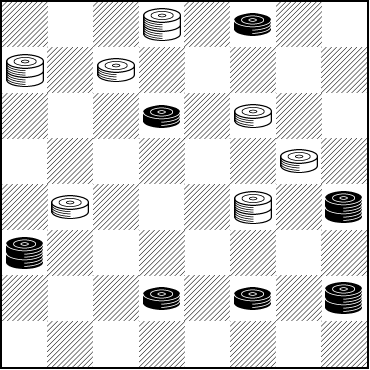
Unsurprisingly, we suggest greeting it with a thematically relevant checker problem such as the one below, composed by grandmaster problemist Ed Atkinson.
WHITE
White to Play and Win
W:WK2,K5,6,11,16,17,K19:B3,10,K20,K21,26,27,K28.
Will you be lucky or unlucky, or do you believe it's all a matter of skill? Try your luck, and then luck out by clicking on Read More to see the incredible solution.
You can email the Webmaster with your comments on this article.
4th of July Special
Public Domain Pictures CC0
When this column appears we'll be just a few days short of the 4th of July, America's birthday, and a holiday that The Checker Maven celebrates every year; for as we always say, we are unabashed patriots, proud to honor our nation on Independence Day.
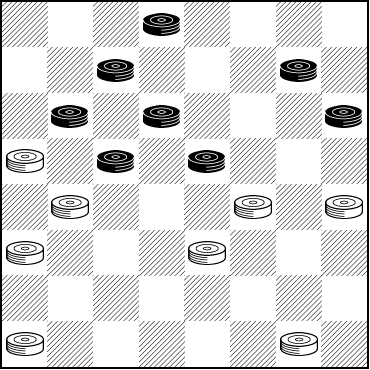
And--- as we do every year--- we turn to player, problemist and patriot Tom Wiswell, with another of his studies. He calls this one Harmony.
WHITE
White to Play and Draw
W:W13,17,19,20,21,23,29,32:B2,6,8,9,10,12,14,15.
Mr. Wiswell suggests that the pieces should work together to sing a harmonious tune. We agree; can you play the correct melody, without any flat notes? Try to solve it, then let your mouse sing (a patriotic tune) on Read More to see the solution and notes.
You can email the Webmaster with your comments on this article.
Novice Lesson
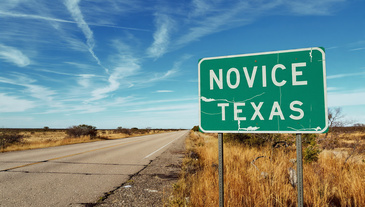
Not an actual representation
Yes, there is such a place. It's a small town in Texas, population not much over 100. How many of those residents, do you suppose, are checker players?
We can't really say, but we can say that in honor of the release of the print edition of Checkers for the Novice, today we're presenting something vital, yet which actually won't be very easy for novices. Experts, of course, should have no problem --- right?
3 kings vs. 2 kings seems like it ought to be an easy win, yet it in fact baffles many a player, even some players with a fair amount of experience with our game. Let's look at an example, in two different ways.
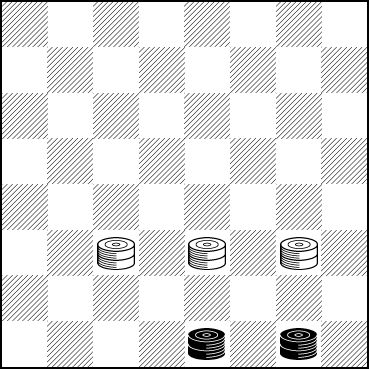
WHITE
Either to Play, White to Win
W:WK22,K23,K24:BK31,K32.
First, try this with White to play. How does White win it? If you're a top-level player, you'll see how to do it in just a few seconds --- right?
How about if Black plays first? Can you win with White? It's a little harder, but again an expert should solve it fairly quickly --- right?
We're teasing a little. Even most experts have to stop and think. 3 vs. 2 endings aren't easy, but they come up all the time and knowing how to win them is essential. Take as much time as you like and then click on Read More to see the solutions.
You can email the Webmaster with your comments on this article.
Strokes in June
In order to avoid reuse of the "golf stroke" pun, we've gone with a tennis stroke instead. The point is that winter in North America seemed especially tough this year (or at least so we hear[1]), and we'd bet that many of you are happy to be able to get out and make a few strokes on the tennis court or golf course.
But, as a checker fan, surely you'll come back in at the end of the day, and, perhaps after dinner, want to take on a checker stroke, one of those mind-bending fantasy problems that may not be practical but certainly provide great visualization practice. With that in mind, here's one that we would not call easy.
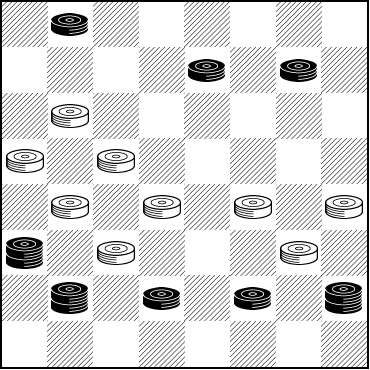
WHITE
White to Play and Win
W:W24,22,20,19,18,17,14,13,9:BK28,27,26,K25,K21,8,7,1.
Take a swing at this rather entertaining position, then swing your mouse over to Read More to see the solution.
[1] This year we did not have snow in Honolulu(!) although the temperature did get as cold as 62F/17C.
[Read More]You can email the Webmaster with your comments on this article.
The Engineer

Pexels CC0
Although your editor's degrees are in engineering, he's definitely not the kind of engineer shown above. Those engineers certainly earn a very nice living, and we suspect that quite a number of them play checkers while on the road.
Today's little problem was published decades ago by someone who simply called himself "The Engineer." We have no further information on who he might have been. Did he design bridges? Refine oil? Drive a train? Perhaps someone out there on the internet might know, but for now it remains an intriguing mystery.
His checker problem, though, won't stay a mystery for long.
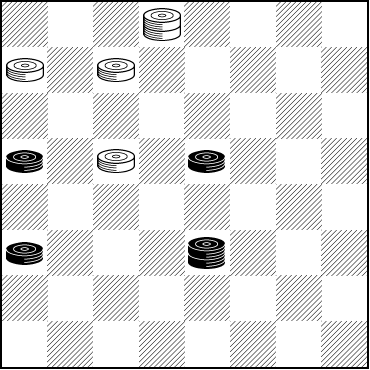
BLACK
Black to Play, What Result?
B:WK31,28,27,19:B20,18,12,K10.
Despite the sometimes unfair (and annoying!) "what result" terms, the problem is fairly easy if you take an engineering approach and do a little organized analysis. No slide rules required, just some orderly checker thinking. Do your calculations and then click on Read More to see the solution.
You can email the Webmaster with your comments on this article.
A Bit of a Break

Sometimes, it all gets to be a little too much, and we need a break. We're not sure what the poor young lady in the picture above is working on; could she perhaps be doing a manual transcription of the 10-piece endgame database?
Today we have a speed problem, provided by regular contributors Lloyd and Josh Gordon, that will give you a break in checker terms: it's definitely on the easy side. While some may disagree, we believe that easy problems have a clear purpose: to improve both sight-solving skills and speed of analysis.
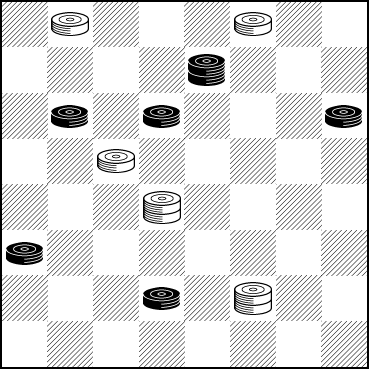
BLACK
Black to Play and Win
B:W32,30,19,K15,K6:BK26,24,23,21,12,7.
See how quickly you can solve this one, and then break over to Read More to verify your solution.
You can email the Webmaster with your comments on this article.
A 'Maid of the Mill' Surprise
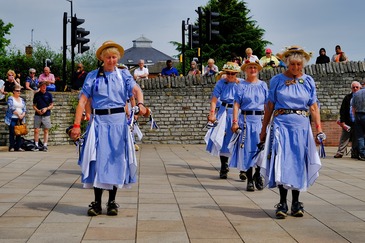
Needpix.com CC0
Above, a group of Morris Dancers are performing and one dance often performed by such groups is Maid of the Mill. While the dance is itself well known, Maid of the Mill spans many genres: dance, art, literature ... and draughts.
In our ongoing serialized story, Three Move Opening: A Checker Romance, our protagonist made an unfortunately timed reference to the Maid of the Mill opening. Today, we'd like to offer something quite substantial in the play of that opening.
The following is based on the 15th game of the 2014 World Championship Go As You Please match between Sergio Scarpetta (Black) and Ron King (White). The game, as played, ended in a draw, but there was an interesting winning possibility for Black.
| 1. | 11-15 | 22-17 |
| 2. | 8-11 | 17-13 |
| 3. | 15-18 |
Forms Maid of the Mill.
| 3. | ... | 23x14 |
| 4. | 9x18 | 21-17 |
| 5. | 10-15 | 25-21 |
24-20 is definitely better, but it isn't clear that this move loses.
| 6. | 4-8 | 26-23 |
| 7. | 18-22 | 24-19 |
| 8. | 15x24 | 28x19 |
| 9. | 11-16 |
Back into the KingsRow opening book with a pull for Black, but not clearly a win.
| 9. | ... | 27-24 |
| 10. | 8-11 | 24-20 |
| 11. | 7-10 | 32-28 |
| 12. | 3-7 | 28-24 |
| 13. | 11-15 | 20x11 |
| 14. | 7x16 | 24-20 |
23-18 also draws.
| 15. | 15x24 | 20x11 |
| 16. | 12-16 | 11-8 |
Loses; 23-18 should draw.
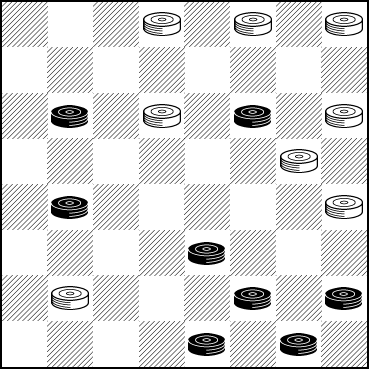
BLACK
Black to Play and Win
B:W31,30,29,23,21,17,13,8:B24,22,16,10,6,5,2,1.
Mr. Scarpetta didn't find the win. Can you? We realize that's a lot to ask, and in fact it's a very difficult problem, but the solution is as surprising as it's good, and we think that any effort you put into this problem will be amply repaid. So do try it, and then click on Read More to see the answer.
You can email the Webmaster with your comments on this article.
The Checker Maven is produced at editorial offices in Honolulu, Hawai`i, as a completely non-commercial public service from which no income is obtained or sought. Original material is Copyright © 2004-2026 Avi Gobbler Publishing. Other material is public domain, AI generated, as attributed, or licensed under CC1, CC2, CC3 or CC4 and the various CC options. Information presented on this site is offered as-is, at no cost, and bears no express or implied warranty as to accuracy or usability. You agree that you use such information entirely at your own risk. No liabilities of any kind under any legal theory whatsoever are accepted. The Checker Maven is dedicated to the memory of Mr. Bob Newell, Sr.