The Checker Maven
The World's Most Widely Read Checkers and Draughts Publication
Bob Newell, Editor-in-Chief
Published every Saturday morning in Honolulu, Hawai`i
King Me! The Movie
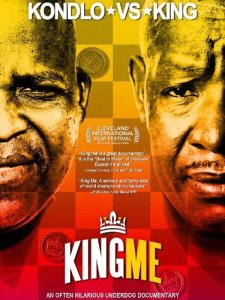
With permission
A major checker documentary is in the works. No, we are not kidding! It will be called King Me and you can read all about it on the King Me web site.
Professionally produced by Think Media Studios, the movie is being filmed on location in South Africa, Barbados, Canada, and the U.S. Crews will be at the 2009 U.S. Nationals in August.
No checker fan will want to miss this one. Be sure to follow the film's progress on the website linked above, or on the American Checker Federation site.
You can email the Webmaster with your comments on this article.
Happy Birthday America
PICRYL CC0
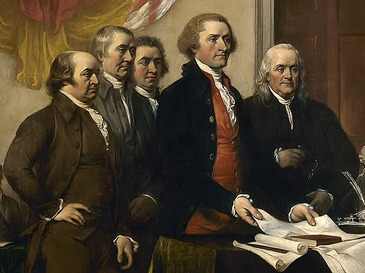
The Fourth of July, as we know so well, celebrates America and recalls the story of the brave band of patriots who, back in the 1770s, brought our nation into existence and gave life to the American dream. We've said before, and we'll say it again, that we're unabashed patriots ourselves, and personally owe much to America.
Celebrating the Fourth of July is something we love to do, and we'd like to once more carry that over to The Checker Maven and present a checker problem from the dean of American problemists, the legendary Tom Wiswell.
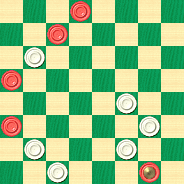
Mr. Wiswell's problems are not known for being easily, but they are worth the effort taken to solve them, and they never fail to delight. Diagrammed below is today's selection.
WHITE
White to Play and Win
W:W9,19,24,25,27,30:B2,6,13,21,K32.
White is a man up, but Black has a king and will quickly get the man back. How can White win this one? The solution is amazing. Don't give up too quickly; you'll be richly rewarded if you do solve it. When you've drummed up your answer, click on Read More to see the revolutionary solution.
You can email the Webmaster with your comments on this article.
Uncle Ben's Porch: Tommy Goes to Brooklyn
Public Domain
It was a hot Saturday morning in June, hot and humid the way only Florida can be. Tommy and Uncle Ben were, as usual for a Saturday morning, sitting on Uncle Ben's porch with a checkerboard and a pitcher of Uncle Ben's incomparable lemonade.
"So, Tommy," began Uncle Ben, "I take it you've never been to Brooklyn before?"
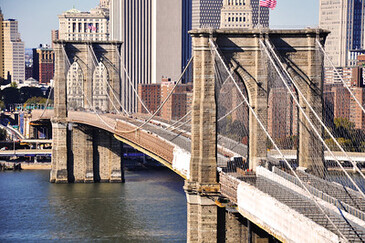
"No, sir," replied Tommy, "but I'm really looking forward to it." Tommy's grade school checker team had done really well the past year in the Southeastern Checker District, and had been invited to play in the Eastern U.S. Regionals, to take place in July in Brooklyn, New York. Tommy, as Captain of the Junior Varsity Team, would be going along as a substitute.
"You know, Tommy, that I spent much of my life in Brooklyn, prior to my retirement. I wrote most of my books while I was there. I think you're going to enjoy your visit, and I hope you'll have time to do a little touring."
"Yes, Uncle Ben, Coach Hovmiller has given us an extra day at the end of the tournament to see the sights, and he's even arranged for a bus to take us to the Statue of Liberty and the Empire State Building!" Tommy paused for a moment. "But most of all, I'd like to get a chance to play, and maybe do well enough to make the Varsity Team next year."
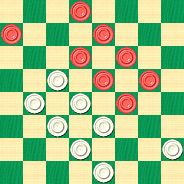
"I was thinking about that," said Uncle Ben, "and today I'd like to give you some practice in visualization that could come in very handy. We're going to take a look at, of all things, something called 'The Brooklyn Stroke.' Quite appropriate, don't you think?"
And with that, Uncle Ben set up the following position on the checkerboard.
WHITE
Either to Play and Win
W:W14,17,18,22,23,26,28,31:B2,5,7,10,11,15,16,19.
"It's rather unique, Tommy," he said, "in that whoever plays first will win! Can you show me how? Start with White, and then try it with Black."
But Tommy was already deep in thought. It took a little time, and half a glass of lemonade, before he spoke. "Here you go, Uncle Ben!" he said excitedly, and began to move the pieces.
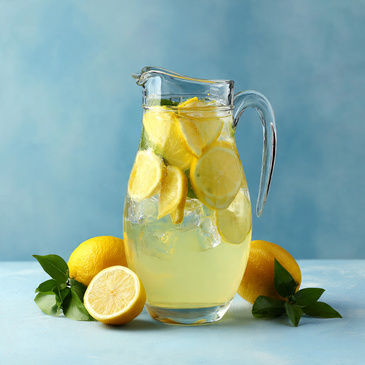
How will you do with this problem? Will half a glass of lemonade do the job, or is it a bit harder than that? When you've solved it--- from both sides, mind you--- click on Read More for the solution, a sample game, and over a dozen additional examples of this theme.
You can email the Webmaster with your comments on this article.
Not Quite PC
Today's offering in our monthly series of excerpts from Willie Ryan's Tricks Traps & Shots of the Checkerboard, entitled Freeman's Flashback, is another entry that in modern terms can't be called "politically correct." Reflecting the approach of a different era, Willie makes a comment that, while innocent in intent, would no longer be considered "acceptable."
We note that we're not ourselves offended by remarks that mean no harm and in fact cause none, and it's our humble opinion that the notion of needing to be "politically correct" has been taken way too far. But that's a topic for a different forum, and we'd much rather let Willie show us another gem of the checkerboard.
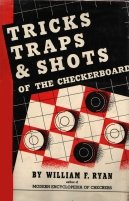
"Here is how 'World Beater' Clarence Freeman of Providence, Rhode Island, polished off 'Stonewall' Barker of Boston, Massachusetts, in an American Championship match game, many years ago. Freeman, a full-blooded Pequot Indian, required no tomahawk to 'scalp' almost all of the leading players of his day. Like Reed, he was a brilliant cross-board player.
| 10-15 | 7-10 | 10-17 |
| 21-17 | 26-22 | 28-24 |
| 11-16 | 9-14 | 1-5 |
| 22-18 | 18-9 | 18-15 |
| 15-22 | 5-14 | 7-10 |
| 25-18 | 31-26 | 23-18 |
| 16-20 | 4-8 | 16-23 |
| 17-13 | 22-18 | 26-19 |
| 8-11 | 14-17 | 5-9---A |
| 24-19 | 25-21 | See the |
| 11-16 | 3-7 | diagram. |
| 29-25 | 21-14 |
WHITE
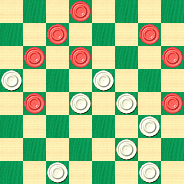
White to Play and Win
W:W13,15,18,19,24,27,30,32:B2,6,8,9,10,12,17,20.
A---Barker walks right into the net. The only moves for a draw are: 2-7*, 18-14, 17-22, 13-9, 10-17, 9-2, 7-11, 15-10---1, 11-16, 19-15---2, 22-26, 30-23, 16-19, etc."---3
1---2-7 draws as well---Ed.
2---Or 10-7---Ed.
3---23-16 12-28 27-24 20-28 32-23 to a clear draw---Ed.
You don't need to be "PC" to solve this problem; you just need to be a good checkerist. After you've sought the "correct" expression of the solution, no one will dispute that clicking on Read More isn't the best way of seeing how it's done "correctly."
You can email the Webmaster with your comments on this article.
A Graham Cracker
PxHere CC0
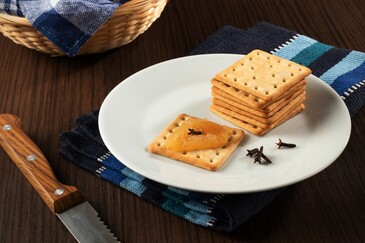
Undoubtedly your school lunch (whether that applies to the current era or to yesteryear) at times contains (or did contain) some Graham crackers. This popular snack was originally invented in New Jersey something like 180 years ago by a Reverend Sylvester Graham, who thought that white flour lead to all sorts of evils not suitable for mention in a family-oriented publication, and that his graham-flour based preparation would save many a wayward soul. But today, sad to say, many so-called Graham crackers don't even contain graham flour! Such is the way of the world.
Today's continuation of our on-going Checker School series, though, is the real thing: a position attributed to a different Graham, old-time checkerist R. Graham, that's a cracker of a problem. While far from being trivial, it's less difficult than most of the problems in this series; and as usual, it's eminently practical.
BLACK
WHITE
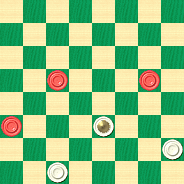
White to Play and Win
W:WK23,28,30:B14,16,21.
White certainly has the better position here, including the "move" or opposition. Can you crack this one and bring the White side through to a win, or will you slip up and fall into a crack? Clicking on Read More will show you the solution, a sample game, and the customary explanatory notes.
You can email the Webmaster with your comments on this article.
A Gentle Stroke

We thought we had completely run out of puns on the word "stroke" until the one above finally came to mind. Now, the Checker Maven offices have a strict no-pets policy, but it's hard to resist the charm of the photo above.
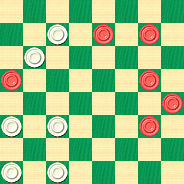
Today's problem is indeed a stroke, but is gentle in that it's less difficult than usual. We invite you to practice your visualization skills on the diagram below.
WHITE
White to Play and Win
W:W6,9,21,22,29,30:B7,8,13,16,20,24.
When you've worked it out to your satisfaction, stroke the Read More button to see the solution.
You can email the Webmaster with your comments on this article.
Tina and Joey

Tina
"Hey there, Sweetie!"
The raspy voice cut through the thick Florida air and Tina's arms and face burst out in goose bumps as she involuntarily shuddered. It was that horrible boy Joey again, pestering her as he did nearly every morning. No doubt he would ask her out for lunch ...
"Wanna go for lunch with me, Sweetie?"

Joey
Tina kept her head up and her eyes straight ahead as she walked by, refusing to answer. As she passed Joey's position, he blew a lungful of cigarette smoke in her direction. Tina's eyes started to water and she couldn't help but cough.
"Wassa matter, Sweetie, got a cold and lost your voice?" Joey started to chuckle, self-amused.
"Joey, you are a disgusting boy, and if Coach Hovmiller catches you smoking, he'll throw you off the checker team ... and good riddance, too! I just think I'm going to report you this time!"
"Aw, Sweetie, you done that before and it didn't do nothing. It was your word against mine and ole Hovmiller couldn't take no kinda action. Why dontcha just go for lunch with me and kiss and make up?"
"Joey, I'm going to wipe that grin off your face! Just wait and you'll see!" Tina strode along the path as quickly as she could and soon reached the safety of the school building. Inside, breathing hard and on the verge of tears, she balled her fists and proclaimed, "I'm going to fix that boy good!"
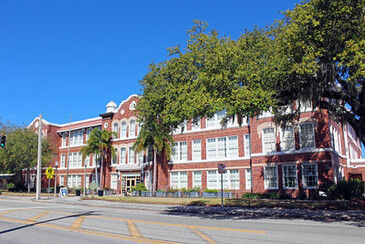
Tina knew that Joey had cheated his way on to the checker team, and continued to cheat to keep his place. Coach Hovmiller, although a rather stern leader, had yet to catch on to Joey's tricks.
But the school day passed as it always does, and soon it was three o'clock and time for team practice. Today Coach Hovmiller had scheduled the next round of the team board placement tournament. And, wouldn't you know, Tina was paired up with Joey. Tina sighed when she saw the posting on the wall chart. Why couldn't she be matched with Tommy Wagner, or even that nice boy Kevin? Tina smiled a little when she thought about Kevin...
"Sweetie! Hey, Sweetie! You ready for some action?" Joey snickered as he said the last words.
"Don't you be fresh with me, Joey!" said Tina, "or I'll ... I'll...."
"You'll what?" replied Joey. "Turn me in to the Coach like you said this morning? Oooh, I'm so scared! Hey, let's play our game. Tell ya what, how's about winner gets to ...."
"Oh, you just keep quiet, you awful boy!" said Tina. "Let's play our game and get it over with!" Without further discussion, they sat down at their assigned table and began to play. Tina had the White pieces; Joey lead off with Black.
| 1. | 10-14 | 24-20 |
| 2. | 6-10 | 22-17 |
| 3. | 11-15 | 17-13 |
| 4. | 1-6 | 25-22 |
A weak move; 28-24 is much better.
| 5. | 14-18 | 23x14 |
| 6. | 9x25 | 29x22 |
| 7. | 8-11 |
Black is somewhat better off here.
| 7. | ... | 27-23 |
| 8. | 4-8 |
This gives up the advantage; 15-19 would have kept a comfortable lead for Black.
| 8. | ... | 23-18 |
| 9. | 15-19 |
The tide turns in White's favor. 12-16 would have kept things even.
| 9. | ... | 32-27 |
| 10. | 10-14 | 18x9 |
| 11. | 5x14 | 22-17 |
| 12. | 6-9 | 13x6 |
| 13. | 2x9 | 17x10 |
| 14. | 7x14 |
After the exchanges, White might have a win.
| 14. | ... | 26-22 |
| 15. | 11-15 | 22-17 |
| 16. | 14-18 | 17-14 |
17-13 was more accurate. White lets her lead slip quite a bit.
| 17. | 9-13 | 27-24 |
14-9 would have been better. White has completely dissipated her advantage.
| 18. | 8-11 | 14-10 |
| 19. | 18-23 | 10-6 |
| 20. | 23-27 | 6-2 |
| 21. | 27-32 | 2-6 |
| 22. | 32-27 | 6-10 |
| 23. | 27-23 | 10-14 |
| 24. | 3-7? |
12-16 was correct here.
| 24. | ... | 30-25 | 25. | 12-16? |
23-27 would have been better.
Tina's heart leapt. Could it be? Yes... if she just moved here and then after that she'd move there. It looked like it would all work out! Satisified with her plan, she made her move.
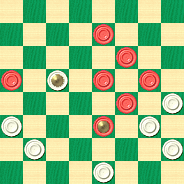
WHITE
White to Play and Win
W:W31,28,25,24,21,20,K14:BK23,19,16,15,13,11,7.
If you were Tina, would you be able to teach Joey a much-merited lesson in this position? Don't be intimidated; work out the solution and be sure to click on Read More for the correct answer and the unexpected conclusion to our story.
You can email the Webmaster with your comments on this article.
Jacob's Jinx

Things don't always go right; our soccer players in the photo above are finding that out, it seems. Sometimes when things go wrong over and over in the same situation, we speak of a "jinx." In today's episode from Willie Ryan's Tricks Traps & Shots of the Checkerboard, some skilled checkerists seem to encounter a bit of a jinx of their own. We'll let Willie tell us the story.
"It was in 1905 that two very distinguished Englishmen of the draughts world, Harry Jacob and J. H. Strudwick, of London, produced a fine work on the Kelso opening, showing play on all white replies to 10-15 as an opening move. When the authors arrived at the position diagrammed on the next page, they pulled one of the most glaring boners in checker literature by overlooking the shattering shot revealed at the point of illustration.
The diagrammed position is reached by:
| 10-15 | 8-11 | 9-14 |
| 21-17 | 29-25 | 24-19 |
| 11-16 | 4- 8 | 15-24 |
| 17-13 | 22-17 | 28-19 |
| 16-20 | 7-10 | 11-16---A |
| 25-21 | 25-22 |
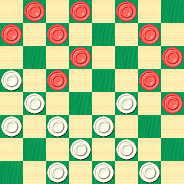
WHITE
White to Play and Win
W:W13,17,19,21,22,23,26,27,30,31,32:B1,2,3,5,6,8,10,12,14,16,20.
A---Recommended by Jacob and Strudwick for a draw, but it loses. The following, however, will gain a draw easily: 11-15---1, 19-16, 12-19, 23-16, 2-7, 16-12, 7-11, 26-23,15-18, 22-15, 10-26,17-10, 6-15, 30-23, 11-16, 21-17, 8-11, 17-14, 15-19, 23-18, 1-6, 18-15, 11-18, 27-23, 19-26, 31-15, 3-7, 15-11, 6-10, etc. Wm. F. Ryan."
1---Deep computer analysis supports this line of play. Willie, of course, did it all on his own---Ed.
Can you find the win that Jacob and Strudwick missed, or will you be jinxed as well? Try your luck and then click on Read More to see the action-packed solution.
You can email the Webmaster with your comments on this article.
Three of a Kind
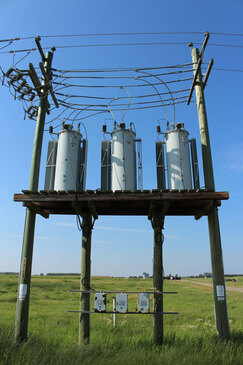
Public Domain Pictures CC0
Three electrical distribution transformers? When we think of "three of a kind" playing cards come to mind first, followed by a few other more ordinary images. Our photo is definitely "three of a kind" but of a type rarely considered by most of us.
Today's Checker School entry is also three of a kind; or, at least, three variations on a common checker theme. In each setting, Black has three kings to White's two kings and a man, and it is up to Black to demonstrate a win. It's not an easy task, but the situations are very practical and knowing this theme will score you many an extra point in competitive play.
WHITE
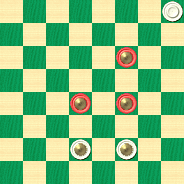
BLACK
Black to Play and Win
B:W29,K7,K6:BK22,K15,K14.
WHITE
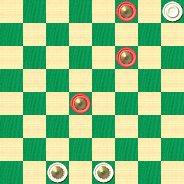
BLACK
Black to Play and Win
B:W29,K3,K2:BK30,K22,K15.
WHITE
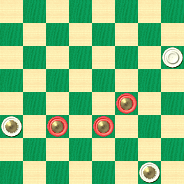
BLACK
Black to Play and Win
B:W21,K12,K1:BK14,K11,K10.
In a sense, if you can solve one, you can solve them all; but it's easier said than done. As a small hint, you may wish to do these in reverse order, starting with the third diagram.
Give it a try, and note that as usual one thing is no mystery: clicking on Read More brings you the solutions, sample games, and many explanatory notes.
You can email the Webmaster with your comments on this article.
Baseball Season: The Horror Of It All
PickPik CC0
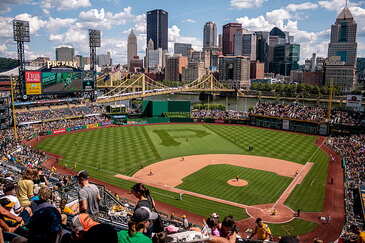
This year's baseball season is well underway, and we're certain that old-time checkerist Harvey L. Hopkins would be horrified. Mr. Hopkins, you'll perhaps recall, was an attorney in Chicago in the late 1800s, and published a checker pamphlet called Home Checker Companion: Our Boys at Home.
We've teased a lot in our columns about Mr. Hopkins' pedantic, moralistic approach to checkers; we've even made him a part of the back-story to the alternative reality of Marvin J. Mavin's world. In his little booklet, he put forth the thesis that going to baseball games was a rather unsavory activity, perhaps even leading to a life of crime! How much better it would be if "the boys" stayed at home and played checkers, under close parental supervision, to be sure.
We can't deny that staying home and playing checkers is a good thing. Neither can we deny that parental supervision is equally good. But as fans ourselves, we have trouble with Mr. Hopkins' theory about the evils of baseball. Still and all, it's a fact that Mr. Hopkins was a skilled checkerist, and today's problem (which Mr. Hopkins attributes to Ralph D. Banks) is a clever and instructive study.

BLACK
Black to Play and Win
B:W28,23,K22:BK29,21,20,15.
It's a common occurence: Black, being a piece up, should win handily, but his position is cramped and demonstrating the win over the board is necessary. Can you do it, solving by sight alone? Never mind that ball game, you've got a checker problem to work out! Do your best and then click on Read More to see the solution.
You can email the Webmaster with your comments on this article.
The Checker Maven is produced at editorial offices in Honolulu, Hawai`i, as a completely non-commercial public service from which no income is obtained or sought. Original material is Copyright © 2004-2026 Avi Gobbler Publishing. Other material is public domain, AI generated, as attributed, or licensed under CC1, CC2, CC3 or CC4 and the various CC options. Information presented on this site is offered as-is, at no cost, and bears no express or implied warranty as to accuracy or usability. You agree that you use such information entirely at your own risk. No liabilities of any kind under any legal theory whatsoever are accepted. The Checker Maven is dedicated to the memory of Mr. Bob Newell, Sr.