The Checker Maven
The World's Most Widely Read Checkers and Draughts Publication
Bob Newell, Editor-in-Chief
Published every Saturday morning in Honolulu, Hawai`i
Noticing missing images? An explanation is here.
Traffic Jam
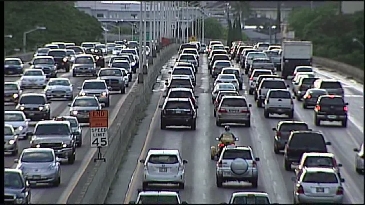
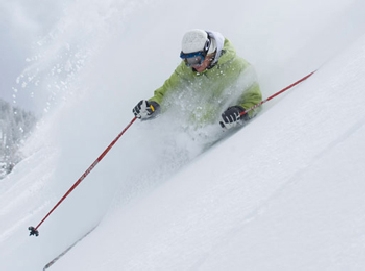
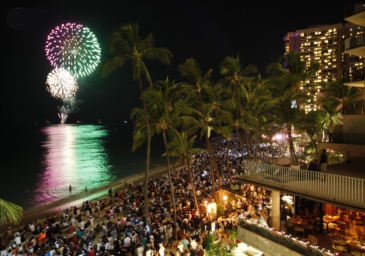
Paradise has a price. A surprising fact is that Honolulu traffic is second only to Los Angeles in the United States. The photo above tells it all as we see an all too common jam-up on the H1 highway.
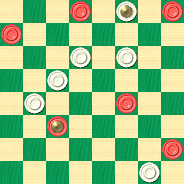
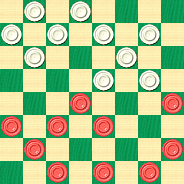
We've just given you a big hint, by the way, to the solution of today's Checker School problems. And here's another hint: solve the second one first. These aren't especially easy, so be patient and persevere, just as you would have to do in a traffic jam.
WHITE
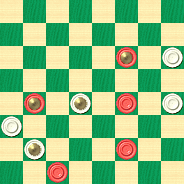
BLACK
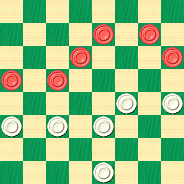
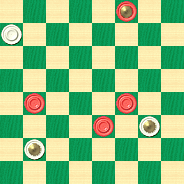
Black to Play and Win
B:W21,K15,13,12,K8:BK22,K16,14,6,3.
WHITE
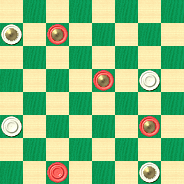
BLACK
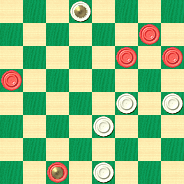
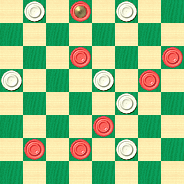
Black to Play and Win
B:WK28,17,12,K1:BK27,K18,K9,3.
Don't get yourself in a jam; solve the problems and then jam that mouse down on Read More to see the solutions, sample games, and explanatory notes.
Presidents' Day
We wonder--- how many readers can recall the origin of Presidents' Day?
The older among us will recall the February 22 celebration of Washington's Birthday, and perhaps the February 12 celebration of Lincoln's Birthday in some states such as Illinois. Observation of Washington's Birthday goes back to the 1800s, in fact, becoming a Federal holiday in 1879.
But at some point in the 1960s a movement began for more three-day weekends, and finally in 1971 Washington's Birthday began to officially be observed on the third Monday in February. By the 1980s, the name "Presidents' Day" was in common use.
The holiday is now intended to honor all of our Presidents. And that points out one thing about America: we're all free to like or dislike our President as we see fit--- and be as open as we want about it--- but the Office of the President deserves the greatest of respect.
Today we're featuring a checker problem derived from a book published back in 1886.
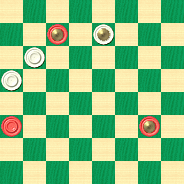
BLACK
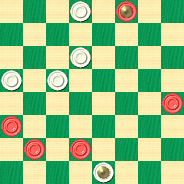
Black to Play and Win
B:WK26,24,20:BK27,12,K9.
Naturally, we challenge you to solve this problem, but first, can you quickly say who was President in 1886? Not so easy, is it?
When you've solved the problem (or not) and named the President (or not), click on Read More to see the solutions.
Another Easy Stroke
We checked into our past columns, and we haven't published something called an "easy stroke" since 2010, and to find another, you'd have to go back to 2005.
Every five years just doesn't seem like quite enough, does it? Today, it's surely time for an "easy" stroke, and we offer you one below.
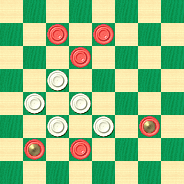
WHITE
White to Play and Win
W:W23,22,18,17,14:B26,K25,K24,10,7,6.
What's that you say? It doesn't look "easy" at all? Actually, if you find the "key" move, the rest pretty much plays itself. Well, pretty much!
Tap this one home ... find that first little move, and then click on Read More to check your solution.
Marvin and the Academic
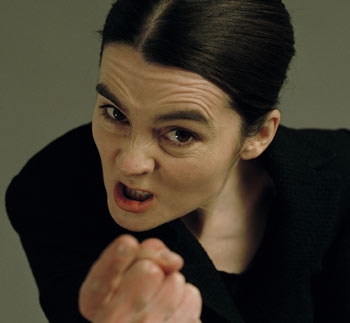
Dr. Hillary Silverfish
Dr. Hillary Silverfish stared and pointed at Marvin, the intensity of her gaze frightening and chilling. Close-cropped dark hair added to the effect. This was one tough customer.
"Prepare to die," she hissed.
Marvin J. Mavin, sitting across the checkerboard from Dr. Silverfish, pretended not to be intimidated, but if the truth be known, he was terrified. Even though Marvin was team captain for the Detroit Doublejumpers and one of the National Checker League's top players, Dr. Silverfish was a formidable opponent, and her patented stare was one of her most feared weapons.
Marvin J. Mavin
The Doublejumpers were playing an exhibition match with San Diego Liberal Artiste University's faculty team. Dr. Silverfish, not surprisingly, was head of the Psychological Arts Department, and lead the checker team. She often boasted about how she could have been a top pro player, "but I have a Ph.D., you know, and it's really my duty to teach the next generation of students."
"Ph.D., Schmee-h D.," Marvin had remarked, with characteristic impoliteness, when the local press asked him what he thought about his opponent, "You still got to make the right moves to win the game." At that point Marvin excused himself and went off to find himself a beer, which in San Diego wasn't particularly difficult.
But once again, Marvin had found himself not just a beer, but a few beers, and so at the start of the match he was, shall we say, at less than a hundred percent, and Dr. Silverfish was not one to fail to exploit a weakness.
"Who you starin' at, Silverfish?" said Marvin in his most irritating tone. "We'll see who's going to die, you old bookworm!"
Dr. Silverfish cleared her throat. "I don't respond to comments by inebriated louts," she said. "I just crush them, like this."
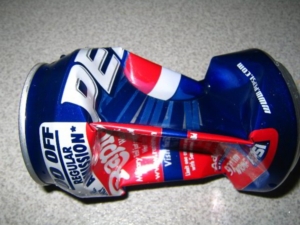
To Marvin's amazement, Dr. Silverfish picked up the empty soda can sitting at her left and, with one hand, squeezed it until it split along the seams.
Marvin repressed a shiver, hoping Dr. Silverfish hadn't seen. But she didn't miss much.
"You should be scared, maggot," she said, but before she could go on, the referee blew his whistle, signalling the start of the match. Marvin lead off with the Black pieces, and Dr. Silverfish had the White.
| 1. | 11-15 | 23-19 |
| 2. | 9-13 |
"Your tricks don't fool me," Dr. Silverfish said. "I know a poor move when I see one."
| 2. | ... | 22-18 |
| 3. | 15-22 | 25-18 |
| 4. | 10-15 |
"Drinking doesn't help you play better, little man."
| 4. | ... | 18-11 |
| 5. | 7-23 | 27-18 |
| 6. | 12-16 | 29-25 |
| 7. | 5-9 |
(This is the end of of the KingsRow opening book. White has an advantage due to the odd line played by Black.)
| 7. | ... | 25-22 |
(Good, but 32-27 would have been really strong here; White still has a definite edge.)
| 8. | 16-20 | 24-19 |
| 9. | 6-10 | 18-15 |
(30-25 would have been hard to draw against. White now has just a narrow advantage.)
| 10. | 1-6 | 22-18 |
| 11. | 8-12 |
(10-14 loses after 28-24.)
| 11. | ... | 26-23 |
| 12. | 3-7 |
(A poor move allowing only the narrowest of draws. 4-8 was correct.)
Dr. Silverfish smiled. "Your poor play continues," she said, "and now I will finish you off."
Indeed, Marvin was fidgeting in his chair, as he always did when he was in a tough spot.
| 12. | ... | 30-26 |
(32-27 would have kept the lead. The game is now even.)
Marvin exhaled. "Well, there, Silverfish, you ain't as good as you think you are. You missed your chance and you ain't getting another, not against ole Marvin."
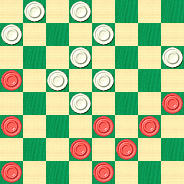
BLACK
Black to Play and Draw
B:W32,31,28,26,23,21,19,18,15:B20,13,12,10,9,7,6,4,2.
How will Marvin save the game? Can you stand up to Dr. Silverfish's terrifying stare and find the solution? Don't panic; work it out and then click on Read More to see the solution and the conclusion of our story.