The Checker Maven
The World's Most Widely Read Checkers and Draughts Publication
Bob Newell, Editor-in-Chief
Published every Saturday morning in Honolulu, Hawai`i
Hurry Back to School
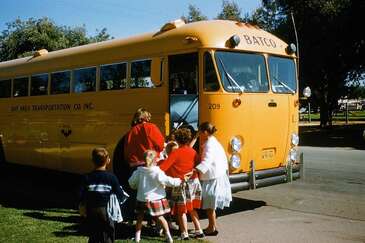
GetArchive - Wikimedia Commons - CC0
School is back in session, and the kids had better hurry and get on the bus so as not to be late--- we suppose we should say "tardy"--- for class. A little extra speed might avoid having to bring home a note from the teacher.
A little extra hustle is also called for in this month's speed problem, which looks more complex than it really is. Keen eyes and good checker sense will solve this one, but there's not a moment to lose, as we're only allowing 30 seconds to solve it.
Don't miss the bus; click on the link below, find the answer, and then ride back and click on Read More to check your moves.
September Speed Problem (moderate difficulty; 30 second time limit)

You can email the Webmaster with your comments on this article.
Fast Relief

Pexels CC0
At the time of writing, much of the United States mainland was suffering from unseasonable heat, and the hottest month of the year, August, still lays ahead. We can only hope that our mainland friends get some fast relief.
Fast relief is also the subject of this month's speed problem. As you'll see when you click on the link below, with correct play Black can win quickly and head off to a refreshing shower or a tall, cool beverage ... if the right moves are made. We rate this problem as "easy to medium" and we'll give you a generous 15 seconds to find the win and earn your reward. When you've solved it, come back here and click on Read More to check your solution.
August Speed Problem (easy to medium, 15 seconds)
You can email the Webmaster with your comments on this article.
Double Duty

Pexels CC0
Checker players can take an important lesson from working moms, who do double duty--- they are full-time employees as well as full-time mothers and homemakers. We often wonder how they have the mental and physical stamina to do it all.
You might think the point we're making is that, as checkerists, we can ourselves do "double duty" and fit checker study and play into our busy lives (admittedly, much less of a task than that faced by working moms). While a valid point, that's not where we're going in today's column. You'll get the idea when you solve the problem diagrammed below.
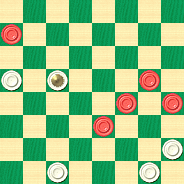
WHITE
White to Play and Win
W:W32,30,28,K14,13:B23,20,19,16,5.
Can you find the White win right away, or will you have to double back and try again? Make at least two attempts before you click on Read More (and that's a single click, not a double click) to see the solution.
You can email the Webmaster with your comments on this article.
All But One
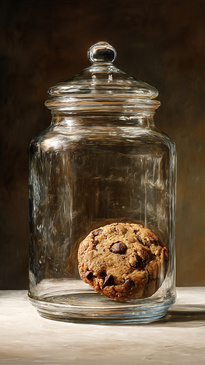
It's the sort of thing we did when we were kids. We'd get into the cookie jar, and we'd eat all but one, thinking that if we left that one cookie behind, no one would think that we had eaten the rest. Somehow, it never seemed to work, but that didn't stop us from trying ... and those cookies were so good!
We've titled today's stroke problem "All But One" and you'll know why we chose that title when you find the solution.
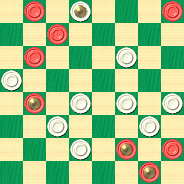
WHITE
White to Play and Win
W:W26,24,22,20,19,18,13,11,K2:BK32,28,K27,K17,9,6,4,1.
Can you solve this one or will you get caught with your hand in the cookie jar? It's an elegant composition and the solution is a treat ... perhaps even as good as those cookies we purloined all those many years ago. When you've eaten this problem up, click on Read More to see the solution.
You can email the Webmaster with your comments on this article.
A Grand Rapids 4th

Once again, we take the annual opportunity to remark that as unabashed and unapologetic patriots we greatly enjoy celebrating the 4th of July holiday. For us, that celebration always includes the publication of a fine checker problem by an American composer.
A little while back, we discovered the astonishing work of late 19th century checkerist O. H. Richmond, of Grand Rapids, Michigan (an all-American town if there ever was one, as the photo above illustrates). Today we're pleased to present another of Mr. Richmond's fine problems with the hope that you will enjoy it as much as we did.
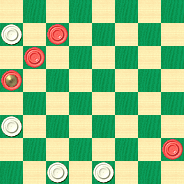
WHITE
White to Play and Win
W:W5,21,30,31:B6,9,K13,28.
Join us in including checkers in your 4th of July festivities. Solve the problem, and then click on Read More to see the solution.
You can email the Webmaster with your comments on this article.
A Grand Rapids Speedster
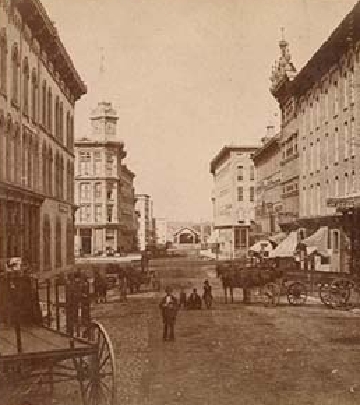
Grand Rapids Historical Society/Grand Rapids Public Library
Today's problem has quite a history. It's credited to an American, a Mr. O. H. Richmond of Grand Rapids, Michigan, but it was actually published in Glasgow, Scotland, some time in the 1880s. Grand Rapids in the 1880s was a town of less than 60,000, mostly known for its production of fine furniture. In the world of checkers as well, it apparently had international reach.
And now, something like 125 years later, we too can enjoy this excellent problem. We're presenting it as a speed problem (what else would we do with a problem from Grand "Rapids"), but we must say that it pushes the limit for speed solving. For this reason, we'll allow 30 seconds for the solution. Our guess is that you'll either see it right away, or you won't. We rate the problem as medium to hard in difficulty; medium if you take your time, and hard if you try to stay within the 30 second time limit.
When you're ready, click on the link below to show the problem and start the clock. When you're finished, come back and click on Read More to see the startling solution.
June Speed Problem (medium to hard, 30 seconds)
You can email the Webmaster with your comments on this article.
The Big Dipper
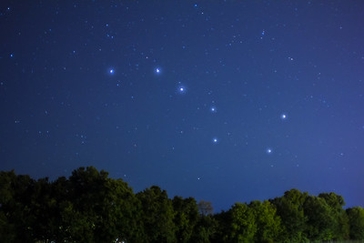
You'll know why we chose the name "Big Dipper" for today's speed problem when you see the diagram, and you won't have much trouble with it, as it's one of the easiest speed problems we've published in quite some time. In fact, it's easy enough that we had planned to only give you five seconds to solve it, but hey, we're generous, and we went with a full ten seconds instead!
Click on the link below to show the problem and start the timer. When you're done, come back and click on Read More to see the solution.
May Speed Problem (Very easy; 10 seconds)
You can email the Webmaster with your comments on this article.
The Four (Heavenly) Kings
A Special Mid-Week Checker Maven Edition
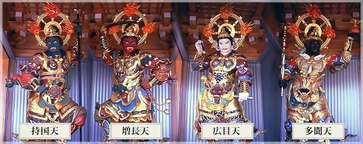
The Four Heavenly Kings are devas or g-ds, which in Buddhism are said to each watch over one cardinal direction.
Mr. Bill Salot, whose work and efforts were featured in a recent Checker Maven column, has his own take on the idea of Four Kings, and Mr. Salot's checker conception is heavenly indeed. His fourth problem composition contest, bigger and better than ever, is titled Kings at Play, as each problem has at least Four Kings on the board.
We're presenting the problems below just to give you an idea of how the competitions have grown and thrived, but we won't give you the solutions; those are found in our Contest Archives.
BLACK

WHITE
White to Play and Win
W:WK4,7,10,11,K17,18,19,20,22,30:B1,8,9,K12,K14,15,21,23,24,K26.
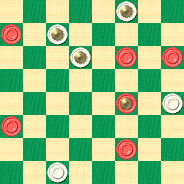
April Fools
BLACK
WHITE
White to Play and Win
W:WK3,K6,K10,20,30:B5,11,12,K19,21,27.
Escaped Prisoner
BLACK
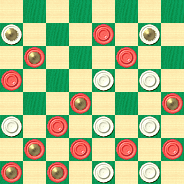
WHITE
White to Play and Win
W:WK5,K8,15,16,21,23,24,31,32:B7,K9,11,13,K18,K20,22,K25,26,27,28,K29,K30.
Multiple Choices
BLACK
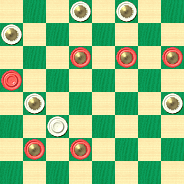
WHITE
White to Play and Win
W:WK2,K3,K5,K17,K20,22:BK10,K11,K12,13,K25,K26.
Zonk
BLACK
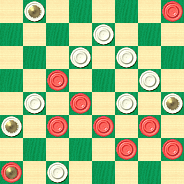
WHITE
Black to Play, White to Win
B:WK1,7,10,11,16,17,19,K20,K21,30:B4,14,18,22,23,24,27,28,K29.
Mr. Salot also tells us "... please enter your original, unpublished, dual-free problems in future contests by sending them at any time to Bill Salot, 1006 Elmwood Drive, Colonial Heights, VA 23834-2905, or wjsalot@comcast.net. Try your hand at any size or style, corrections of published play, game positions, sight solvers, stingers, strokes, novelties, strategies, whatever strikes your fancy." (Editor's Note: The contest series, alas, concluded at the end of 2024).
The Checker Maven is both proud and delighted to support Mr. Salot's efforts.
You can email the Webmaster with your comments on this article.
Our Northern Neighbor
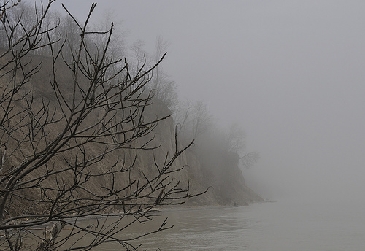
The famed checker editor Manson D. Teetzel, whose career spanned decades of checker publishing, originally came from the town of West Lorne, in Elgin County, Ontario, Canada. No doubt "Teetzel" as he simply liked to call himself, would have been familiar with a scene similar to the one shown above, a beautiful photo of the Canadian shores of Lake Erie, not far from Mr. Teetzel's home town. (The photo is presented courtesy of photographer Rick Blaxall; more of Mr. Blaxall's work can be seen here.)
Teetzel later moved to the United States, where he published American Checker Monthly and for which he is probably best known. But while still in Ontario, he produced The Canadian Checker Player, and it's a problem from the latter journal that we present today. Teetzel didn't give an attribution for the problem; he simply set it forth, something over a century ago.
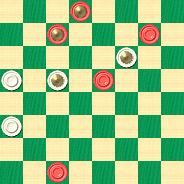
BLACK
Black to Play and Win
B:WK22,20,K19,12:BK31,K27,25,18,3.
Black is a man up, but that's about to change as White is going to even the tally on his next move. Yet Black can still win. Can you figure out how? You don't have to be Canadian to find the solution, you just have to be a Checker Player. Give it a try and then click on Read More to see the solution.
You can email the Webmaster with your comments on this article.
Spring Into Spring When This One Springs
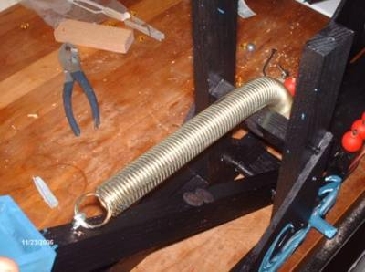
We always hear about "springing into spring" at this time of year, and the arrival of spring is always welcomed after a long winter. Shown above, though, is a spring of a different kind, and when this one springs, we think you'd better move fast and clear the area.
Moving fast and clearing the area--- on the checkerboard--- are our topics for today. We're doing something a little different; we're presenting a stroke problem as a speed problem. Unfair? How can you say such a thing! We're going to give you 60 seconds to solve this one; that's a whole minute!
When you're ready to spring into action, click on the link below--- and move fast. When you're done, spring your mouse on Read More to uncoil the solution.
April Stroke Problem (easy to moderate difficulty; 60 seconds)
You can email the Webmaster with your comments on this article.
The Checker Maven is produced at editorial offices in Honolulu, Hawai`i, as a completely non-commercial public service from which no income is obtained or sought. Original material is Copyright © 2004-2026 Avi Gobbler Publishing. Other material is public domain, AI generated, as attributed, or licensed under CC1, CC2, CC3 or CC4 and the various CC options. Information presented on this site is offered as-is, at no cost, and bears no express or implied warranty as to accuracy or usability. You agree that you use such information entirely at your own risk. No liabilities of any kind under any legal theory whatsoever are accepted. The Checker Maven is dedicated to the memory of Mr. Bob Newell, Sr.