The Checker Maven
The World's Most Widely Read Checkers and Draughts Publication
Bob Newell, Editor-in-Chief
Published every Saturday morning in Honolulu, Hawai`i
Noticing missing images? An explanation is here.
It's Not Just About Winning: A Checker Maven Editorial

PxHere CC0
Controversy rages today, as it did nearly 80 years ago, over the selection of the US team in the upcoming 100th Anniversary US-Great Britain match, to be held in Las Vegas in September. One look at the postings on the Checker Solutions BBS tells the story... and that story has many angles and viewpoints.
In brief, the controversy is over the exclusion of venerable grandmaster Leo Levitt from the US team. As near as we can determine from the BBS postings, Mr. Levitt was originally asked to play, but a vote by a team selection group determined that Mr. Levitt should sit out in favor of a possibly younger, more recently active player.
This type of discussion is nothing new. Let's turn back to a publication we've quoted before, The Morris-Systems Checkerist for September-October 1926. At that time in checker history, the US team was being chosen for the 2nd International Match between the US and Great Britain.
The lead story in the Checkerist was titled "International Team Will Select 11th and 12th Men at Once" and bore the telling subtitle "Matches Called Off Due to Lack of Harmony Amongst Players." An article titled "An Old Timer Comments" by John H. Finn of the Lynn Item stated:
"Yes, the hand of time bears heavily upon all of us and none can escape its fierce grip. The American players are growing old, too, and sooner or later all of the great ones will be too old to get a grip on the game and hold that grip for many moves ... it cannot be said that an old man is one who would be preferred for team play. This applies generally to all who have reached that stage in life when they prefer rest rather than excitement...."
With all due respect, Mr. Finn, we think you were somewhere out in left field with your comments, and as the saying goes, you confused "retired" with "tired." And you tragically underestimated the immeasurable value of the older generation.
The Checker Maven editorial staff cannot support Mr. Finn's 1926 position vis-a-vis the 2nd International Match and likewise cannot support the 2005 decision to omit Mr. Levitt from the US team being assembled for the 100th Anniversary Match.
We base this position not on our knowledge of checkers, which our readers know is limited at best, nor on our familiarity with the players and their abilities, which is likewise circumscribed. Nor do we intend our position to be a criticism of the American Checker Federation or the team selection officials, who we believe to be acting according to what they see as their mandate. They are in an unfortunate no-win situation and will face criticism regardless of their final decision.
We base our position instead on what we learned from our father, of blessed memory, who taught us checkers many decades ago.
We learned that there are things more important than winning. While we learned to play to win, we learned to lose with sportsmanship and grace. We learned that checkers is all about honor, respect, perseverance, humility, hard work, ethics, and ultimately, wisdom. Over time, we've come to see these attributes in the checker community at large and it's cemented our relationship to the Game of Kings.
In the light of these precious principles, which make checkers much more than just a game, and all about much more than just winning, we ask if the exclusion of Mr. Levitt from the US team upholds and serves these principles; and we fear that it in fact does not. We ask whether disappointing an aging grandmaster who has contributed immeasurably to our game, and likely has much more still to offer, is in our best interests. (Mr. Levitt's record of 32 wins with only 1 loss and 45 draws in previous International matches speaks for itself.)

Grandmaster Leo Levitt
Click on photo for biography
Likewise, we admire and applaud the offer of a young and highly skilled player, Clayton Nash, to stand aside to make room for Mr. Levitt. In making this offer, Mr. Nash models behavior and attributes that are a worthy example for us all, and acts in the true spirit of our game.
We do not know how this will all turn out in the end. But we will close with this question: if, in pursuing the goal of victory, we sacrifice our principles, what do we really win?
You can email the Webmaster with your comments on this article.
Results of the Checker Maven Reader's Survey
Reminder: we have switched to our summer publication schedule, which means we don't always publish a Wednesday edition.

Openclipart CC0
Our thanks to everyone who participated in our recent Checker Maven reader's survey. We received a wonderful response, filled with constructive criticism and excellent suggestions. Overall, you seem to like The Checker Maven!
By far the most asked-for feature was current checker news and annotated games from recent tournaments and matches. This may actually turn out to be the most difficult request to deliver upon, as tournament and match games generally have specific ownership and publication rights and limitations. But we're going to try to recruit a network of volunteer "stringers" and we'll make every effort to provide this type of content in the future. Bear with us; it may take some time to put this together.
Problems proved quite popular; you were about evenly split on whether they were too hard, too easy, or about right. This tells us that our mix is good; but we agree that the speed problems are usually too simple.
Book and computer program reviews have their audience as well, although these appeal to a more focused group. Still, the response certainly indicates that we should continue with this type of material.
The most controversy seemed to be over the Marvin J. Mavin stories. Most folks thought they were OK or better; a few people really loved them; and others--- well, let's just say that they and Marvin have a bit of a personality clash. The bottom line for us: we'll continue to run these stories but we won't focus on them or publish them more than every month or two.
The "Masked Man" features garnered one negative mention as well; we didn't get a reason but it might be that the quality of the problems in those articles tended to be lower than in the other problem features. We'll run the one or two more that are already in the publication queue, and that will probably be the end of the line unless we can upgrade the caliber.
Various and varied suggestions included requests for: easier to read diagrams, a return to the click-and-type system of commenting on articles, better indexing, and RSS syndication, among others. We plan to work on all of these over the next weeks as time allows.
Publication frequency of once or twice a week seemed about right to most of you, although there were a couple of requests for daily publication! Alas, that just can't be in the cards for the forseeable future.
As we publish this summary, we're completing a half year of regular, on-time, uninterrupted Checker Maven publication. Our thanks to our nearly 1,000 regular readers for making this webzine a success far beyond anything we ever had a right to expect. We'll do our best to continue to please and to be responsive to your suggestions and input.
You can email the Webmaster with your comments on this article.
Rule, Britannia!

The history making first ever United States-Great Britain internet match is drawing to a close, and the British team has scored a solid victory. With nine out of ten boards reporting, the score is Great Britain 7 wins, 2 losses, and 27 draws. No matter the results of the tenth board, Great Britain has won the match.
The British team was lead by solid performances by Jan Mortimer (three wins) and team captain Lindus Edwards (two wins). The only U.S. wins to date were both scored by the young American star Ryan Pronk.
Complete details can be found on the official web site. In addition, Jim Loy has been annotating the games and posting them on the message boards at the It's Your Turn site (free registration may be required to view these). (Items unfortunately no longer available.)
The Checker Maven congratulates the Great Britain team on a very fine victory.
You can email the Webmaster with your comments on this article.
The Checker Maven Reader's Survey!
We hope you'll be willing to complete our first-ever reader's survey. It will take you five minutes or less and will help us immensely to ensure that The Checker Maven brings you the content that you, our valued reader, need and want.
Thank you in advance!
Note: as of 01 June 2005 the survey is complete and the results have been published. However your comments and suggestions are always welcome; just email us at any time.
You can email the Webmaster with your comments on this article.
Richard Pask's Revised 'Key Openings'

PxHere CC0
We are very pleased and privileged to offer for download Grandmaster Richard Pask's revision to his classic 1999 work, Key Openings. The book can be downloaded here in PDF format, which, though giving rise to a larger download, is a stable format which will reproduce in the same manner on all computers and printers.
Our thanks to Mr. Pask for the opportunity to place this work before the checker playing public.
You can email the Webmaster with your comments on this article.
A Draw Move Is To Be Made Every Time
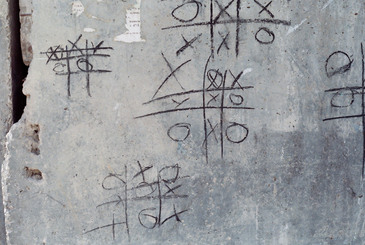
The game of tic-tac-toe is an easy draw if "a draw move is made every time." We'll hear more about "a draw move" a couple of paragraphs below.
The history-in-the-making internet match between the US and Great Britain is moving to a conclusion, with the British leading as of this writing with a tally of four wins, two losses, and 22 draws. Three board positions are still in progress. Complete details are on the official tournament site. (Note: No longer available.)
Here at the New Mexico office of The Checker Maven we're continuing to muse over articles published in 1926 in The Morris Systems Checkerist just prior to the 2nd International Match, played between the US and Great Britain over the board, back in those Golden Days. But things were not simple then, either; the magazine tells of quite a heated controversy in selecting the final two American players for the twelve-player team. We've simply got to requote in part a short piece that the magazine reproduced from the Lynn Item:
"...They have selected 10 players for American team and these are Heffner, Banks, Horr, Gonotsky, Long, Ginsberg, Reynolds, Lieberman, Hanson and O'Grady. There are two more to be chosen and they talk of such men as Bradford, Duffy, Lieber and Dossett.
"It would have been better had the team been held down to 10 men a side, which was the number 20 years ago. The 10 now selected are all good players although there are one or two who should do a lot of practicing from now until the opening of the match; and then play safe and sure instead of taking new lines which they have picked out for themselves and which they may think will trip their opponents. Cooks are not to be thought of in this kind of play but a draw move is to be made every time."
The piece was written by John H. Finn, who, obviously, would not have been of a mind with the likes of draughts champion Derek Oldbury or American football coach Vince Lombardi.
You can email the Webmaster with your comments on this article.
The Manchester Draughts Club
It's a Wednesday evening, and you've just finished a day at one of the editorial offices of The Checker Maven. You're in the mood for a good game of checkers and you wouldn't mind a beer as an accompaniment.
If you're at our Santa Fe office, you might head out to your favorite cantina for chips and salsa, and a Dos Equis Amber to go along with them, but the only checker competition you'll find is on the internet.

If you're at our Honolulu office, you can catch the live-on-the-beach sunset show on Kalakaua Boulevard, and afterwards maybe have a Hinano at Duke's Barefoot Bar; and you can even play chess at the famed beachfront pavilion at the corner of Kealohilani. But if you want to play checkers, you'd better head back to the office and go online.

If you were in Manchester, England, though, you'd really be in luck. No, The Checker Maven isn't going to be opening an office there, at least not yet. But even better, Manchester is home to the Manchester Draughts Club, which meets Wednesday evenings at The Castle.
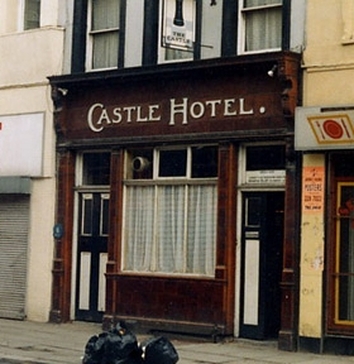
Founded in its present form by Dr. John Reade and Bill McKay in 1990, the club chose The Castle because of its old-fashioned ambiance, good service, and fine selection of Robinson's Cask Beers. These draughts players know what enjoyment truly is!
The club was created to provide a venue for casual cross-board play, as a welcome alternative to correspondence play, which had been the only local option for nearly a decade. But under the inspiration of Frank McDonald, the club soon introduced competitive play, which quickly rose to a high level of skill and achievement.
Internally, the club sponsors both 3-move and go-as-you-please (freestyle) leagues and knockout tournaments. Winners from these competitions qualify as challengers for the Lancashire 3-move and freestyle championships each year. As of this writing (April 2005) Frank Bednall is the reigning 3-move champion, while Donald Oliphant holds the freestyle crown. In addition, the club puts on two open tournaments each year, in memory of two former Lancashire players: the Arthur Jones 3-Move Tournament, played in the spring, and the Ronald Bumby Freestyle Tournament, played in the autumn.

Donald Oliphant, 3-Move Lancashire County Champion, and Melvyn Green, Challenger
Photo by Sue Reade

Lancashire South (Manchester) Win the 2003 British Counties Championship
From left: Matthew Eke, John Reade, Donald Oliphant, Melvyn Green, Eddie O'Gara
Photo by Sue Reade
Dr. Reade extends his invitation to checkers and draughts players who find themselves in the Manchester area on a Wednesday evening to ring him at 0161-643-2985 and arrange for a few games at The Castle. The club plays from opening at 7:30 PM until closing at 11:00 PM, and you're certain to find top-notch competition and the best of British beer.
To be sure, chips and salsa in Santa Fe is fine fare, and the sunset show on the beach in Waikiki is a great experience, but compared with quality over-the-board draughts play and a few pints of Robinson's, you know what our choice would be.

The Checker Maven thanks Dr. John Reade for providing text and photos as the basis of this article.
You can email the Webmaster with your comments on this article.
Richard Pask's Supplement to Oldbury's Move Over
Grandmaster Richard Pask has completed his supplement to Derek E. Oldbury's classic Move Over, and has very kindly allowed us to offer it here for download.

Move Over (which itself can be downloaded from here) is a true classic, a work that was controversial in its time and which still excites the interest of every two-fisted checker player. Now, Grandmaster Pask has provided insightful commentary on the original text, as well as solutions to the problems at the end of the book--- problems which have proven perhaps somewhat more challenging than Oldbury had anticipated.
Be sure to read Mr. Pask's latest work, which is as much a fine tribute to a great player as it is a superb elucidation of a classic text.
Note: the download at the moment is in "Word" format, meant to be printed on A4 paper, and requiring Jim Loy's checker font to render the title page illustration correctly.
You can email the Webmaster with your comments on this article.
How Times Have Changed
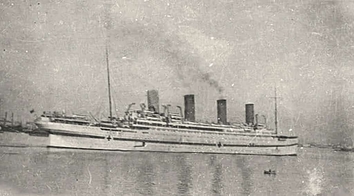
The Checker Maven has reported on the exciting U.S. vs. Great Britain match being played on It's Your Turn at this very moment (April 2005). It's Your Turn is a correspondence style site; players take turns making their moves, just as you would do if you were truly playing by mail.
PICRYL CC0
In fact, many of our readers know that there have been actual mail-based matches between the U.S. and Great Britain. Here's a short article that appeared almost 80 years ago in the September-October 1926 edition of The Morris Systems Checkerist:
Correspondence Match, G. B. vs. U. S.
The following is the score between an English team captained by D. Bryant, and an American team lead by Ray Kemmerer. It will be noted that some of the players have "crossed the bar" since starting the match a few years ago.
Great Britain --- U. S. A.
R. J. Allen 0; A. J. Schmutz 0 drawn 4
D. Bryant 1; A. R. Dosset 2; drawn 1
W. Dixon 0; A. J. Lemense 0; drawn 4
C. Probert 0; W. E. Steere 0; drawn 4
J. Hawks 0; H. D. Kaufman 0; drawn 4
D. Exeter 0; A. Jensen 0; drawn 4
C. McKean 0; F. E. Potts 1; drawn 3
F. F. Smith 1; J. Tonkin 0; drawn 3
Total -- America 3, Great Britain 2, drawn 27. The heat between J. M. Roberts and J. L. Westenberger is not reported as yet.
Times have truly changed. The mind boggles at the prospect of a multi-game correspondence match, played via mail delivered back and forth across the Atlantic by ship. Small wonder the match went on for years and that some players indeed "crossed the bar" during this time.
Today's match is being played in "internet" time and all should be over in weeks, not years. And we certainly hope that no one "crosses the bar"!
The same issue of The Morris Systems Checkerist is full of articles about the 2nd live U. S. - G. B. match, which was in preparation at the time. It makes for interesting reading, and, while today's internet match continues, we'll reprint a few of those old columns here over the next few weeks.
But for the moment, keep up with all of today's action, in internet time, at the official tournament site.
Note: Unfortunately the tournament site is no longer active.
You can email the Webmaster with your comments on this article.
USA vs. Great Britian Internet Challenge
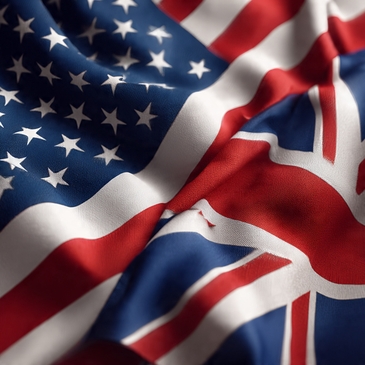
Team matches in checkers between the United States and Great Britain began almost exactly 100 years ago, in 1905, when the British team defeated the Americans in a convincing manner. Since that time, there have been six more such matches, with the Americans gaining the edge; and an eighth match will take place this fall in Las Vegas as a 100th anniversary celebration of this fierce yet friendly rivalry.
But, very recently on the time scale of a full century, the internet has come on the scene and has offered all sorts of opportunities for checker play, of every type and quality (see our site reviews for a rundown on this). Last year, a team match called USA vs. the World was played out at the It's Your Turn play site (the games are documented and annotated at Jim Loy's web site) (no longer available). The teams were ad hoc and the level of play varied widely, but it was a great match overall.
Now, the historic US-Great Britain rivalry is about to be taken up on the internet, and for this matchup, the teams are staffed with top notch, championship grade players. The US team, captained by Yunior Lopez, will have in its lineup stars such as world champion Alex Moiseyev and living legend Richard Fortman. Not to be outdone, the British team, captained by Lindus Edwards, will field players of the caliber of mail-play champion George Miller, and special guest Jan Mortimer, who this fall will challenge Patricia Breen for the women's world championship.
The match begins at the It's Your Turn site on April 4. The games will be 3-move restriction and played postal-style with three days allowed for a move. Complete details can be found at the official web site (no longer available) for the match, and you can follow the results there as they come in.
This promises to be a history making, not-to-be-missed match. Put a few tall ones in the refrigerator and tune in at the official web site!
You can email the Webmaster with your comments on this article.
The Checker Maven is produced at editorial offices in Honolulu, Hawai`i, as a completely non-commercial public service from which no income is obtained or sought. Original material is Copyright © 2004-2026 Avi Gobbler Publishing. Other material is public domain, AI generated, as attributed, or licensed under CC1, CC2, CC3 or CC4 and the various CC options. Information presented on this site is offered as-is, at no cost, and bears no express or implied warranty as to accuracy or usability. You agree that you use such information entirely at your own risk. No liabilities of any kind under any legal theory whatsoever are accepted. The Checker Maven is dedicated to the memory of Mr. Bob Newell, Sr.