The Checker Maven
The World's Most Widely Read Checkers and Draughts Publication
Bob Newell, Editor-in-Chief
Published every Saturday morning in Honolulu, Hawai`i
Noticing missing images? An explanation is here.
Super Easy
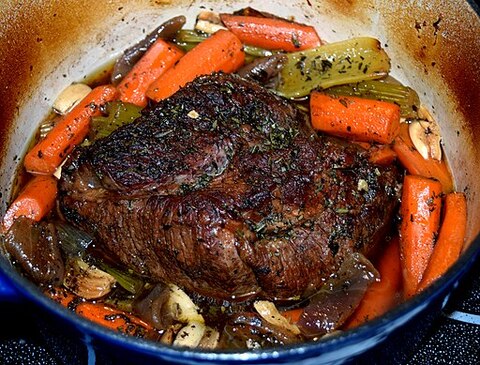
Looks good, doesn't it? It's "Super Easy Pot Roast" from someone who calls herself Chef Savvy and, checking over the recipe, it indeed looks like a great dinner made with minimal effort.
Is there such a thing as a great checker problem, solved with minimal effort? The most pleasing problems seem to be on the more difficult side, but there's another way to look at this: a simple problem solved very quickly can also provide a good measure of satisfaction.
To this end, we've decided to bring back our Javascript clock for perhaps just one time, as today's speed problem is in the category of "super-easy," and we don't want to spoil things by putting the problem diagram in-line. So you'll need to click below and then you'll have five seconds to beat the clock! No worries, that's definitely enough time.
Are you ready? Black to play and win ... and when you're done, come back and click Read More to check your answer.
March 2019 Speed Problem (Super easy)

You can email the Webmaster with your comments on this article.
The Stumper
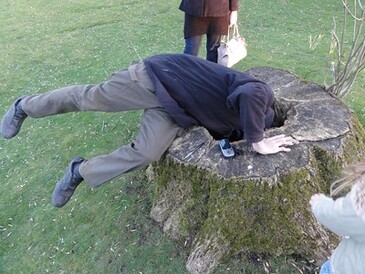
The fellow above is "stumped" in a very unusual way. When we say someone is "stumped" that's hardly what we would have in mind; it's usually taken to mean that there is a problem or situation that they don't have any idea about how to solve.
Checker problemist Brian Hinkle has come up with a "stumper" of his own, and has kindly shared it with us. Let's have a look.
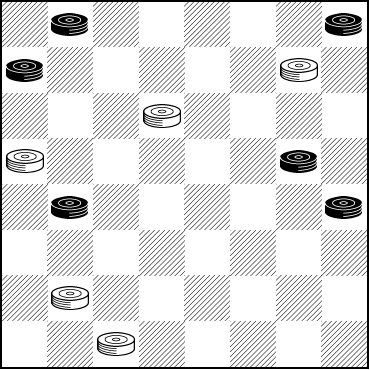
WHITE
White to Play and Draw 2 Ways
W:W8,10,13,25,30:B1,4,5,16,17.
As is typical with Brian's compositions, finding the first move is the real key, although even then you've still got to demonstrate the draw. But "Stumper" actually has two solutions. You may not necessarily be stumped in finding the first solution, but finding the second solution is truly a "Saturday Stumper" of our own.
Will you be stumped, not just on Saturday but in the ensuing days? Consider yourself a good solver if you find the first solution, and an amazing one if you find the second. Clicking on Read More, of course, will show you everything.
You can email the Webmaster with your comments on this article.
Dang Tough
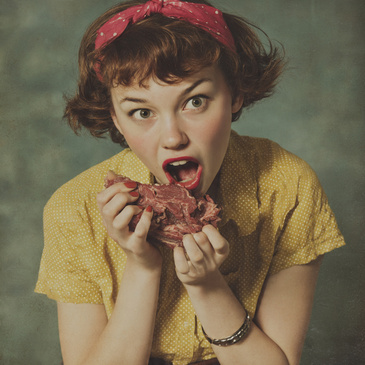
Tough steak? Bit off more than she can chew? The steak might possibly have been a little less tough, and more appealing, if it was tenderized and ... cooked.
Tough in checkers, of course, means something different (and so does "cooked" but that's a story for another day). It seems like we've published quite a number of tough problems lately, but hopefully they've been interesting and instructive. With that out of the way, we're going to publish one more. It's a good one, and although we've lost track of the source, it's nonetheless pleasing--- and tough.
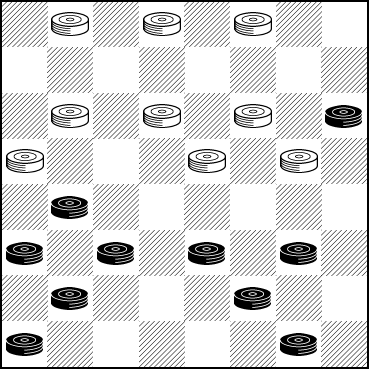
BLACK
Black to Play and Win
B:W17,18,20,22,23,24,30,31,32:B1,4,6,8,9,10,11,12,16,21.
Yes, Black can win this position with skillful play and quite a bit of patience. That's by way of saying that the solution is rather long and requires careful application of technique. Are you tough enough to stick it out and gain the win? But when you're ready, it won't be very tough at all to click on Read More to see the solution.
You can email the Webmaster with your comments on this article.
Hammer It Out

No, not like that! Computers can be frustrating sometimes, but the suggestion to 'hammer it out' shouldn't be taken literally.
Sometimes checker games can be frustrating, and you've got to hammer out a solution. In today's Checker School entry, continuing our series of 'gem' problems, we have something composed, appropriately, by Wm. M. Hammer.
BLACK
WHITE
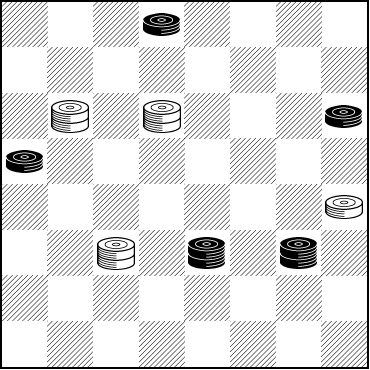
White to Play and Draw
W:WK9,K10,20,K22:B2,12,13,K23,K24
If you're Black, you might be frustrated at the difficulty of hammering out a win. If you're White, and a man down but with a centralized position, you might be frustrated at the difficulty of hammering out a draw. Yet a draw is there. Work it out and then pound your mouse on Read More to see the solution.
You can email the Webmaster with your comments on this article.
A Short Stroke for a Short Month

Leap Year won't come until next year, so February remains a short month. It's always seemed a bit unfair to us. Even though there are only 28 days, the rent or the mortgage or the condo fees remain at their full amount, as do the cell phone bill, the cable bill ...
We're certainly not going to solve that problem here, so maybe we'd best concentrate on a checker problem. It's a short stroke for a short month, and we think you'll find it to be on the easy side.
WHITE
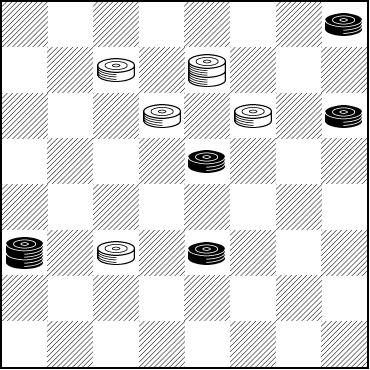
White to Play and Win
W:W6,K7,10,11,22:B4,12,15,K21,23.
Can you solve this one in a short time? Figure it out and then make a short leap with your mouse onto Read More to verify your solution.
You can email the Webmaster with your comments on this article.
A Fantasy
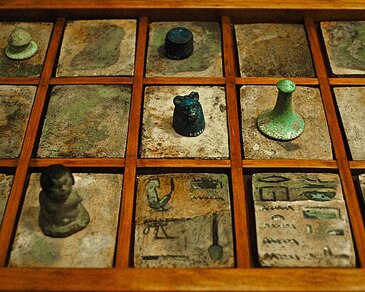
We found A Fantasy in an old checker publication, without any attribution. A Fantasy postulates a game between an Egyptian and the Wizard of Oz, played in the year 2,000 B.C.E.
Well, The Wizard of Oz wasn't published until 1900, but we're willing to suspend disbelief and overlook this nearly 4,000 year time gap, and we won't even get into the fact that our current form of checkers wasn't quite on the scene yet, either. (The photo above is of a Senet board.) We'll just start with the run-up to the problem position.
| 1. | 9-13 | 22-17 |
| 2. | 13x22 | 25x18 |
| 3. | 11-16 | 29-25 |
| 4. | 5-9 | 18-14 |
| 5. | 9x18 | 23x14 |
| 6. | 10x17 | 21x14 |
| 7. | 8-11 | 24-19 |
| 8. | 16x23 | 26x19 |
| 9. | 11-16 | 28-24 |
| 10. | 16x23 | 27x18 |
| 11. | 7-11 | 30-26 |
| 12. | 2-7 | 25-21 |
| 13. | 6-10 | 24-19 |
| 14. | 10x17 | 21x14 |
| 15. | 11-16 | 26-23 |
| 16. | 7-11 | ... |
Loses. An easy mistake to have made, but 7-10 would have drawn. We suspect Black didn't like the looks of 7-10 14x7 3x10 32-27 1-6 18-15 4-8 but Black is safe: ... 27-24 (31-26 10-14 26-22 14-18! 23-14 16-32 Black Wins) 16-20 31-27 12-16 19x3 10x26 to a draw.
| 16. | ... | 14-10 |
| 17. | 16-20 | 31-27 |
| 18. | 11-16 | 18-15 |
| 19. | 4-8 | ... |
Played 2,000 Years B.C.E.
BLACK (An Egyptian)
WHITE (The Wizard of Oz)
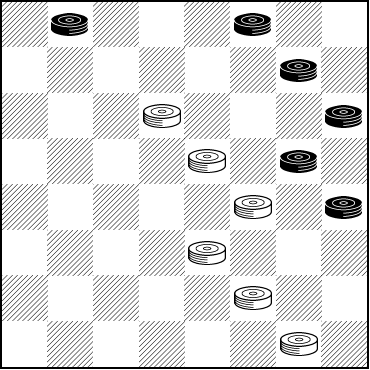
White to Play and Win
W:W10,15,19,23,27,32:B1,3,8,12,16,20.
Up until move 16, both our Egyptian friend and the Wizard played without error. But now the Wizard has a chance to win, and, being a Wizard, will naturally do just that.
Can you do as well as the Wizard of Oz, or is that thought just a fantasy? Stay in the realm of reality by solving the problem and then clicking on Read More to see the solution.
You can email the Webmaster with your comments on this article.
For the Love of Thee
Pixabay CC0
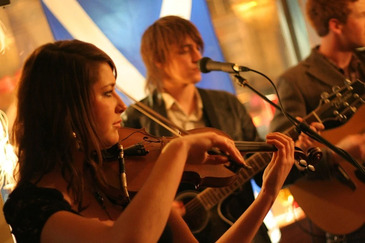
Fred C. Shardlow, born in New York around 1874 and subsequently a resident of the Marshall, Minnesota area, was a song composer, and is credited with the song, For the Love of Thee for voice and violin.
Mr. Shardlow was also a checker problem composer, and we feature one of his "Gem" problems in today's Checker School entry. Unfortunately we don't have further information about his checker career, although we did locate some other problems of his published in the American Checker Monthly and the Winnipeg Free Press.
So, for the Love of Checkers, take a look at the following position.
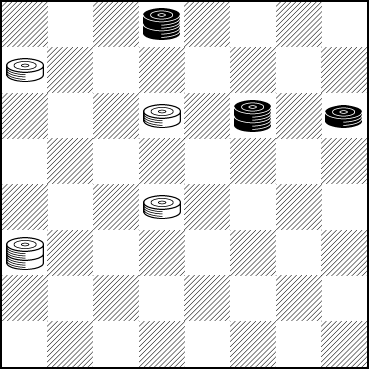
BLACK
Black to Play and Draw
B:WK12,15,23,28:B21,K22,K31.
We know you would love to solve it, so please do! And when you're done, you'll love to click your mouse on Read More to verify your solution.
You can email the Webmaster with your comments on this article.
New Year Action

Who wants to start off the New Year in a dull and boring manner? The waterfall jumper above is certainly looking to make this day anything but routine.
And while we can't recommend waterfall jumping for everyone, the same principle applies to checkers. How about we start off 2019 with a real bang, courtesy of regular contributors Lloyd and Josh Gordon of Toronto?
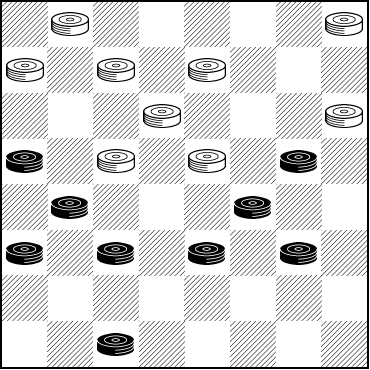
BLACK
Black to Play and Draw
B:W18,19,21,23,26,27,28,29,32:B3,9,10,11,12,14,16,17,20.
Black seems to have only one mobile piece. Can he truly pull out a draw?
This may be just a little past the 30 second "speed problem" category, but it's not terribly difficult and it certainly is loaded with action.
Kick off your checker year with some real thrills. Solve the problem and then jump your mouse onto Read More to check your solution.
You can email the Webmaster with your comments on this article.
The New Year is Coming
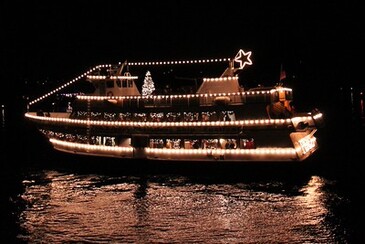
This column will appear a few days before the New Year of 2019, and no doubt you're busy with all sorts of preparations. Are you going dancing? Taking a dinner cruise? Watching fireworks at a nearby location? Or just staying home for a celebration with friends, or even a quiet evening?
There are as many ways to celebrate as there are people, and given how busy most of us seem to be, today we have a "midget" checker problem that won't take up a lot of your time, while still being worth a little effort.
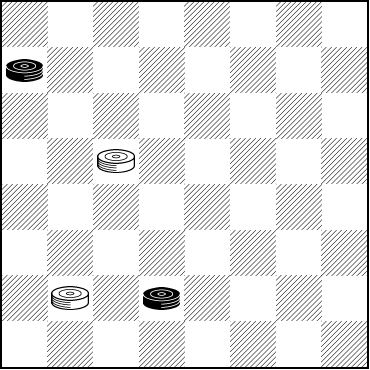
WHITE
White to Play and Draw
W:W14,25:B5,26.
Finish off your checker year by finding the solution, and then get back to your celebrations. There will be plenty more checkers in 2019! When you've finished, click on Read More to check your moves.
You can email the Webmaster with your comments on this article.
Happy Holidays 2018
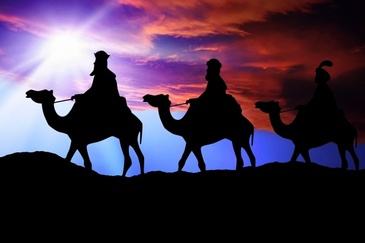
Public Domain Pictures CC0
The story of the Three Kings is a central part of Christian celebration of the holiday of Christmas. Also known as the Three Magi or the Three Wise Men, and sometimes identified as Balthasar of Arabia, Melchior of Persia, and Gaspar of India, they traveled to Bethlehem with their gifts of gold, frankincense, and myrrh, each of which is said to have a symbolic meaning. And whether you celebrate Christmas or some other holiday, the Three Kings make for a fascinating and meaningful story.
We hope you'll have a little time for checkers during the busy holiday season, and in our archives we found a "Three Kings" checker problem. We lost track of the author's name, but nevertheless the problem is very fitting--- and a bit on the difficult side.
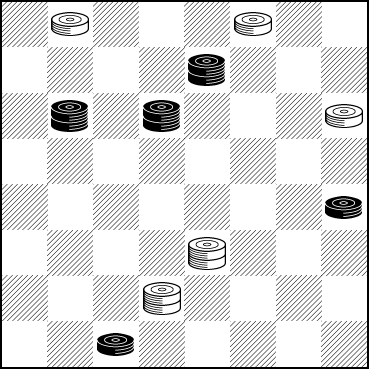
BLACK
Black to Play and Win
B:W32,30,21,K10,K7:BK26,K24,K23,13,3.
Were you able to solve it? The first move, as is often the case, is the key. We hope you gave it a good try; whenever you wish, you can click on Read More to see the solution.
You can email the Webmaster with your comments on this article.
The Checker Maven is produced at editorial offices in Honolulu, Hawai`i, as a completely non-commercial public service from which no income is obtained or sought. Original material is Copyright © 2004-2026 Avi Gobbler Publishing. Other material is public domain, AI generated, as attributed, or licensed under CC1, CC2, CC3 or CC4 and the various CC options. Information presented on this site is offered as-is, at no cost, and bears no express or implied warranty as to accuracy or usability. You agree that you use such information entirely at your own risk. No liabilities of any kind under any legal theory whatsoever are accepted. The Checker Maven is dedicated to the memory of Mr. Bob Newell, Sr.