The Checker Maven
The World's Most Widely Read Checkers and Draughts Publication
Bob Newell, Editor-in-Chief
Published every Saturday morning in Honolulu, Hawai`i
Noticing missing images? An explanation is here.
Clan M'Millan
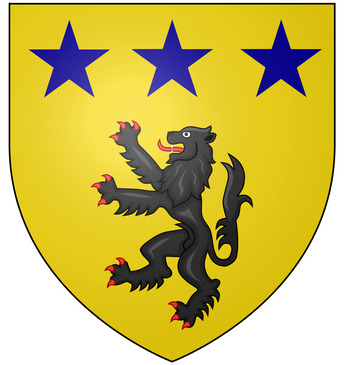
What's the reasoning behind the spelling "M'Millan"--- with an apostrophe? Why not spell out "McMillan" or "MacMillan"?
We found that question rather intriguing. We've seen the "M'Millan" variant before and never rightly understood it. But then again, we never really knew why some names are given as "MacMillan" and others as "McMillan."
The Clan MacMillan website set us straight.
It seems that the clan's name has two different spellings in the Scottish Gaelic language, both of them difficult to pronounce in English. There exists a variety of semi-phonetic transliterations. To avoid confusion, the "neutral" variant, "M'Millan," came into use. It's a clever and very clean solution..
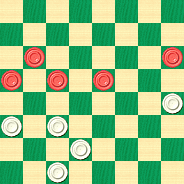
Today's checker school problem, attributed to R. G. M'Millan, also offers a clever and clean solution. Can you find it?
BLACK
WHITE
White to Play and Win
W:W30,26,22,21,20:B15,14,13,12,9.
There should be no confusion here; the position is anything but neutral. After you've worked through it, click your mouse on Read More to see the apostrophic solution, notes, and a sample game.
You can email the Webmaster with your comments on this article.
The Hand of D.E.O.
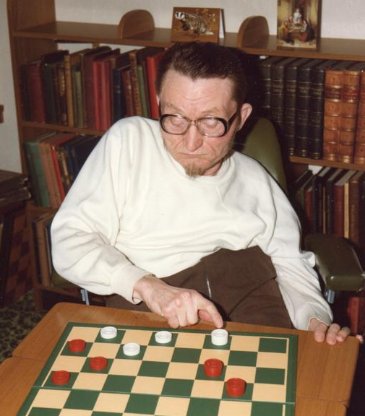
Someone who wishes to be known only as "A Checker Friend from Michigan" sent us a PDN file with all the positions from Derek E. Oldbury's 1947 book of problems, The Hand of D.E.O.. To say the least, this book is hard to find nowadays and if you haven't got a copy, go to the PDN link in the right column and download the file.
Mr. Oldbury's problems are interesting and practical. They aren't necessarily easy, of course, but we're sure you didn't expect a simple walk in the park. This is the man who famously said that he would "take the chances to make the chances" and never backed away from the challenge of pursuing of a win.
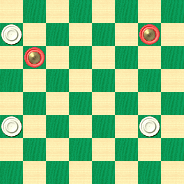
Here's an sample problem for you to try.
WHITE
White to Play and Win
W:W24,21,5:BK9,K8.
Take your chances and make your chances, then click on Read More to see the solution.
You can email the Webmaster with your comments on this article.
21st Century Checkers: 10-15s
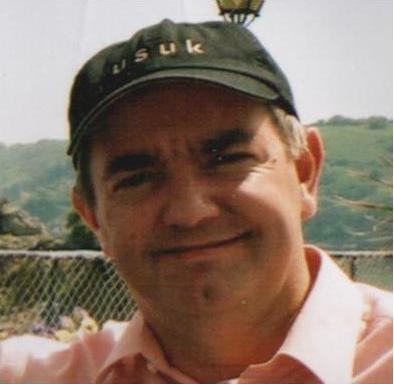
We are both pleased and proud to be able to present the fourth volume in Mr. Richard Pask's new series, 21st Century Checkers. Destined to become the definitive modern reference on 3-move ballots, these books are sure to be of great interest to every serious checkerist. Volume 4, 10-15s can be downloaded here, or from the Richard Pask page linked in the right-hand column.
As in all of the volumes in the series, the book makes extensive use of color. If you want a printed copy, it might be best to print it at home, as commercial services charge quite a bit for color printing.
Here's a preview problem from the new book.
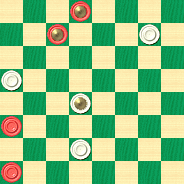
BLACK
Black to Play and Draw
B:B4,12,K27,K31:W7,20,25,K15.
Click on Read More to see the solution and analysis.
The Checker Maven thanks Mr. Pask for his contributions to the checker community and for honoring us with the opportunity to present his work. We are relieved and delighted that this great player and unexcelled author is on his way to a full recovery from life-threatening health issues encountered earlier this year. May Mr. Pask live long and prosper--- and continue to publish!
You can email the Webmaster with your comments on this article.
The Gibson Sound
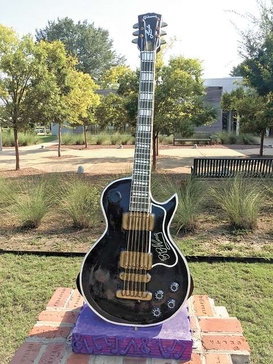
Picryl CC0
Just about everyone has heard of Gibson guitars; Gibson is the maker of the world-famous Les Paul guitar and many other instruments of the highest quality and finest sound. Gibson was founded by Orville H. Gibson well over 100 years ago, and given the time in which Mr. Gibson lived, we've little doubt that he played checkers at least casually at some point.
Checkerist R. W. Gibson was a contemporary of Orville, although it's highly unlikely that they knew each other or were in any way related. Mr. Gibson (R. W., that is) is credited with today's entry in our Checker School series. It may not be the "Les Paul" of checker problems, but it is certainly a nice one, with a solution as pleasing as the sound of a Gibson guitar.
BLACK
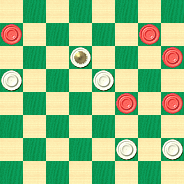
WHITE
White to Play and Win
W:WK10,13,15,27,28:B5,8,12,19,20.
We're not just stringing you along; solve the problem and strum your mouse on Read More to see the solution, notes, and a sample game.
You can email the Webmaster with your comments on this article.
Whitney
Needpix.com CC0
"Whitney" is a common surname and a not-uncommon first name in the English speaking world. There are the famous Pratt and Whitney aircraft engines, for one thing. There is also J.C. Whitney Auto Parts, an old and famous institution still very active today.
Something else that is old and famous, and active today for sure, is our game of checkers. This month's problem in our Checker School series is attributed to a different Whitney--- one G. Whitney, to be exact. While analyzing Mr. Whitney's position, we turned up something new and interesting, and so we've modified things a little.
BLACK
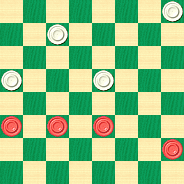
Black to Play and Win
B:W29,27,20,18:B12,11,10,5.
Black definitely has a win here. In the problem as originally published, Black missed the win and after Black's errant move, the terms of the problem became "White to Play and Draw." In the solution section, we'll show you the original situation, but for now we're asking you to find the Black win. It's sort of like original auto parts and modified high-performance parts.
When you've found the winning line of play, rev your mouse on Read More to see the run-up to this position and how Black can get it right--- or get it wrong.
You can email the Webmaster with your comments on this article.
Anonymous

Freerange Stock CC0
Ah, that celebrated, most famous author of all time: Anonymous, who sometimes goes under the pseudonym "Author Unknown." With so many stories and poems and yes, even checker problems to this author's credit, Anonymous must have been (and still is) tremendously prolific, not to mention exceptionally long-lived, nigh on to immortal.
The famous Mr. (or is it Mrs. or Miss?) Anonymous, using the aforementioned pen-name of "Author Unknown," is credited with today's problem position in our ongoing Checker School series.
BLACK
WHITE
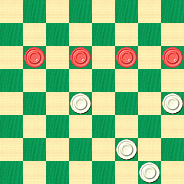
White to Play and Draw
W:W32,27,20,18:B12,11,10,9.
Don't be a checker unknown; try to solve the problem. But if the solution remains unknown, you can always click on Read More to reveal the position's identity, so to speak.
You can email the Webmaster with your comments on this article.
Do As I Say
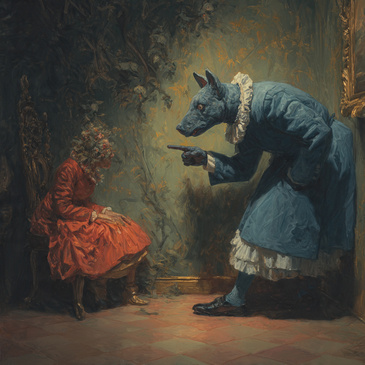
"Do as I say, not as I do" is an old expression that finds application all too often. We can think of far too many examples to list here, so we'll just invite you to use your imagination. (We're not sure quite what's going on in the AI generated image above and perhaps that's for the best.)
In a scientific game such as checkers, though, it would seem that such a catchphrase has little application. After all, checker moves speak for themselves; they're either good or they're not. But bear with us; following the solution to today's problem you'll find a hilarious example of one man's version of "Do as I say" over the checkerboard.
The position, part of our Checker School series, is subtle and pleasing, and as usual, highly practical.
WHITE
BLACK
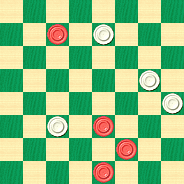
Black to Play and Win
B:W26,17,13,11:B27,10,6,2.
It's harder than it looks. Can you solve it? When you've found your solution, click on Read More to check your answer and play through a sample game with explanatory notes.
You can email the Webmaster with your comments on this article.
Diagonal Diagnosis
Picryl CC0
Editor's Note: This column has been substantially corrected thanks to correspondence from checker expert Al Lyman.
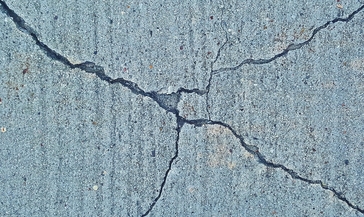
The photo above shows a nasty diagonal crack in the foundation of someone's house. That's going to be an expensive problem but it's best to diagnose and fix it before it gets worse.
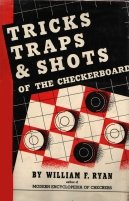
As we mentioned in our previous installment from Willie Ryan's Tricks Traps & Shots of the Checkerboard, we're getting towards the end of the book and Willie's examples have turned even more complex than ever. In today's installment, Willie, who lacked powerful 21st century computing capabilities, had a few of his own diagonal cracks in the foundation of his analysis. Still, it's hard to fault such a brilliant man; he was doing everything in his head with no silicon monsters to help him out, and he got it right far more often than not.
Today, we're asking you to repair the cracks, and we understand that that's a tall order indeed. But we think you'll enjoy and benefit from our revised analysis, all of which is attributed to Ed Gilbert's KingsRow computer engine and 10-piece endgame database. Think what Willie would have done with such fabulous tools. No more patching by hand!
| 9-13 | 18-9 | 13-22 | 1-5 | 12-16 |
| 21-17 | 5-14 | 20-16* | 11-15 | 17-13 |
| 11-15 | 24-20---I,4 | 11-18---O | 5-9 | 18-23 |
| 25-21 | 3-8---J | 19-15 | 8-11 | 24-20---9 |
| 8-11 | 28-24 | 10-28 | 27-24 | White |
| 23-18---1 | 1-6*---K | 30-26 | 4-8 | should |
| 6-9---2 | 23-19*---5 | 12-19 | 21-17 | win. |
| 26-23---A | 15-18---N,6 | 26-1*---P | 8-12 | Wm. F. |
| 9-14---B,3 | 22-15 | 7-11---7 | 29-25---8 | Ryan. |
BLACK
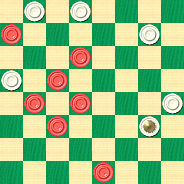
Black to Play and Draw
B:W32,31,25,20,13,K9:B28,23,19,16,15,11,2.
A---"The orthodox continuation here is: 27-23, 9-14, 18-9, 5-14, 30-25, 1-6, 24-19, etc. While the 26-23 line is not so safe, it is sound enough, and is considerably more productive of wins than the conservative 27-23 development.
B---3-8 is stronger at this point and has been published erroneously as a play to win for black. The following outline charts the course to safety for white:
| 3-8 | 32-27* | 6-9 | 23-18 | 19-23 |
| 23-19* | 1-6 | 31-27---G | 27-24 | 2-7 |
| 11-16---C | 30-26* | 7-10 | 18-15 | 23-18 |
| 18-11 | 10-15---E | 28-24 | 24-19 | 1-6 |
| 16-23 | 20-16* | 19-28 | 15-10---H | 18-25 |
| 27-18 | 2-1---F | 27-24 | 4-8 | 7-10 |
| 8-15 | 27-23* | 12-19 | 6-1 | 13-22 |
| 18-11 | 15-18 | 24-6 | 8-11 | 6-13* |
| 7-16---D | 23-14* | 28-32 | 10-6 | Drawn. |
| 24-20* | 9-25 | 26-23 | 11-15 | Wm. F. |
| 16-19 | 29-22 | 32-27 | 6-2 | Ryan. |
C---If the moves are: 9-14, 18-9, 5-14, then the draw is reached with: 30-25*, 11-16, 24-20, 15-24, 28-19,16-23, 27-9,1-5,17-14, 10-26, 31-22, 5-14, 22-17, 13-22, 25-9. Wm. F. Ryan.
D---Abandoned here by P. H. Ketchum without further play. He judged the situation to be strong for black, if not a win. The route to a draw from this point involves instructive analysis.
E---4-8 is a low-pressure alternative and barely gains a draw, viz: 4-8, 27-24*, 2-7, 24-15, 10-19, 22-18*, 13-22, 26-17, 9-13*, 17-14, 6-9*, 29-25, 8-11*, 31-27, 19-23, 27-24, 13-17, 24-19, 17-22, 21-17, 22-29, 17-13, 29-25, 13-6, 23-26, 6-1, 25-21, 1-6, 21-17, 6-10, 5-9, 10-3, 17-10, 3-8, 10-14. Wm. F. Ryan.
F---Or 6-10, 27-24, 9-14, 16-11, 12-16, 31-27*, 5-9, 29-25*, 16-20, 11-7, 2-11, 27-23, 20-27, 23-7, 27-31, 26-23, 31-27, 23-19, 15-24, 28-19, which also produces a draw. Wm. F. Ryan.
G---A more difficult draw may be effected with careful play by 22-18,13-22, 26-17, 9-13, 17-14, 19-23, 18-15, 12-19,15-10, 5-9, 10-3, 9-18, 3-7, 18-22, 7-10, 22-25, 10-15, 4-8, 15-24, 8-12, 24-20, 25-29, 28-24. Wm. F. Ryan.
H---The position is now clearly a draw, but we continue the play to illustrate a fancy as well as feasible finish.
I---White has the best looking board, with virtually all of the winning chances in his favor.
J---The build-up by 4-8, 28-24, 1-6, 23-18 is a creaky combination for black, but 15-19, 23-16, 12-19 will do well; at this point, continue with: 27-24, 10-15* (not 11-15, 22-18*, 15-22, 24-6, 1-10, 32-27 *, etc., as white will win; I have victimized many a player with this scheme) 17-10, 7-14, 30-26, 2-7, 32-27, 4-8, 27-23* (not 22-17, 13-22, 26-10, 7-14, 31-26, 14-18, 26-22, 18-25, 29-22, 1-5, 21-17, 5-9, 17-13, 9-14, 13-9, 14-18, 22-17, 19-23, as black will win. Paul Thompson); 8-12, 23-16, 12-19, 22-17, 13-22, 26-10, 7-14, 31-26*, 14-18, 26-22, 18-25, 29-22, 19-23, 24-19, 15-24, 28-19, 23-26, 22-18, 26-30, 19-16, 30-25, 16-7, 3-10, 21-17, ending in a draw. Wm. F. Ryan.
K---Black's only move to draw. The three alternatives, 1-5, 11-16, and 12-16, all lose in short order as follows:
| 1-5---L | 15-24 | 10-19 | 13-17 | 12-16 |
| 30-25* | 27-11* | 17-10 | 21-5 | 31-26 |
| 5-9---M | 8-15 | 19-23 | 30-21 | 16-19 |
| 32-28* | 23-19* | 10-6* | 18-14 | 26-22 |
| 11-16 | 15-24 | 23-26 | 21-17 | 19-23 |
| 20-11 | 28-19 | 6-1 | 14-9 | 29-25. |
| 7-16 | 4-8 | 26-30 | 17-14 | White |
| 24-19* | 19-15 | 22-18 | 1-6 | wins. |
L---If the play goes: 11-16, 20-11, 7-16, white triumphs with 23-18, 14-23, 27-11, 8-15, 30-26, 16-20, 17-14, 10-17, 21-14, 20-27, 31-24. Again at L, if 12-16 is the play, white romps home first with: 23-19, 16-23, 27-9, 1-5, 9-6, 2-9, 30-26, 9-14, 26-23, 8-12, 35-19, 14-18, 29-25, 5-9, 32-27, 9-14, 31-26, 4-8, 26-23. Wm. F. Ryan.
M---Against 11-16, 20-11, 7-16, white executes a very unique clean-out and wins with: 23-19*, 16-23, 27-9, 5-14, 22-18*, 14-23, 31-27, 13-22, 25-11, 8-15, 27-11.
N---Loses, and white snaps the trap shut with a startling stroke, which has claimed many a champion. I was caught by this one several times before I came to recognize it; and I saw Newell W. Banks entrapped by it as well. The following play at N assures a draw and makes white run hard for home: 6-9*, 30-25*, 11-16, 20-11, 7-23, 27-11, 8-15, 24-19*!, 15-24, 32-28, 24-27, 31-24, 12-16, 24-20, 16-19, 20-16, 4-8, 16-12, 8-11, 12-8, 11-15, 8-3, 19-24, 28-19, 15-24, 3-8, 2-7, 8-12, 24-27 (not 7-11, 22-18!, as white will win), 12-16, 27-31, 16-19, 7-11, 19-15, 10-19, 17-10, 31-27, 10-6, 27-23, 6-1, 19-24, 21-17, 23-26, 25-21, 26-30, 1-6, 11-15, 6-10, 15-19. Wm. F. Ryan.
O---11-20, 19-16, 12-28, 30-26, 10-19, 17-1* is no better, and also loses. The important point is to take the stroke into square one, and not to three, as the ending with the king on square three cannot be scientifically won.
P---White now has a free hand with his king. Black cannot crack the line without the loss of a piece, and subsequently loses because his position deteriorates. Although the stroke following black's 15-18 move at N has been published several times, I can find no record of it being properly executed. Invariably, white has made the mistake of jumping into square 3 at Note P. I make no claim for the play prior to the shot, but its proper execution, as revealed in this study, as well as its attending formational structures discussed in the notes, are my contributions to an outstanding, brilliant, and practical stroke."
1---30-25 is substantially better here---Ed.
2---4-8 would have been preferable---Ed.
3---While 3-8 can't be called "winning" it certainly gives Black an edge---Ed.
4---Willie's comment is hard to understand as the computer finds this position to be dead even. Perhaps White is stronger in practical over the board play.
5---Why Willie stars this move baffles us; far from winning, it gives Black the advantage! 32-28 was the right move here---Ed.
6---This is not actually a losing move---Ed.
7---8-11 is best; White now has a solid edge---Ed.
8---While White can't be said to have a clear win, 24-20 was correct here. The game is now a draw.---Ed.
9---The game is definitely a draw according to the computer; we don't see Willie's win for White at all---Ed.
Can you demonstrate the draw for Black here? Fix the crack in the problem and then click on Read More to check your solution.
You can email the Webmaster with your comments on this article.
Find the Differences
Supercoloring.com CC0
Yes, we've definitely done this theme before--- Find the Differences, that is--- but with today's Checker School lesson, it certainly bears repetition.
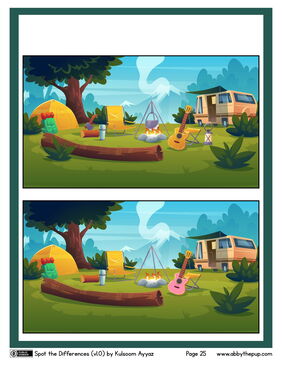
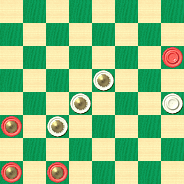
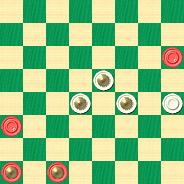
Much as the drawings above have subtle but important differences--- 8 of them, we're told--- the two checker positions below similarly have two small but important differences. Yet both positions yield a White victory, as long as your skills are up to the task.
BLACK
WHITE
White to Play and Win
W:WK15,K18,20,K22:B12,K21,K29,K30.
BLACK
WHITE
White to Play and Win
W:WK15,K18,K19,20:B12,21,K29,K30.
Can you solve these? Of course, we recommend that you give the checker positions most of your attention, but we have to say the cartoon puzzle is interesting, too. Clicking on Read More will give you the solution to the Wyllie and Spayth problems. We still haven't completely solved the cartoon!
You can email the Webmaster with your comments on this article.
The Kidnapped King
PICRYL CC0
In last month's installment from Willie Ryan's Tricks Traps & Shots of the Checkerboard, Willie told us that one of the moves "sets up a fine problem study by Champion John T. Bradford, American member of the 1927 International Checker Team." But that column had already become rather involved, and so we split off Mr. Bradford's study and present it this month. We think you'll agree that it deserves space of its own.
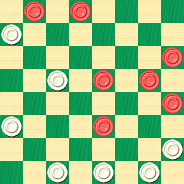
Black's position in the diagram below looks pretty good. How can White pull this one off?
WHITE
White to Play and Win
W:W5,14,21,28,30,31,32:B1,2,12,15,16,20,23.
Don't let the apparent difficulty carry you away; with enough effort you can escape with the solution, though it will be a real struggle. When you're ready, click on Read More to see the solution and a full set of explanatory notes.
You can email the Webmaster with your comments on this article.
The Checker Maven is produced at editorial offices in Honolulu, Hawai`i, as a completely non-commercial public service from which no income is obtained or sought. Original material is Copyright © 2004-2026 Avi Gobbler Publishing. Other material is public domain, AI generated, as attributed, or licensed under CC1, CC2, CC3 or CC4 and the various CC options. Information presented on this site is offered as-is, at no cost, and bears no express or implied warranty as to accuracy or usability. You agree that you use such information entirely at your own risk. No liabilities of any kind under any legal theory whatsoever are accepted. The Checker Maven is dedicated to the memory of Mr. Bob Newell, Sr.