The Checker Maven
The World's Most Widely Read Checkers and Draughts Publication
Bob Newell, Editor-in-Chief
Published every Saturday morning in Honolulu, Hawai`i
Noticing missing images? An explanation is here.
Nice and Neat
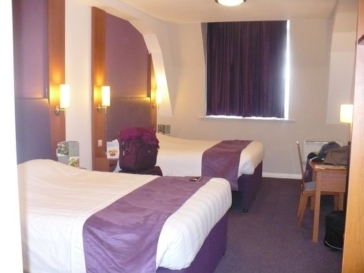
Shown above is a hotel room that is quite attractive because it's nice and neat, giving it plenty of appeal. At least based on the photo, you'd most likely be quite willing to stay there for business or vacation.
Checker problems can be nice and neat, too, with solutions that appeal and settings that draw you in. We think the problem below meets these criteria.
WHITE
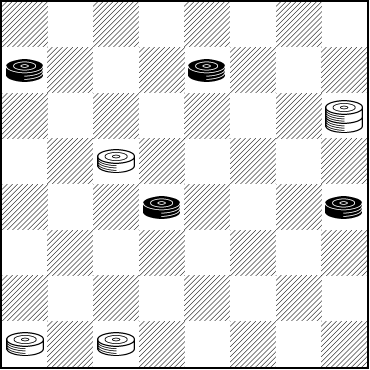
White to Play and Win
W:W30,29,14,K12:B20,18,7,5.
This problem is "nice" in that it has a very flashy solution which is reasonably well concealed. And the problem is "neat" in that the author's intended solution can be avoided, yet there is still a solid win which demonstrates practical technique.
Are you nice, or neat, or nice and neat? Don't be mean and don't mess it up! Solve the problem and click on Read More to see the solutions.
A. Jackson, Duelist
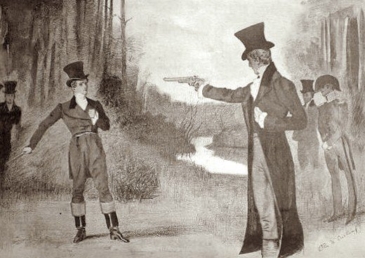
Andrew Jackson, seventh President of the United States, certainly wasn't the author of today's Checker School study; President Jackson passed away a good forty years before this position was first formally presented. But did President Jackson play checkers? It's been speculated by historians that he was a chess player, and it seems quite likely that, at the very least, he would have known how to play the game of checkers. But his favorite sport was apparently dueling; he is reported to have participated in some hundred duels!
Fortunately, a checker duel has far fewer permanent consequences than the type of dueling President Jackson did. Let's, for instance, look at the position below.
WHITE
BLACK
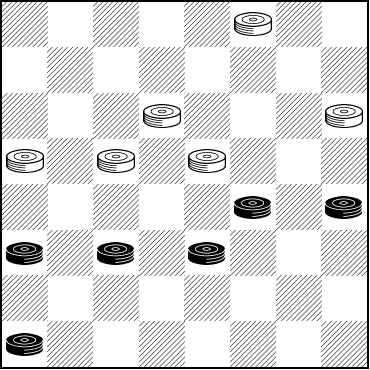
Black to Play and Draw
B:W30,23,21,20,19,18:B14,13,12,11,10,4.
"Play and Draw" has little application to dueling (unless you're drawing pistols), as obtaining a draw in a duel isn't the point. But here, getting a draw with the Black pieces represents a respectable achievement. Can you do it? No pistols or swords needed, just good over the board checker skills. Solve the problem and shoot (or stab) your mouse on Read More to see the solution, sample games, and explanatory notes.
Hard Problem
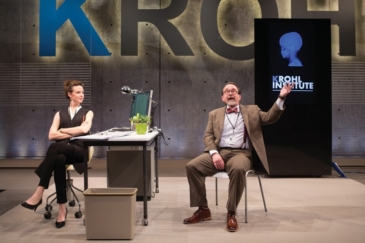
Hard Problem is actually the title of a play by Tom Stoppard that ran at the Scena Theatre in Washington, D.C., early this year. While the "problem" is about consciousness, not checkers, by all accounts it was a good show.
We hope we have a good show for you today as well, with a "hard problem" about checkers. Let's jump right in.
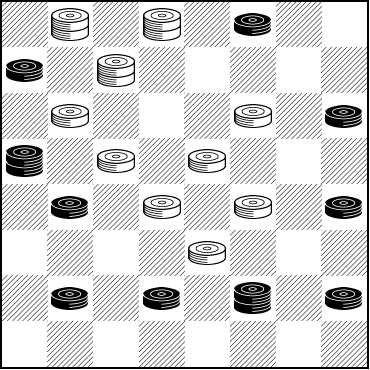
WHITE
White to Play and Win
W:W23,19,18,15,14,11,9,K6,K2,K1:B28,K27,26,25,20,17,K13,12,5,3.
You'll need to maintain a high degree of consciousness to solve this one, and, regardless of possible metaphysical implications, you'll have to focus and apply solid over the board visualization skills. Try to solve it without moving the pieces; that will definitely be a mind-expanding experience. Then, when you're done, make a conscious decision to click on Read More to see the solution.
An Easy Problem
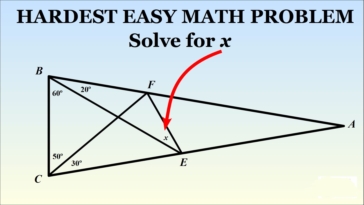
How good are you at geometry? Does the problem above look easy to you? To us, it looked easy in principle, and we didn't need more than a minute or two to come up with a set of equations to represent the relationships in the diagram. Then we went to solve the equations for the desired variable 'x'. That too was just the work of a couple of minutes ... until we ran into what we'll call "a little snag."
Hopefully today's checker problem will be the work of a few seconds (not even minutes), just a brief summer interlude, with no hidden snag. Let's have a look.
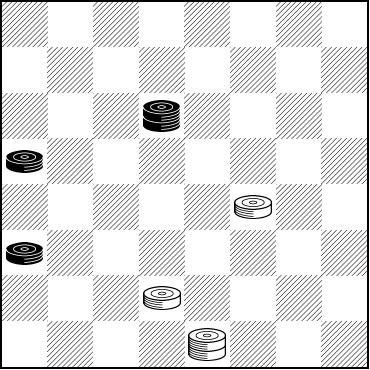
WHITE
White to Play and Win
W:WK31,26,19:B21,13,K10.
You've probably already solved it, but we'll extend an extra incentive to click on Read More: We'll also give the answer to the math problem.
4th of July: America United
It's not often that The Checker Maven presents a political message or takes a political stand, but as we prepare to celebrate the birthday of our great nation on our wonderful 4th of July holiday, we can't help but wish for unity among us.
In our Republic, Americans are free to differ and indeed we celebrate our differences. But the kind of divisiveness we've seen over the past year or so is good for no one. Why can't we agree to disagree about some things, but still unite for the sake of our nation?
The 4th of July is an appropriate time to reflect on the fact that we are one nation and one people, e pluribus unum, from the many--- one. Let's work together for the good of us all.
And for our checker problem today, we've simply got to turn to Tom Wiswell, that great problemist and great American patriot.
WHITE
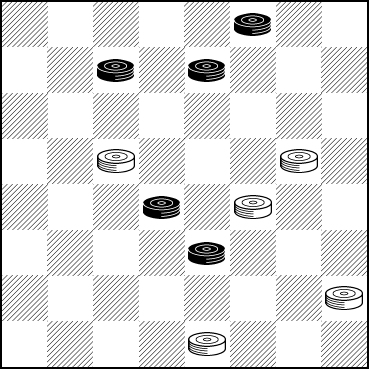
White to Play and Draw
W:W31,28,19,16,14:B23,18,7,6,3.
Can checkers be a great unifying factor? Why not? Try out this problem and then click on Read More to see how to do it. The solution is one worthy of a master; maybe you might enjoy getting together with your checker friends--- regardless of anyone's political views--- to work it out.
Dunne It Again
Karen Arnold CC0
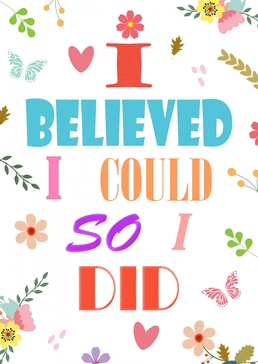
We found the above inspirational poster very appropriate to our weekly column, for doesn't checkers mirror life in so many ways? Trust in our abilities, a belief in our capacity to succeed and to do what we have to do; these attributes apply both to the game of checkers and to life in general.
Someone who has Dunne-it before and now has Dunne-it again is our old checker friend, F. Dunne. We've seen his studies and positions before, and today we have another one that is subtle and interesting. It's our Checker School entry for this month.
BLACK
WHITE
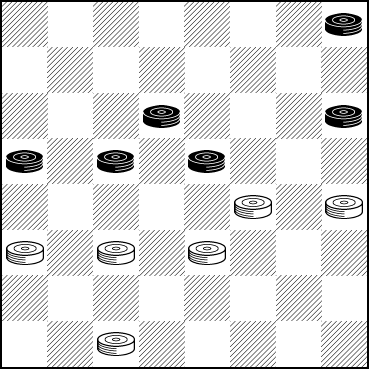
White to Play and Draw
W:W30,23,22,21,20,19:B15,14,13,12,10,4.
Can you solve this and find the White draw? There's another inspirational saying from none other than Henry Ford: "Whether you think you can or think you can't, you're right." Trust in yourself, think positive, and click on Read More to see the solution, sample games, and explanatory notes.
From Corner to Corner
Pexels CC0
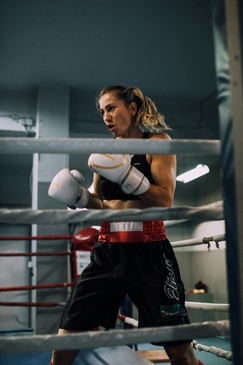
From one corner to the other, boxers chase their opponents, hoping to land the winning blow. The fighter above seems ready to come out of her corner and do whatever it takes to lay out her opponent.
But some fighters win by decision rather than the quick knockout. That fact, and the title of today's column, provide broad hints toward the solution of the problem shown below.
BLACK
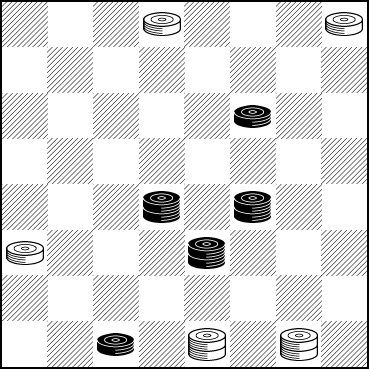
Black to Play and Win
B:W31,29,12,K2,K1:B22,K15,K14,K10,3.
Before you begin, let's make note of a couple of things. First, White has two kings more or less entrapped in or near the Black double corner. Second, White has a man on 12 that is immobilized. Finally, White holds a bridge position on 29 and 31, but the man on 29 is immobile, and if White moves the man on 31, Black can stop it with 15-19 and then win it a few moves later.
So what can White do? Not much except perhaps shuffle around in the double corner. Black has a tremendous mobility advantage. That usually spells a win. The question is how to make it happen.
We'll repeat our hints. This is not a quick knockout; to win, Black must patiently apply technique. And again, keep in mind the title of our study. It's by no means an easy fight. This one is championship class.
Don't let this one knock you out; win the decision, then land your mouse on Read More to check your solution.
London Bridge
Public Domain
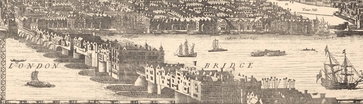
One of Great Britain's most famous landmarks, London Bridge, has changed a lot over the years. The sketch above depicts London Bridge as it supposedly looked near the end of the 17th century. It's a far cry from today's London Bridge, and we suspect that's just as well.
One thing that hasn't changed over the years, though, is the Bridge Position in our game of checkers. Certainly, more variations and interesting problems have been published, but at heart a bridge has the same fundamental characteristics as ever.
Of course, sometimes a bridge is a win, sometimes a loss, and oft-times a draw. It all depends. In the following position, a rather unornamented bridge turns out to be a loss for the bridging side.
BLACK
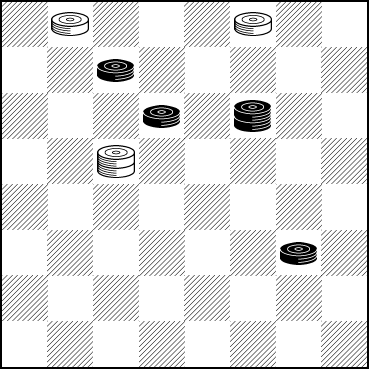
Black to Play and Win
B:W32,30,K19:B27,23,K22,9.
Is this a bridge that you can cross, by finding the Black win? We'd rate the difficulty as medium; if you're familiar with bridges, you won't have any trouble with it; and if you're not familiar with these positions, this is a good time to bridge that gap. When you're ready, click on Read More to see the solution.
At A Stroke
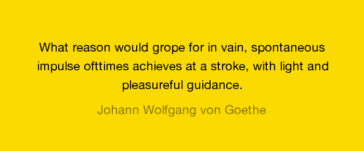
We didn't think they could do it, but our intrepid Research Department managed to come up with another meaning for the word stroke, to wit: at a stroke, with the meaning of "all at once," such as, "we solved a dozen checker problems at a stroke."
That would be quite a feat, indeed, and of course you just know we're going to present a stroke problem to kick off the month of June.
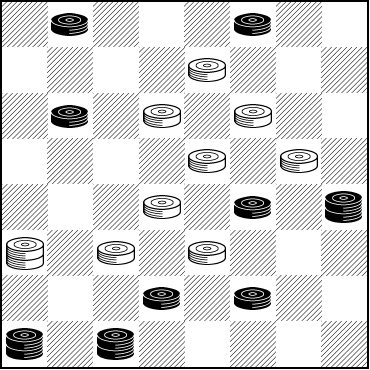
WHITE
White to Play and Win
W:W23,22,K21,18,16,15,11,10,7:BK30,K29,27,26,K20,19,9,3,1.
Can you solve this one "at a stroke" or will it take you longer? Are your powers of visualization up to the challenge? If you find the position difficult, we refer you to the quote at the beginning of the article.
When you've determined the correct moves, clicking on Read More will bring you to the solution--- at a stroke.
A Trap With A Tale 1
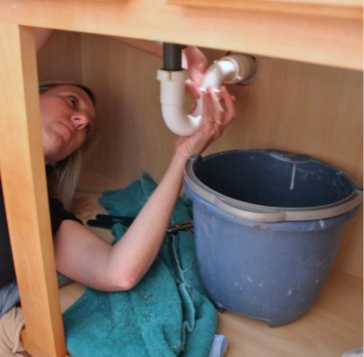
We can bet that this woman has a pretty interesting tale to tell about installing a sink trap. It can be a messy job and a lot of things can go wrong. But it appears she's found a solution in the form of long-lasting plastic components.
Which, of course, brings us to our subject: finding a solution, not for drain problems, thank goodness, but for equally perplexing checkerboard conundrums.
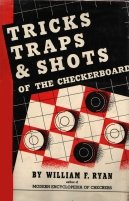
Today we're continuing with our presentation of material from Willie Ryan's fascinating Tricks Traps & Shots of the Checkerboard with the first part of something Willie calls A Trap With a Tale. We know you'll find it interesting, as we've discovered some unique things about this study. We'll give the runup without Willie's notes; those will come in later columns, but for now we want to cut to the chase.
| 1. | 11-16 | 24-19 |
| 2. | 8-11 | 22-18 |
| 3. | 16-20 | 25-22 |
| 4. | 9-13 | 29-25 |
| 5. | 11-15 | 18-11 |
| 6. | 7-16 | 22-18 |
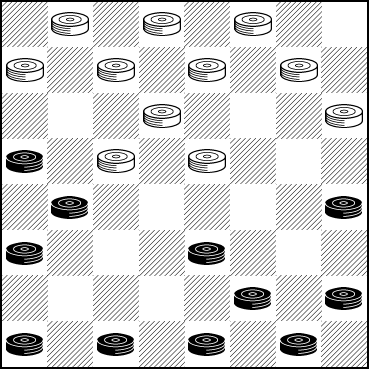
BLACK>
Black to Play, What Result?
W32,31,30,28,27,26,25,23,21,19,18:B20,16,13,12,10,6,5,4,3,2,1.
This one is not so easy and correct play requires what was once called "sticktoitiveness." Can you tell this tale or will you remain trapped in erroneous play? Patience is the watchword. When you're ready, clicking on Read More will indeed tell the tale in the correct manner.
The Checker Maven is produced at editorial offices in Honolulu, Hawai`i, as a completely non-commercial public service from which no income is obtained or sought. Original material is Copyright © 2004-2026 Avi Gobbler Publishing. Other material is public domain, AI generated, as attributed, or licensed under CC1, CC2, CC3 or CC4. Information presented on this site is offered as-is, at no cost, and bears no express or implied warranty as to accuracy or usability. You agree that you use such information entirely at your own risk. No liabilities of any kind under any legal theory whatsoever are accepted. The Checker Maven is dedicated to the memory of Mr. Bob Newell, Sr.