The Checker Maven
Jump to navigationWhen Wyllie Wavered

PickPik CC0
The usual definitions of wavering are (1) to move unsteadily back and forth, and (2) to exhibit irresolution or indecision. But in seeking an image to illustrate the concept of "wavering" we came across some really unusual interpretations, such as the photo above. We'll guess that maybe the waves are "wavering"? It's a pun bad enough to be worthy of The Checker Maven editoral staff! We also ran into a rock album called "Wavering Radiant"; some jewelry pieces with "wavering" patterns; and a lot more bizarre stuff that seemed at best tangentially related to the basic definitions.
Willie Ryan implies, in the excerpt below from his famous book Trips Traps & Shots of the Checkerboard that the great Wyllie "wavered" in losing in a most uncharacteristic manner. Maybe that's Willie's own definition of the word, and would be yet another to add to a growing list. But whatever you might call it, the checker play is fascinating and instructive. Willie will explain.
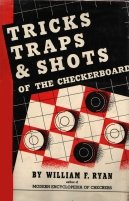
"James Wyllie seldom lost a game by a pitch or an unexpected shot. Those who beat him had to do it the hard way, by protracted end-game play. The following example records one of those relatively rare occasions when the canny Scot got what is commonly known as the 'Bum's Rush,' at the hands of James Mugridge of Buffalo, New York:
| 11-16 | 9-14 | 4- 8 |
| 24-20 | 18-9 | 29-25 |
| 16-19 | 5-14 | 11-15 |
| 23-16 | 25-22 | 27-24---2 |
| 12-19 | 8-11 | 8-11---3 |
| 22-18 | 22-17---1 | 32-27---A, |
| forms the | ||
| diagram. |
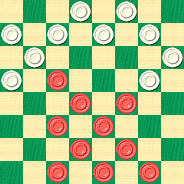
BLACK
Black to Play and Win
B:W31,30,28,27,26,25,24,21,20,17:B19,15,14,11,10,7,6,3,2,1.
A---Loses, and marks the spot where more than a few great players have fallen. The correct draw play is: 17-13, 3-8, 32-27, 15-18, 24-15, 10-19, 27-24, 7-10 (11-15, 20-16, 14-17, 21-14, 7-10, also resolves a draw), 24-15, 10-19, 26-22, 19-23, 22-15, 11-18, 20-16, 8-12, 16-11, 12-16, 11-8, 16-20, 31-26, 23-27, 26-22, 18-23, 22-18, etc. Wm. F. Ryan."
1---27-23 might be slightly better here---Ed.
2---Definitely not as good as 27-23. The computer gives Black a small edge here---Ed.
3---It took deep computer analysis to show that 1-5 may instead be the best way to retain Black's slight lead---Ed.
The solution is quite long, but don't waver for a moment. Work it through and then wave(r) your mouse over Read More to see the rest of the play.
Solution
"Continue:
| 19-23 | 6-15 | 2-6 | 3-8 | 25-21---4 |
| 26-19 | 21-14 | 31-26 | 30-26 | 17-13---5 |
| 14-18 | 18-23 | 1-5 | 29-25 | 10-17 |
| 17-14---B | 27-18 | 26-22 | 26-23 | and |
| 10-17 | 15-29 | 6-10 | 8-12 | black |
| 19-10 | 24-19 | 22-17 | 28-24 | wins. |
B---25-22,18-25,17-14,10-17, 21-14,15-18, 30-21,18-22, etc., and black wins."
4---Not 25-22? 17-13 10-17 23-18! 22-15 19-3. Drawn---Ed.
5---What can White play here? If 23-18 5-9! 14-5 21-16 ends the festivities for White---Ed.