The Checker Maven
English Open 2013
Courtesy Jim Loy
The 2013 English Open 3-Move Championship took place in the city of Bristol from April 22 through April 26 of that year. By any account it was a memorable tournament featuring some fine play. The tournament was won by one of the younger competitors, Shane McCosker. Referred to by Alex Moiseyev as an up and coming player on the world stage, this was hardly Shane's first tournament win. He has taken first place in numerous other tournaments prior to the 2013 contest, including the American Youth Tournament in 2007. He has won many more since 2013.
(The Checker Maven regrets being unable to obtain higher quality photographic images from the Bristol tournament.)
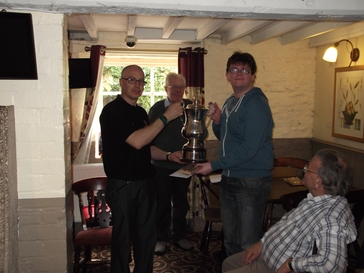
Shane McCosker (right, standing)
Second place went to Francis McNally.
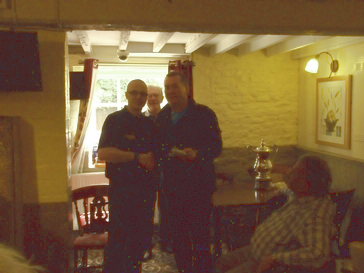
Francis McNally (right, standing)
Third place was taken by Colin Young.
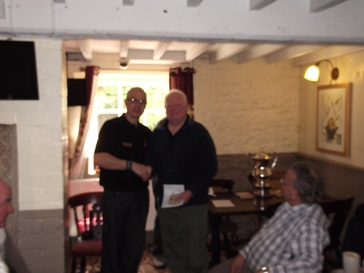
Colin Young (right, standing)
Eminent checker author, analyst, and annotator Jim Loy assembled a book containing a large number of the tournament's games, and added his own notes and analysis as well as many diagrams, set up as problems to be solved. The book is highly instructive, and Mr. Loy is kindly offering it to Checker Maven readers as a free download. It's absolutely worth having and you can get it here.
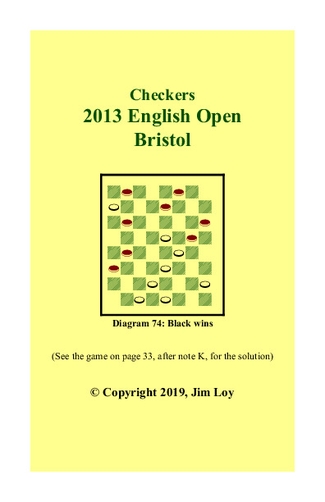
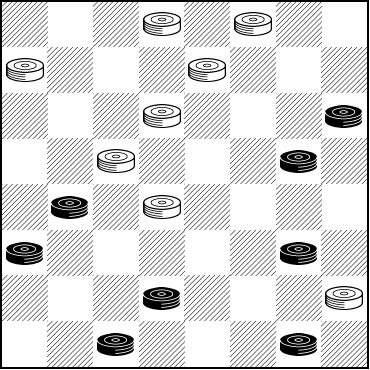
So how about that problem position shown on the cover of the book?
BLACK
Black to Play and Win
B:W5,15,19,23,26,28,30,31:B1,3,7,9,12,16,17,21
See how you do with this one. Of course it's best to download the book, but you can also check your solution by clicking on Read More. Thank you, Jim Loy, for this excellent book.
A Different Prize Problem
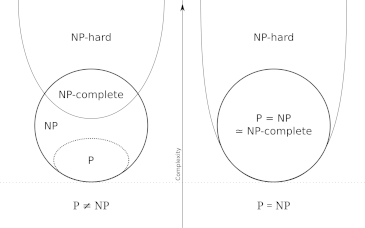
The P=NP problem in computer science is one of the Millennium Prize Problems and if you can solve it, you'll win a cool $1 million prize from the Clay Mathematics Institute. We won't attempt to explain the problem here but it certainly can be said to be at the ultra-difficult level. The prize is yet to be claimed.
Turning to checkers, we recently we presented Brian Hinkle's Prize Problem which carried with it an award of $100 (not $1 million) to the first correct solver. Alas, that reward went unclaimed. Today we have a different sort of prize problem. It was published back in 1907 in the Canadian Checker Player magazine. The prize was a six-month subscription to that excellent publication of bygone days, and the prize was indeed awarded to a successful correspondent.
We'll not claim that the problem is up to Brian's grandmaster composing standards, nor will we offer anything beyond personal satisfaction for finding the solution. But it's nevertheless an interesting composition.
WHITE
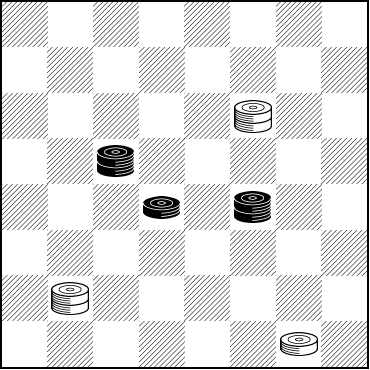
White to Play, What Result?
W:WK11,K25,32:BK14,18,K19
Would you have won a half-year subscription to one of history's best checker publications? We'd offer you a free six month on-line subscription to The Checker Maven but that wouldn't be much of a prize given that our publication is already free. So solve it just for the fun of it, and claim a look at the solution by clicking on Read More. If you like, write to us and tell us if you might have been a winner well over a century ago.
In Need of a Spare

Public Domain Pictures CC0
Uh-oh. Someone is going to have to get out that spare tire, and no matter how many times you've changed a tire on the road, it's never much fun.
There are other kinds of spares, of course. There is spare time (a rather rare commodity in the Checker Maven offices). You can be "spared" something unpleasant, like a visit to the dentist. A spacious home has "room to spare" --- and so on.
In today's Checker School column, we present a very old position attributed to William Payne. "Spare" also has a meaning in checkers, as you'll see.
WHITE
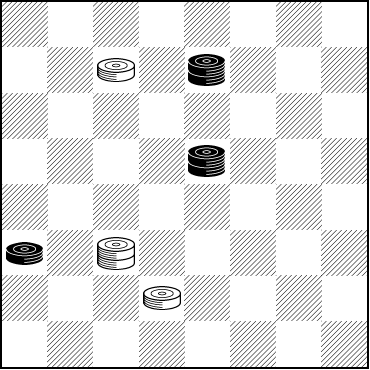
White to Play and Win
W:W6,K22,26:BK7,K15,21
Of course, the problem is extremely easy and will be solved in a couple of seconds by players with even a moderate level of experience. But after you solve it, use a spare couple of minutes to click on Read More to see what point Andrew J. Banks, author of Checker Board Strategy, was trying to make.
Beacon Cafe: State Championships
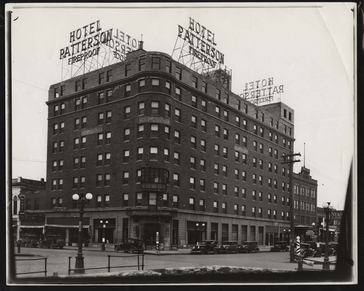
State of North Dakota CC0
It was the big day. This Saturday, the North Dakota Open would take place with the winner declared the North Dakota State Checker Champion. This year, 1955, the tournament was taking place in the famed Silver Ballroom of the Patterson Hotel in Bismarck.
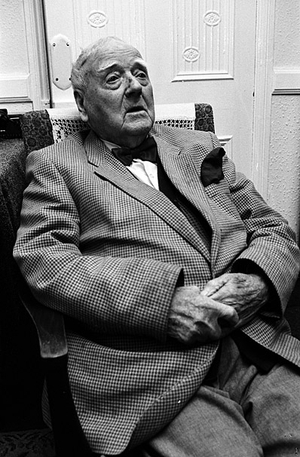
Sal Westerman
Sal Westerman and the "boys," all of whom were at least 50 years old, wouldn't be meeting at the Beacon Cafe this afternoon, as several of them, including Sal, were competing in the tournament.
The format was simple. The tournament would use the "Swiss" system with three rounds in the morning and two in the afternoon. Players with equal tournament scores would be matched against one another. Play was divided into the Championship Division and the Minor Division.
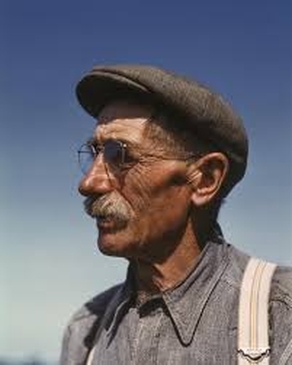
Gerhardt G. Grossvater
Gerhardt G. Grossvater of Minot was the defending champion and the favorite to win. Other top seeds were Professor Don Steam from Fargo, Danny Dan Daniels from Dickinson, and Bismarck's own Sal Westerman. But there were numerous other strong players and upsets were known to happen.
There was an air of excitement in the ballroom as the early rounds were played. One by one, the lesser players were defeated by the greater. Professor Steam, however, was upset by a player from Beulah, Pawel Patschpawkoski, who was now in the top four along with Danny Dan, Sal, and Gerhardt.
At the lunch break, Sal and a couple of the boys, Delmer and Wayne, went downstairs to the Rainbow Bar for a quick burger.
"What do you think your chances are, Sal?" asked Delmer.
"I don't know. I play Danny Dan and I think I have good chances. My record against him is almost all wins. And I don't think this Pawel fellow, good as he must be, can take out Gerhardt. That would leave me to play Gerhardt in the final round, which has never worked out for me."
"Come on, Sal," said Wayne. "You'll do it this time for sure."
But Sal didn't look so confident. The boys finished their lunches and went back upstairs a few minutes before the final rounds were to begin.
Sal was right. He won against Danny Dan, but the game was a close one. Gerhardt easily disposed of Pawel.
Linnaea Mallette PublicDomainPictures
It was nearly four o'clock and time for the final round. Gerhardt and Sal, the only players with a perfect score of four points so far, would once again play for the title.
Gerhardt was certainly polite enough, though he had just a bit of a swagger about him. Perhaps, as many-time State Champion, he felt he had earned it. For his part, Sal looked a little worried. Gerhardt was more than just good. He held his own in national tournaments, let alone in North Dakota.
The game began. Spectators thronged around the playing area. This was the game of the year, the one that would crown the Champion.
Sal gained a little confidence as play went on. Gerhardt, on the other hand, seemed frustrated at not being able to force a quick advantage.

The game took some odd twists and turns. Numerous kings were crowned but still the game stayed close. Finally Sal went a piece up, having four kings and a man to Gerhardt's three kings and a man. Could this be Sal's moment?
But the win, if any, looked tough. Gerhardt, having made a move, looked over at Sal, extended a hand, and said, "Draw?"
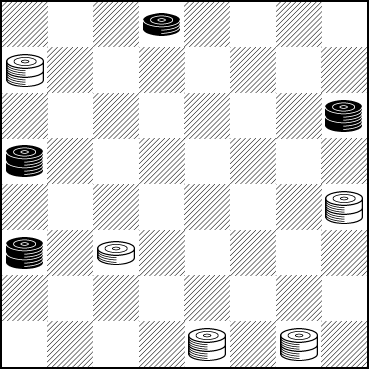
WHITE (Sal)
White to Play and Win
W:WK5,K20,22,K31,K32:B2,K12,K13,K21
Sal was surprised by this. Gerhardt played games to the very end, almost never resigning and seldom even offering a draw unless the position had no play whatsoever left in it. Did this mean, Sal wondered, that Gerhardt might actually be in a loss and was bluffing?
"Thank you, but let's play it out," Sal replied.
"You won't take a draw against the great Gerhardt G. Grossvater, someone against whom who have a lifetime score of zero?" Gerhardt replied.
Now the crowd murmured. Gerhardt was known to have something of an ego, but this was a bit much.
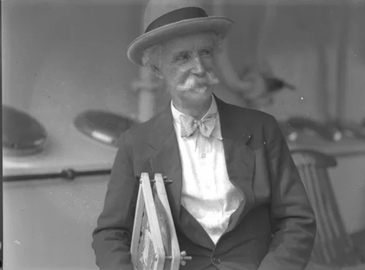
Referee Julian Jaegerlitz
PICRYL CC0
"Quiet on the floor!" Referee Julian Jaegerlitz called out. Sal, for his part, did not reply. He thought for a minute or two, and then simply said, "Here," as he made his move.
Can you win this one? For Sal, his first ever State Championship hangs in the balance, but for our readers, there's no pressure, just the enjoyment of solving a fine problem (it's by Brian Hinkle). See you how do and then click on Read More to see the solution.
Action-Packed

Well, it may be called Camp Mosquito but it certainly looks to be a summer camp packed with active rather than passive adventure. Sounds good to us.
This month's speed problem is action-packed, too--- and quite active. Solve it and see why.
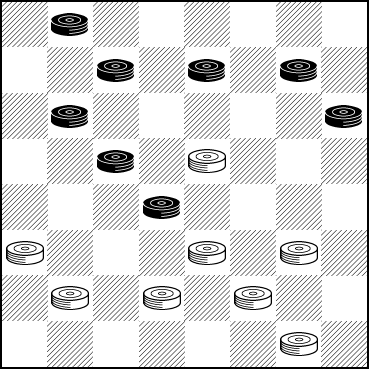
WHITE
White to Play and Win
W:W32,27,26,25,24,23,21,15:B18,14,12,9,8,7,6,1
We'd say it's on the upper end of easy in difficulty, not quite medium, but certainly not trivial and very nice. Skilled players won't need a lot of time. The rest of us might need a little longer, but it's definitely within reach. Take action, try it out, and then click on Read More to check your solution.
.jpg)